RFID EPC code structures form the backbone of modern inventory tracking and supply chain management systems worldwide. As technology continues to evolve, understanding these digital identifiers has become essential for businesses seeking efficiency and transparency in their operations. This comprehensive guide will walk you through everything you need to know about EPC codes, their implementation, and how they can transform your business operations.
1. What Is an RFID EPC Code and Why It Matters
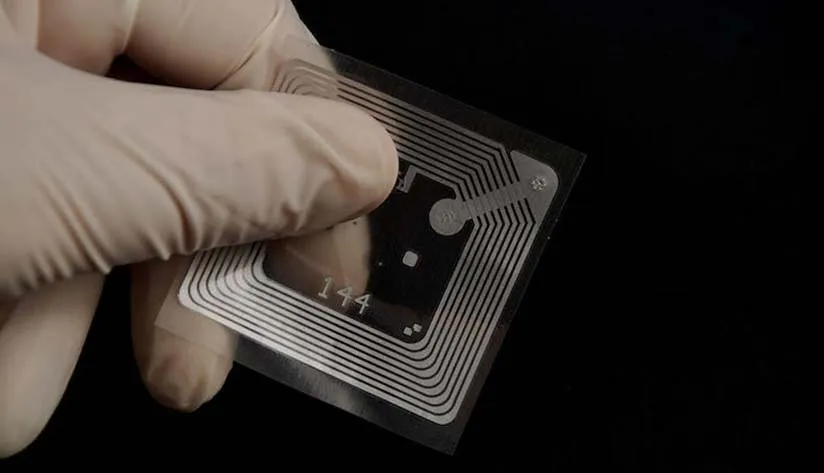
The RFID EPC code (Electronic Product Code) represents a universal identifier that provides a unique identity for physical objects, assets, or locations in the supply chain. Unlike traditional barcodes, these codes work within Radio Frequency Identification (RFID) systems to enable contactless scanning, multiple-item reading, and real-time inventory visibility.
For tech leaders and procurement specialists like Chad Carpenter at major retailers such as Walmart, these codes have revolutionized inventory management by:
- Reducing manual counting errors by up to 95%
- Enabling real-time inventory visibility across multiple locations
- Streamlining receiving and shipping processes
- Enhancing loss prevention capabilities
- Improving customer experiences through better stock accuracy
The Evolution of Product Identification Systems
Before diving deeper into RFID EPC code structures, it’s worth understanding how product identification has evolved:
- Traditional Barcodes (1970s): Limited to line-of-sight scanning and one-at-a-time reading
- 2D Barcodes (1990s): Increased data capacity but still required visual scanning
- RFID with EPC (2000s): Revolutionary contactless scanning with unique identifiers
- Modern RFID EPC Systems (Present): Cloud-connected, AI-enhanced tracking systems

2. The Anatomy of an RFID EPC Code
EPC Code Structure Breakdown
The RFID EPC code follows a standardized structure developed by GS1, the global standards organization. Each code contains several segments that provide specific information:
Header
The first component identifies the EPC version number and encoding scheme being used.
Manager Number
This segment identifies the company or organization that manages the subsequent numbers.
Object Class
Refers to the specific product type (similar to a SKU or product number).
Serial Number
A unique identifier for the individual item within its object class.
Here’s a visual representation of the structure:
| Component | Bits | Purpose | Example |
| Header | 8 | Identifies EPC version | 00110000 |
| Filter Value | 3 | Indicates packaging level | 001 |
| Partition | 3 | Defines boundary between fields | 101 |
| Company Prefix | 20-40 | Identifies the manufacturer | 0614141 |
| Item Reference | 24-4 | Identifies product type | 812345 |
| Serial Number | 38 | Unique item identifier | 6789012 |
SGTIN-96: The Most Common EPC Format
The Serialized Global Trade Item Number (SGTIN-96) is the most widely used RFID EPC code format in retail and consumer goods. The “96” refers to the 96-bit length of the code, which provides enough unique combinations to identify trillions of individual items.
3. How RFID EPC Codes Are Generated and Assigned
The Role of GS1 in EPC Assignment
GS1 manages the global standards for EPC codes, ensuring uniqueness across different companies and industries. Organizations must:
- Obtain a GS1 Company Prefix
- Assign GTINs to product types
- Generate serial numbers for individual items
- Encode this information into the EPC format
EPC Encoding Methods
There are several ways to encode RFID EPC code information:
- Binary Encoding: Direct binary representation
- Hexadecimal Notation: Compact representation using hex digits
- URI Format: Web-friendly format for internet applications
- Tag Data Standard (TDS): GS1’s comprehensive encoding specification

4. Practical Applications of RFID EPC Codes in Various Industries
Retail Implementation
Major retailers like Walmart have implemented RFID EPC code systems to achieve:
- 99% inventory accuracy (up from 70% with traditional methods)
- 50% reduction in out-of-stock situations
- 60% faster inventory counting processes
According to a 2023 Auburn University RFID Lab study, retailers using RFID technology saw an average sales increase of 5.5% due to improved inventory accuracy.
Healthcare Applications
In healthcare settings, RFID EPC code systems help with:
- Medical equipment tracking and maintenance scheduling
- Pharmaceutical authentication and anti-counterfeiting
- Patient identification and safety protocols
- Supply chain management for critical supplies
Manufacturing and Supply Chain
Manufacturers leverage EPC codes for:
- Work-in-progress tracking
- Component authentication
- Automated quality control
- Streamlined supplier management
- Warranty and recall management
5. RFID EPC Code Implementation: Best Practices
Selecting the Right RFID Tags
When implementing an RFID EPC code system, choosing the appropriate tags is crucial:
Passive vs. Active Tags
Passive Tags:
- No internal power source
- Lower cost ($0.10-$1.50 per tag )
- Shorter read range (up to 10 meters)
- Ideal for retail items and consumer goods
Active Tags:
- Battery-powered
- Higher cost ($15-$100 per tag)
- Extended read range (up to 100 meters)
- Better for high-value assets and vehicle tracking
Tag Frequency Selection
| Frequency Band | Typical Read Range | Best Applications | Limitations |
| LF (125-134 kHz) | < 10 cm | Access control, animal tracking | Slow data rate |
| HF (13.56 MHz) | < 1 meter | Smart cards, library books | Medium range only |
| UHF (860-960 MHz) | 1-12 meters | Retail, supply chain | Water/metal interference |
| Microwave (2.45 GHz) | Up to 30+ meters | Vehicle tracking, active systems | Higher power requirements |
EPC Memory Bank Configuration
Modern RFID tags typically have four memory banks:
- Reserved Memory: Contains kill and access passwords
- EPC Memory: Stores the RFID EPC code
- TID Memory: Tag identifier information
- User Memory: Optional custom data
Integration with Existing Systems
For successful implementation, RFID EPC code systems should integrate with:
- Enterprise Resource Planning (ERP) systems
- Warehouse Management Systems (WMS)
- Point of Sale (POS) systems
- Supplier portals and B2B platforms

6. Advanced RFID EPC Code Applications
Internet of Things (IoT) Integration
The RFID EPC code serves as a bridge between physical items and digital systems, enabling:
- Automated inventory replenishment
- Predictive maintenance for tagged equipment
- Smart retail experiences with dynamic pricing
- Connected consumer products with enhanced features
Blockchain and EPC
Combining blockchain technology with RFID EPC code systems creates:
- Immutable supply chain records
- Enhanced product authentication
- Transparent chain of custody
- Automated smart contracts based on physical events
7. Common Challenges and Solutions in EPC Implementation
Technical Considerations
While implementing RFID EPC code systems, organizations may face:
- RF Interference: Solved through frequency selection and reader placement
- Metal/Liquid Interference: Addressed with specialized tags and optimal placement
- Read Accuracy: Improved through multiple antennas and optimized reader settings
- Data Management: Handled with middleware and filtering systems
Standards Compliance
Ensuring compliance with global standards requires:
- Following GS1 EPC Tag Data Standard (TDS)
- Implementing proper encoding schemes
- Maintaining unique serial numbers
- Regular system audits and updates

8. The Future of RFID EPC Code Technology
Emerging Trends
The RFID EPC code ecosystem continues to evolve with:
- Battery-free sensor-equipped RFID tags
- Machine learning for predictive inventory management
- Miniaturization enabling new applications
- Enhanced security features and encryption
- Integration with computer vision systems
Sustainability Considerations
Modern RFID implementations are addressing environmental concerns through:
- Recyclable tag materials
- Reduced packaging needs due to better inventory control
- Lower carbon footprint from optimized logistics
- Reusable RFID tags for closed-loop systems
9. How to Choose the Right RFID Solution Provider
Key Evaluation Criteria
When selecting an RFID partner, consider:
- Experience: Track record in your specific industry
- Standards Compliance: Adherence to GS1 and ISO standards
- Integration Capabilities: Compatibility with existing systems
- Support Services: Implementation assistance and ongoing support
- Scalability: Ability to grow with your business needs
Conclusion: Leveraging RFID EPC Codes for Business Advantage
The RFID EPC code system represents far more than just a technological upgrade—it’s a fundamental shift in how businesses track, manage, and optimize their physical assets and inventory. By implementing these systems correctly, organizations can achieve unprecedented visibility, accuracy, and efficiency throughout their operations.
As supply chains become increasingly complex and consumer expectations continue to rise, RFID technology with standardized EPC codes provides the foundation for meeting these challenges head-on. Whether you’re in retail, healthcare, manufacturing, or logistics, understanding and implementing this technology can deliver significant competitive advantages.
Ready to transform your inventory management and supply chain operations with cutting-edge RFID technology? At RFIDLabel, we specialize in providing high-quality, customizable RFID solutions tailored to your specific business needs. From hotel key cards to retail tags and industrial labels, our extensive product range and five dedicated production lines ensure we can meet any requirement. Visit rfidlabel.com today to explore our products or contact our team for personalized assistance with implementing RFID EPC code systems in your business operations.
Recommended Product
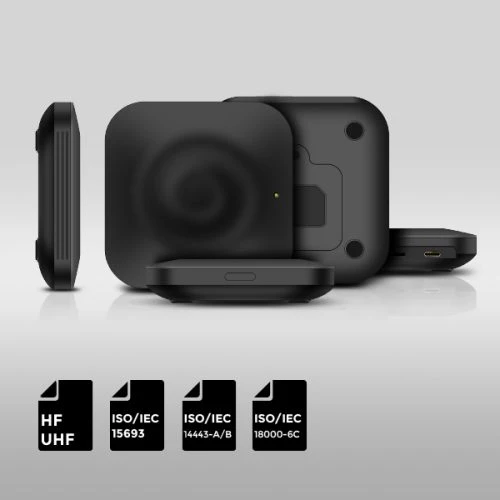
HF+UHF Dual-Band RFID Reader / Writer AZ-R1
This is a high-performance reader/writer with both HF and UHF reading capabilities and supports a variety of protocol standards, such as ISO 18000-6C, ISO 14443 A/B, and ISO 15693. With excellent HF and UHF reading performance, it can achieve UHF tag reading at rapid velocity and maintain a high recognition rate simultaneously. Besides, it is easy to deploy and operate by connecting its USB port to a PC without driver installation. All these make it widely used in various RFID applications such as logistics, access control, anti-counterfeiting, and production process control.