

When buyers request a custom RFID label, one of the most common questions is: why is there an extra RFID label tooling charge?
An RFID label tooling charge is not a hidden fee. It is usually a one-time or project-based cost related to preparing a custom label for production. Depending on the design, it may cover mold preparation, machine setup, material testing, die cutting adjustment, sample runs, or production validation.
For standard RFID labels, this charge may not be needed. But when the label size, shape, material, inlay position, roll format, or cutting requirement is customized, the factory often needs extra preparation before stable mass production can begin.
This article explains what an RFID label tooling charge includes, why it happens, and how flatbed die cutting and rotary die cutting affect the final cost.
What Is an RFID Label Tooling Charge?
An RFID label tooling charge is the cost of preparing the tools, machines, materials, and production process needed to manufacture a specific RFID label design.
In practice, buyers may also hear similar terms such as:
- Mold fee
- Die charge
- Setup fee
- Machine setup cost
- Tooling cost
- Plate or cutting tool cost
These terms are sometimes used together, but they are not always the same.
A mold fee usually refers to the physical cutting tool or die used to cut the label into a specific size or shape. A setup fee is more related to machine preparation, parameter adjustment, material changeover, trial production, and inspection before the order runs smoothly.
For RFID labels, tooling is more sensitive than ordinary printed stickers because the label contains an RFID inlay. The cutting process must avoid damaging the antenna, chip, bonding area, or label structure. A small mistake in the cutting position may affect both appearance and RFID performance.
Why Custom RFID Labels May Require a Tooling Charge

A tooling charge is most common when the label is not a standard size or standard construction.
For example, if a customer requests a UHF RFID label with a special size, PET face material, strong adhesive, printed logo, custom encoding, and a specific roll direction, the factory cannot simply use an existing production setup. The material, inlay, die cutting position, and machine parameters need to be checked together.
Here are the main reasons a tooling charge may be needed.
1. Custom Label Size or Shape
If the label size is not already available in the factory’s existing mold library, a new cutting die may be required.
Standard rectangular labels are usually easier to produce. Special shapes, rounded corners, narrow labels, long labels, or labels with strict edge tolerance may need custom tooling.
The more specific the shape, the more important it becomes to prepare the right die before production.
2. RFID Inlay Positioning
Unlike a regular sticker, an RFID label has an inlay inside. The chip and antenna must sit in the correct position between the face material and liner.
During die cutting, the cutting edge must not hit the antenna or chip area. This means the mold and production layout need to match the inlay placement.
If the customer changes the label size but keeps the same inlay, the factory still needs to confirm whether the antenna fits safely inside the cutting area.
3. Material Changeover and Testing
RFID labels can use different face materials and adhesives, such as paper, PET, PP, synthetic materials, removable adhesive, strong adhesive, or special adhesives for difficult surfaces.
Each material behaves differently during lamination, printing, die cutting, and rewinding.
Some materials are soft and easy to cut. Some are thick, slippery, or more sensitive to pressure. If the label uses a special material, the machine needs testing and adjustment before mass production.
4. Machine Setup and Trial Production
Before full production, the factory may need to run trial sheets or trial rolls to check:
- Cutting depth
- Label edge quality
- Inlay position
- Roll tension
- Adhesive release
- Printing alignment
- Encoding accuracy
- Readability after processing
This setup process takes time and consumes material. Even if the final order quantity is small, the preparation work still has to be done carefully.
5. Small Batch Custom Orders
Small quantity custom orders often feel more expensive because the setup cost is spread over fewer labels.
For example, preparing a mold and adjusting the machine may take the same effort whether the order is 5,000 pieces or 500,000 pieces. In a large order, the tooling cost becomes a very small part of the unit price. In a small order, it is more visible.
This is one reason buyers may see an RFID label tooling charge on custom sample orders or pilot production orders.
RFID Label Tooling Charge vs Mold Fee vs Setup Fee
These terms are closely related, but it helps to understand the difference.
| Term | What It Usually Means | When It Applies |
| RFID label tooling charge | General production preparation cost | Custom size, shape, material, inlay layout, or cutting requirement |
| Mold fee / die charge | Cost of making or using a cutting die | New label size or special shape |
| Setup fee | Cost of machine adjustment and trial production | Material changeover, printing, encoding, lamination, die cutting, or roll format adjustment |
In many quotations, these costs may be combined under one line item called “tooling charge.” In other cases, they may be listed separately.
The important point is not the name of the fee, but what work it covers. A clear supplier should be able to explain whether the charge is for a physical mold, production setup, material testing, or a combination of these steps.
How Die Cutting Affects RFID Label Tooling Charge
Die cutting is the process of cutting the RFID label into its final shape while keeping the liner intact. It sounds simple, but for RFID labels, it needs good control.
The cutting pressure must be deep enough to cut the face material and adhesive layer cleanly, but not so deep that it damages the liner or RFID inlay. The mold also needs to match the layout of the label and the position of the RFID antenna.
Two common die cutting methods are used in RFID label production: flatbed die cutting and rotary die cutting.
Flatbed Die Cutting for RFID Labels
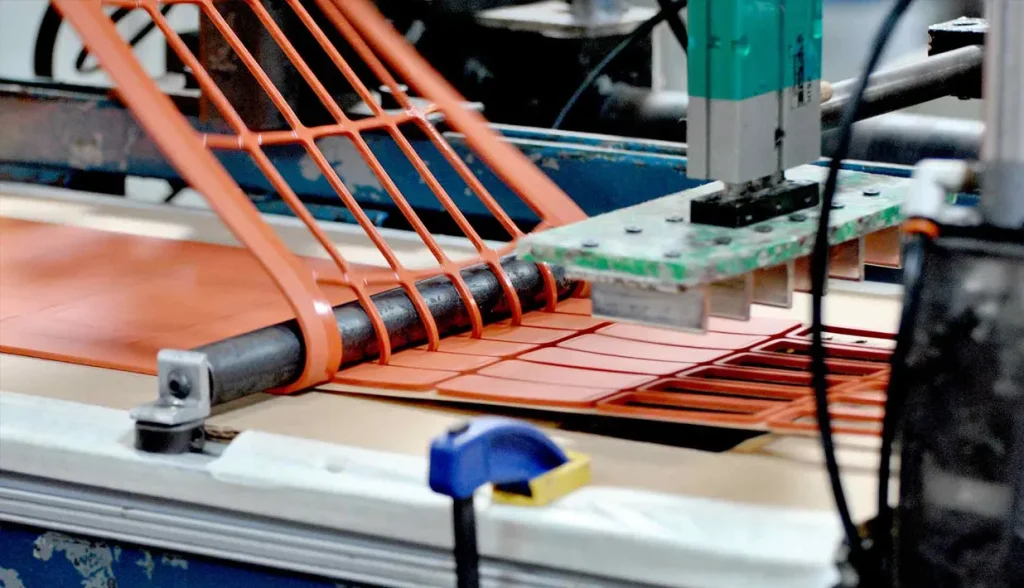
Flatbed die cutting uses a flat cutting die. The material is pressed from top to bottom to complete the cut.
This method is often suitable for small or medium batch custom RFID labels, especially when the label design changes often or the customer needs special shapes.
Advantages of Flatbed Die Cutting
Flatbed tooling is usually more flexible. It is suitable for custom label sizes, short runs, multiple SKUs, sample orders, and labels that require special materials or thicker structures.
For buyers, flatbed die cutting can be a practical choice when the design is still being tested or when the order quantity is not very large.
Limitations of Flatbed Die Cutting
Flatbed die cutting is generally slower than rotary die cutting. It is not always the best choice for very large production volumes where speed and consistency are the main priority.
If the order is highly standardized and the quantity is large, rotary die cutting may be more efficient.
Rotary Die Cutting for RFID Labels
Rotary die cutting uses a cylindrical die. The label material passes through the machine continuously, and the die cuts the labels as the roll moves.
This method is widely used for high-volume RFID label production because it is fast and stable once the tooling and machine settings are ready.
Advantages of Rotary Die Cutting
Rotary die cutting is efficient for large orders. It offers strong consistency, high production speed, and good repeatability. It is often used for standardized RFID labels that need to be produced in large quantities.
It also works well when the label format, material, and inlay structure remain stable across repeated orders.
Limitations of Rotary Die Cutting
The tooling cost for rotary die cutting is usually higher. It is less flexible if the customer frequently changes the label size, shape, or structure.
Rotary dies are also better suited for regular shapes and stable material constructions. For special or changing projects, flatbed tooling may be easier to adjust.
Flatbed vs Rotary Die Cutting: Which One Is Better?
There is no single answer. The right choice depends on the RFID label design, order quantity, material, and production goal.
| Item | Flatbed Die Cutting | Rotary Die Cutting |
| Cutting method | Up-and-down press cutting | Continuous roll-to-roll cutting |
| Best for | Small to medium custom orders | Large-volume standardized orders |
| Tooling flexibility | Higher | Lower |
| Production speed | Medium to slow | Fast |
| Tooling cost | Usually lower | Usually higher |
| Repeatability | Good | Very good |
| Suitable label shapes | More flexible for irregular shapes | Better for regular shapes |
| Material suitability | Good for thicker or special materials | Better for stable, consistent materials |
For many custom RFID label projects, flatbed die cutting is a good starting point. For mature products with stable demand, rotary die cutting may reduce long-term production cost.
Does Every RFID Label Need a Tooling Charge?
No. Not every RFID label requires a tooling charge.
A tooling charge may not be needed if the customer chooses:
- A standard label size
- An existing RFID inlay structure
- A commonly used material
- A standard roll format
- A label shape already available in the factory
- No special printing or finishing requirement
However, even with standard sizes, a setup cost may still apply if the order requires special encoding, printing, inspection, or packaging.
The best way to confirm is to provide complete label specifications before quotation.

Can an RFID Label Tooling Charge Be Reused?
In many cases, yes.
If the same customer places a repeat order using the same label size, same shape, same material structure, and same die cutting requirement, the original mold may be reusable.
However, reuse depends on several factors:
- Whether the mold is still in good condition
- Whether the label size has changed
- Whether the material thickness has changed
- Whether the inlay position is the same
- Whether the production line and roll layout remain compatible
A small change in size or structure may require a new mold or new setup. For example, changing only the printed logo may not require a new cutting die, but changing the label width or corner radius probably will.
Buyers should ask the supplier whether the tooling charge is one-time, reusable for future orders, or project-specific.
How to Reduce RFID Label Tooling Costs
A good supplier should not simply add a tooling charge without explanation. In many cases, there are practical ways to reduce or avoid unnecessary tooling costs.
Use an Existing Label Size When Possible
If your application allows it, choosing a standard size or existing die can reduce tooling cost and shorten lead time.
This is especially useful for early testing, proof of concept, or pilot projects.
Confirm the Application Before Designing the Label
Before deciding the label size, confirm the use case first:
- What surface will the label be attached to?
- Is the surface plastic, cardboard, metal, glass, or textile?
- What read range is required?
- Will the label be exposed to heat, moisture, friction, or chemicals?
- Will it be printed, encoded, or applied automatically?
These details help the supplier recommend a suitable inlay and label structure before tooling begins.
Avoid Frequent Size Changes
Changing label size after mold preparation can create extra cost. It is better to confirm the final size, corner radius, roll direction, and liner requirement before production.
Share Complete Specifications Early
When requesting a quotation, provide as much information as possible:
- Label size
- Label shape
- RFID frequency
- Chip model, if required
- Read range requirement
- Application surface
- Face material
- Adhesive requirement
- Printing artwork
- Encoding requirement
- Quantity
- Roll direction
- Label gap
- Core size
- Packing requirement
The more complete the information, the easier it is to quote accurately and avoid repeated setup changes.

A Practical Example
Suppose a customer requests a custom UHF RFID label for product packaging. The required size is 75 × 25 mm, with PET face material, permanent adhesive, logo printing, EPC encoding, and roll packing for automatic application.
Before production, the factory needs to check whether the selected inlay fits within the label size, whether the antenna position leaves enough safe cutting margin, whether the PET material can be cut cleanly, and whether the roll direction matches the customer’s labeling machine.
If no existing die matches the size, a new mold may be needed. If the material and encoding process require machine adjustment, a setup fee may also apply.
In this case, the RFID label tooling charge is not just for “making a sticker shape.” It helps prepare the label for stable production, proper function, and reliable delivery.
Why a Clear Tooling Charge Builds Trust
For buyers, tooling charges can be frustrating if they are not explained. But when the supplier clearly explains what the charge covers, it helps both sides avoid misunderstanding.
A transparent RFID label quotation should make clear:
- Whether the charge is one-time or recurring
- Whether the mold can be reused
- Whether the cost includes sample testing
- Whether a standard size can avoid the charge
- Whether changing the design later will require new tooling
- Whether the tooling is for flatbed or rotary die cutting
This is especially important for custom RFID labels because the label must look correct and work correctly. A low price is not useful if the label cannot be read reliably, cannot be applied smoothly, or fails during actual use.

Summary
An RFID label tooling charge is not simply an extra cost added to a quotation. It reflects the preparation needed to turn a custom RFID label design into a stable, repeatable, and functional product.
For simple standard labels, tooling may not be necessary. For custom RFID labels with special sizes, materials, inlay layouts, printing, encoding, or die cutting requirements, tooling and setup work are often part of the production process.
For those looking for high quality RFID windshield tags, RFIDLabel provides a wide range of reliable RFID tag solutions designed for vehicle management applications. With competitive pricing, professional technical support, and responsive after sales service, we help customers find the right RFID solutions for their specific needs. Visit rfidlabel.com to explore our RFID windshield tags and discover the ideal solution for your vehicle management projects.
FAQs
1.What is an RFID label tooling charge?
An RFID label tooling charge is a production preparation cost for custom RFID labels. It may cover mold preparation, machine setup, die cutting adjustment, material testing, and trial production before mass production.
2.Is tooling charge the same as mold fee?
Not always. A mold fee usually refers to the cutting die itself. A tooling charge may include the mold fee plus setup work, material testing, trial production, and machine adjustment.
3.Why do custom RFID labels have tooling charges?
Custom RFID labels may require tooling charges because the factory needs to prepare the correct mold, adjust machines, test materials, align the RFID inlay, and make sure the label can be produced reliably.
4.Can the RFID label tooling charge be reused?
In many cases, the mold can be reused for repeat orders if the label size, shape, material, and inlay layout remain the same. If the design changes, new tooling may be required.
5.Which is cheaper, flatbed die cutting or rotary die cutting?
Flatbed die cutting usually has lower tooling cost and better flexibility for small or custom orders. Rotary die cutting is usually more efficient for large-volume standardized orders, but the tooling cost is often higher.
6.How can I avoid an RFID label tooling charge?
You may be able to avoid or reduce the charge by choosing a standard label size, using an existing mold, keeping the design simple, and confirming all specifications before production.
Recommended Product

NXP ICODE® SLIX2 PET+3M adhesive NFC Label 86×54mm

A high-performance, large-format NFC tag designed for smart applications that require a wider read range and high storage capacity. Equipped with the NXP ICODE® SLIX2 chip, it complies with ISO/IEC 15693, ISO/IEC 18000-3, and NFC Forum Type 5 standards, and features excellent read sensitivity and fast response time, making it especially suitable for complex environments and long-distance operations. Its large 86×54mm design optimizes antenna performance for stronger signal coverage and higher reading efficiency. The tag provides 2560 bits of user storage space and supports multiple data formats to meet diverse business needs. Enhanced security features include flexible access control and anti-counterfeiting technology for effective data security and brand protection. Suitable for a wide range of scenarios such as logistics management, product authentication, smart packaging and interactive marketing.

Alien Higgs® 3 Coated Paper + 3M Adhesive UHF RFID Label 4″×1″ | 101.6×25.4mm
Experience superior tracking performance with our UHF RFID Label, powered by the cutting-edge Alien Higgs® 3 chip. Renowned for its high data rate and exceptional read sensitivity, this chip distinguishes our label in the RFID industry. The Higgs® 3 chip supports advanced features such as dynamic authentication and strong memory protection, ensuring both secure and efficient data handling. With ISO18000-6C compliance, it enhances RF performance, enabling high data throughput for seamless and asset tracking.

Alien Higgs® 3 RFID Self-adhesive Label
The Alien Higgs® 3 RFID self-adhesive label is embedded with the advanced Alien Higgs® 3 chip, ensuring high-precision reading. It is compliant with EPC Class 1 Gen 2 and ISO/IEC 18000-6C standards, guaranteeing stable reading capability in various environments. This label provides efficient tracking and management solutions.