

Introduction
In today’s rapidly evolving retail environment, efficiency and accuracy are critical to a company’s success. As one of the world’s largest retailers, Walmart has been at the forefront of technological innovation, aiming to optimize its supply chain and inventory management. One key initiative has been its mandatory requirement for radio frequency identification (RFID) technology. This initiative has not only transformed Walmart’s operational model but has also had a profound impact on suppliers worldwide. This article will delve into the background of Walmart RFID mandate, its impact on the retail industry, and how RFID technology can help businesses enhance operational efficiency and competitiveness.
1. Background and Importance of Walmart RFID Mandate

Walmart’s early exploration of RFID technology dates back to the early 21st century, when it sought to use the technology to address pain points in inventory management, such as stockouts, inventory inaccuracies, and insufficient supply chain visibility. Despite initial challenges, Walmart continued to advance the application of RFID and gradually promoted it as a mandatory requirement for its suppliers.
The importance of this mandatory requirement is self-evident. For Walmart, RFID technology can significantly improve inventory accuracy, thereby reducing stockouts, optimizing product displays, and ultimately enhancing the customer shopping experience. By tracking products in real-time throughout the entire process from suppliers to stores, Walmart can more effectively manage its vast supply chain, reduce operational costs, and improve overall efficiency.
For suppliers, Walmart’s RFID requirement means they must adapt to new technical standards and operational processes. While this may involve initial investment and adjustments, adopting RFID technology will bring numerous benefits to suppliers in the long run. For example, it can improve inventory accuracy, streamline inventory counting processes, reduce human errors, enhance shipping efficiency, and ultimately strengthen partnerships with large retailers like Walmart. Suppliers who fail to comply with these requirements may face risks such as order delays, fines, or even the loss of business opportunities. Therefore, understanding and actively addressing Walmart’s RFID requirements is crucial for suppliers who wish to continue collaborating with Walmart.
2. Advantages of RFID technology in the retail industry
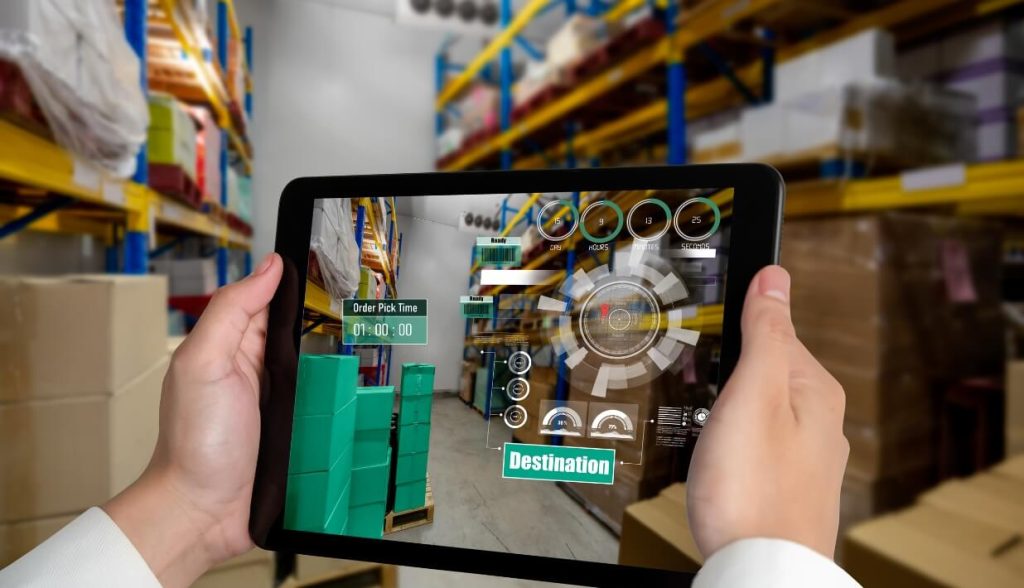
RFID technology has revolutionized the retail industry, offering advantages far surpassing those of traditional barcode systems. Below are the main advantages of RFID in the retail sector:
Improved inventory accuracy: RFID systems can achieve inventory accuracy rates of up to 99%, far exceeding the 65%-75% accuracy of barcodes. This means retailers can gain a more precise understanding of their inventory levels, reducing issues such as stockouts or overstocking caused by inaccurate inventory data. For example, SML’s case study shows that RFID technology can improve inventory accuracy to 93-99%.
Real-time inventory visibility: RFID tags can track products in real time throughout the entire process from warehouse to store to point of sale. Retailers can monitor the location and status of each item at any time, enabling more efficient inventory management and restocking strategies. Impinj notes that with RAIN RFID technology, retailers can view the location of each item at any time with an accuracy rate of up to 99%.
Quick and efficient inventory counting: Unlike barcodes, which require individual scanning, RFID readers can simultaneously read multiple RFID tags, significantly reducing inventory counting time. For example, a publicly listed retail company in Shanghai significantly improved inventory counting efficiency after deploying RFID in its warehouse.
Enhanced supply chain efficiency: RFID technology optimizes the entire supply chain process, from receiving, warehousing, and shipping to distribution, making each step more efficient and transparent. This helps reduce human error, improve logistics speed, and lower operational costs.
Improved customer shopping experience: Accurate inventory information makes it easier for customers to find the products they need, reducing disappointment caused by out-of-stock items. Additionally, RFID technology can support new retail models such as “buy online, pick up in-store” (BOPIS), offering customers greater convenience.
Theft prevention and anti-counterfeiting: RFID tags can be embedded inside products, making them difficult to remove or replicate, thereby helping to prevent product theft and the circulation of counterfeit goods. RFID technology uses digital encryption to prevent data leaks or tampering, ensuring the security of inventory data.
Data Analysis and Decision Optimization: The vast amount of data collected by RFID systems can be used for in-depth analysis of sales trends, customer behavior, and inventory turnover rates, providing retailers with valuable insights to optimize product procurement, marketing strategies, and store operations.
These advantages collectively form the irreplaceable value of RFID technology in the retail industry, making it a key tool for enhancing corporate competitiveness.
3. RFID and Barcodes: A Technical Comparison
To better understand the advantages of RFID technology, we can compare it with traditional barcode technology. Although barcodes have played an important role over the past few decades, RFID demonstrates superior capabilities in many areas.
| Features | RFID (radio frequency identification) | Barcode (optical identification) |
| Reading method | No line of sight required, can read multiple tags in batches | Line of sight required, must scan one tag at a time |
| Reading speed | Extremely fast, can read hundreds of tags per second | Relatively slow, reads one tag at a time |
| Data Capacity | Large, can store more information (e.g., production date, batch number, serial number) | Small, typically only stores product identification codes |
| Read/Write Capability | Most RFID tags are read/write, allowing information to be updated | Typically read-only, with fixed information |
| Durability | High, resistant to dirt and wear | Low, susceptible to dirt and wear |
| Security | Can be encrypted, difficult to counterfeit | Easy to copy, lower security |
| Cost | High initial investment for tags and readers | Lower cost for tags and readers |
| Application scenarios | Inventory management, supply chain tracking, asset management, anti-counterfeiting, smart payments | Point-of-sale scanning, product identification, simple inventory management |
| Inventory accuracy | Up to 99% | 65%-75% |
As shown in the table above, RFID technology offers significant advantages in terms of automation, data richness, efficiency, and accuracy, making it an ideal choice for modern retail and supply chain management.
4. Challenges and Solutions in RFID Implementation

Although RFID technology offers numerous advantages, businesses may still face some challenges during actual implementation. Understanding these challenges and developing corresponding solutions is crucial to ensuring the success of RFID projects.
Challenges:
Initial investment costs: The initial investment in RFID tags, readers, software systems, and integration services is relatively high, which may be a burden for some small and medium-sized enterprises. However, it is important to recognize that this investment typically pays off in the long term through improved efficiency and cost savings.
Technical Complexity: The deployment and integration of RFID systems involve multiple aspects such as hardware, software, networking, and data management, requiring a high level of technical expertise. Businesses may need the assistance of professional RFID solution providers to ensure the smooth implementation and stable operation of the system.
Data Management and Integration: RFID systems generate a large volume of data. Effectively managing, analyzing, and seamlessly integrating this data with existing enterprise resource planning (ERP) or warehouse management systems (WMS) is another challenge that needs to be addressed.
Tag Performance and Environmental Interference: The read performance of RFID tags may be affected by environmental factors such as metal and liquids. In complex retail environments, it is necessary to select appropriate tag types and readers and conduct thorough on-site testing to ensure read accuracy and stability.
Employee Training and Adaptation: The introduction of new technology systems requires comprehensive training for employees to familiarize them with RFID device operations and new workflows. Employee acceptance and adaptability will directly impact the success of the RFID project.
Solutions:
Phased Implementation: Businesses can consider implementing RFID projects in phases, starting with pilot projects and gradually expanding the scope of application. This helps control initial investment, accumulate experience, and gradually optimize the system.
Selecting Reliable Partners: Collaborating with experienced RFID solution providers can provide professional consulting, technical support, and customized services, thereby reducing implementation risks.
Standardization and compatibility: Ensure that the selected RFID solution complies with industry standards (such as EPC Gen 2v2) and is compatible with existing systems to avoid data silos and integration challenges.
Optimize tag selection and deployment: Select the most suitable RFID tag type (such as anti-metal tags, flexible tags, etc.) based on the material, packaging, and storage environment of the goods, and ensure proper tag placement to maximize read performance.
Continuous Training and Support: Provide ongoing training and technical support to employees, address issues they encounter during operations, and encourage them to provide feedback to continuously improve systems and processes.
By proactively addressing these challenges and implementing effective solutions, businesses can fully leverage the potential of RFID technology to achieve significant improvements in operational efficiency.
Conclusion
Walmart’s mandatory RFID requirement is not only a significant step toward optimizing its own supply chain but also a microcosm of the future trends in the retail industry. For RFID labels, we understand that providing customers with high-quality, customized RFID products and solutions is crucial in this transformative process. We operate five production lines, ensuring industry-leading quality, and offer custom logos and shapes, as well as optional eco-friendly materials, to meet the diverse needs of clients in major export markets such as North America, Europe, and Australia.
Addressing Walmart’s RFID mandate is not merely about compliance; it is a golden opportunity to enhance competitiveness through technological upgrades. If you are seeking a reliable RFID product supplier or have any questions about effectively implementing RFID solutions, please visit our official website at www.rfidlabel.com. We look forward to collaborating with you to embrace the new business opportunities brought by RFID technology.
Recommended Product