
ARC-certified RFID Labels
Certified For Precision,
Trusted For Performance




Types of ARC Certified Labels and Application Scenarios

F
Apparel/Home

H
High Density Apparel

I
Apparel ETSI

L
Intimates Apparel

O
Sporting Good, Crafts, Stationary

Q
Accessories

R
Apparel and Footwear

W5
Sunglasses, Accessories

W6
Jewelry

Y2
Electronics,Toys

Z
QSR (food)
Avery Dennison® ARC-Certified Labels
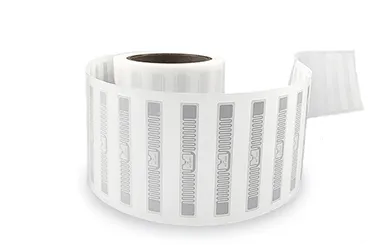
ARC-certified RFID labels are categorized based on specific performance benchmarks tailored to various product types and applications. Each specification ensures optimal label performance for different industries and environments.
What is ARC certification?
ARC Certification is issued by Auburn University’s RFID Lab, a globally recognized authority in RFID technology. It is a globally recognized standard, achieved by subjecting RFID labels to rigorous testing based on specific performance benchmarks, including read range, durability, and system compatibility.
Products that receive ARC Certification meet specific performance criteria across various fields and are ensured to have outstanding quality, performance, and reliability. This label guarantees that the tags will function effectively in real-world applications, providing businesses that rely on RFID technology with enhanced reliability and peace of mind.

Why select ARC-certified label?
ARC labels have been tested in multiple simulation scenarios, and have demonstrated excellent and stable performance in terms of read range, anti-interference ability and environmental adaptability. In contrast, ordinary RFID labels lack the same level of testing, making it difficult to maintain stable performance in complex environments. For applications requiring high precision and reliability, ARC labels are superior and support large-scale deployment.
Why does Walmart favour the use of ARC-certified labels?
Retail giants like Walmart require suppliers to use ARC-certified RFID labels to ensure consistency and reliability in their vast supply chain management. By enforcing ARC Certification, Walmart can guarantee that the RFID labels used meet high standards for accuracy and compatibility, ultimately benefiting both Walmart and its suppliers through smoother and more reliable product tracking.
Programming & Coding
01
Programming equipment preparation
Firstly, the user needs to ensure that the RFID reader or programming device used is compatible with the ARC labels. Common devices include fixed and handheld RFID encoders. Next, install and configure the appropriate RFID programming software that will be used to write the required data to the label.
02
Programming steps
After starting the programming software, establish communication between the RFID reader and the ARC label to ensure that the label is working properly and can read its basic information.
In the software, key data such as EPC, GTIN, serial number, product ID and batch number are entered sequentially. Each label should have a unique identifier to avoid data conflicts.
Next, the entered data is batch-written to the memory chip of the ARC label, usually by clicking the ‘Write’ button.
Depending on requirements, users can also add data protection features to the label, such as access control or encryption.
Finally, use the RFID reader to read the label again to ensure that the data is written accurately.


03
Installation and labeling guide
To ensure that users’ ARC labels have the best reading and data tracking performance, we provide the following guidelines for ARC label installation:
Label location
ARC labels are usually attached to the front or side of the package and are placed as far away as possible from metals, liquids, and other materials that may interfere with RFID signals.
Surface requirement
Before applying a label, users must ensure that the surface is clean and without dust, oil or other debris. In addition, the label must be adhered smoothly to the surface to avoid wrinkles, bubbles or damage.
Label angle and orientation
When installing the label, the user should attach it at the specified angle and direction, aligning the label with the antenna of the RFID reader.
04
Reading test
After the user completes the labeling, we recommend that you conduct a reading test on the label to ensure that the label works properly in different operating environments.

FAQs
The minimum order quantity varies depending on the tag type, but typically starts at 1,000 units.