


The challenge of RFID metal interference has long been a significant hurdle in deploying robust identification and tracking systems. For years, metal surfaces were considered the nemesis of reliable RFID performance, often causing signal reflection, absorption, and dead zones. However, through continuous innovation and advanced engineering, we have developed specialized on-metal RFID labels and tags that not only overcome these limitations but also achieve impressive read ranges, sometimes extending up to 10 meters. This breakthrough transforms what was once a complex problem into a practical and highly effective solution for various industries.
Understanding the Interaction: Why Metal Affects RFID Signals
RFID technology relies on radio waves to communicate between a reader and a tag. When these radio waves encounter metal, they behave differently than in free air.
The Physics of Reflection and Absorption
Metal is an excellent conductor of electricity. When an RFID signal hits a metal surface, it can be reflected, much like light off a mirror. This reflection can cause the signal to bounce back to the reader prematurely, interfere with the tag’s antenna, or create multiple signal paths that confuse the reader. Additionally, metal can absorb some of the radio frequency energy, weakening the signal and reducing the effective read range. This phenomenon is at the heart of RFID metal interference.

The Breakthrough: Specialized On-Metal RFID Tags
To counteract the effects of RFID metal interference, engineers developed on-metal RFID tags. These tags are specifically designed with unique features that allow them to perform optimally even when directly mounted on metallic surfaces.
How On-Metal Tags Work: The Science Behind the Solution
The secret to on-metal tag performance lies in their ingenious design, which effectively isolates the tag’s antenna from the metal surface.
The Role of the Air Gap and Insulating Layers
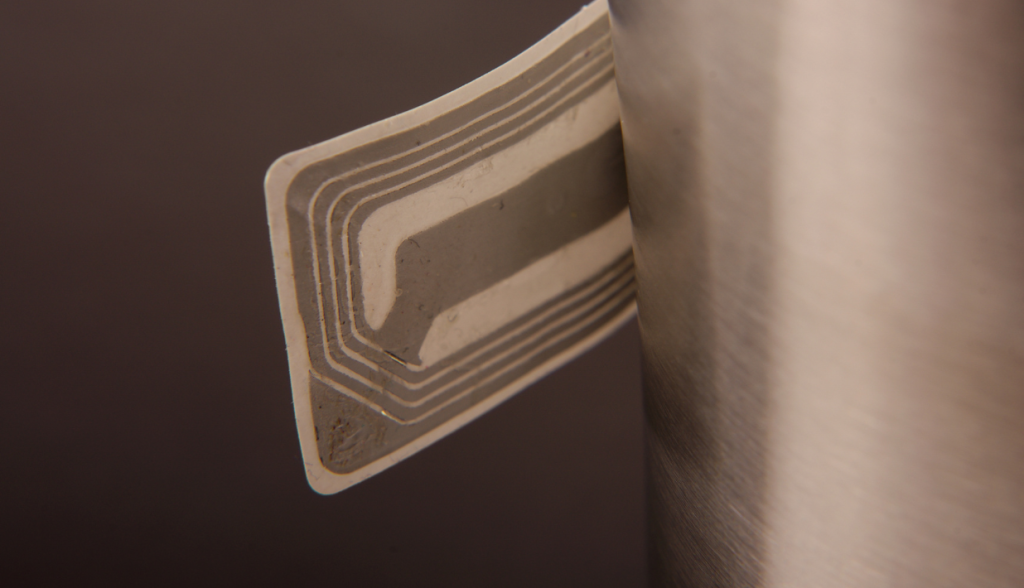
A critical component of on-metal tags is an integrated insulating layer, often referred to as a “standoff” or “air gap.” This layer creates a small, controlled distance between the tag’s antenna and the metal object. This physical separation prevents the metal from detuning the antenna and ensures the radio waves can propagate freely, minimizing signal reflection and absorption.
Advanced Materials and Antenna Design
Beyond the air gap, on-metal tags incorporate specialized materials and optimized antenna designs. These materials are chosen for their dielectric properties, which further reduce interference. The antenna itself is often designed to be less susceptible to the proximity of metal, ensuring efficient energy transfer and signal reception. This meticulous engineering allows for consistent and reliable performance, even in environments prone to RFID metal interference.
Practical Applications of On-Metal RFID Solutions
The ability of on-metal RFID tags to perform reliably on metallic surfaces has opened up a vast array of practical applications across numerous sectors.
Asset Tracking in Industrial Environments
In manufacturing plants, warehouses, and data centers, where equipment, tools, and inventory are predominantly metallic, on-metal RFID tags are indispensable. We can efficiently track high-value assets like machinery, IT equipment, and metal containers, ensuring accurate inventory records and streamlined operations.
Inventory Management on Metal Shelving
Retail and logistics operations often utilize metal shelving for storage. On-metal RFID labels allow for precise inventory management, enabling quick and accurate stock counts without manual scanning, even when items are densely packed on metal racks.

Key Benefits of Deploying On-Metal RFID
Implementing on-metal RFID solutions offers significant advantages for businesses seeking to enhance their tracking and management capabilities.
Enhanced Read Range and Accuracy
Unlike conventional tags that struggle on metal, specialized on-metal tags provide impressive read ranges, often reaching up to 10 meters, and maintain high accuracy, reducing errors and improving data integrity.
Durability and Longevity
Designed for harsh industrial environments, on-metal tags are typically robust, resistant to extreme temperatures, chemicals, and physical abrasion, ensuring a long operational lifespan.
Choosing the Right On-Metal RFID Solution
Selecting the appropriate on-metal RFID tag depends on several factors, including the specific application, read range requirements, environmental conditions, and the size of the metallic asset. We offer a wide range of customizable on-metal solutions to meet diverse needs.

Real-World Success: RFID in Data Centers
A prime example of overcoming RFID metal interference is the successful deployment of RFID technology in data centers.
Case Study: Orange Manages Data-Center Assets via RFID
European network operator Orange successfully implemented RFID technology to manage IT assets at its Val de Reuil data center. They utilized passive UHF RFID on-metal tags for servers and racks, achieving an impressive 99% accuracy in their asset inventory. This solution significantly streamlined their asset management processes, which previously relied on manual counts. The ability of these on-metal tags to perform reliably in a metal-rich data center environment demonstrates their effectiveness in overcoming signal interference and providing accurate, real-time asset visibility.

Conclusion: Your Partner in Overcoming RFID Metal Interference
The advancements in on-metal RFID technology have effectively neutralized the challenges posed by RFID metal interference, opening up new possibilities for efficient and accurate asset tracking and inventory management across metal-rich environments. From industrial machinery to IT infrastructure, these specialized tags provide reliable performance and extended read ranges, transforming operational efficiency. We are committed to providing high-quality, customizable RFID solutions that meet the unique demands of your business. To explore our comprehensive range of RFID cards, tags, and custom solutions, or to learn more about how we can help you overcome your specific RFID challenges, please visit us at rfidlabel.com.





