
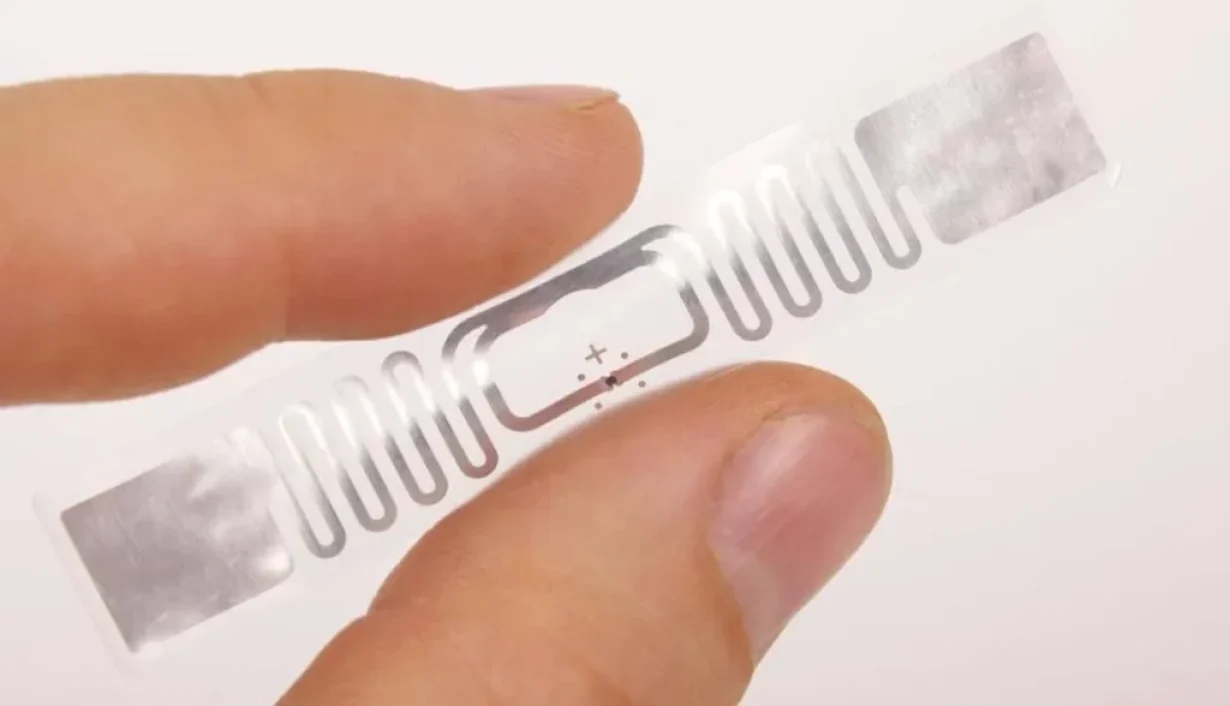

In today’s digital age, radio frequency identification (RFID) technology has penetrated into every aspect of our lives, from daily shopping to logistics management, its figure is everywhere. However, along with the popularity of this technology, a common question has also emerged: whether RFID tags can track the location of items or people in real-time, just like the Global Positioning System (GPS). Much of this concern stems from a misunderstanding of the principles of RFID technology and exaggerated media coverage. This article aims to explore the ability of RFID tags track location, reveal the truth behind them, and clarify common misconceptions to help readers gain a more comprehensive and objective understanding of the technology.
What is RFID?

RFID is a non-contact automatic identification technology. It through the radio frequency signal automatically identifies the target object and obtains relevant data, identifies work without human intervention, and can work in a variety of harsh environments. A typical RFID system usually consists of the following three main parts:
RFID Tag:Consisting of coupling elements and chips, each tag stores a unique identification code and related data. The tag can be passive (no battery, obtains its energy through electromagnetic waves emitted by the reader), active (has its battery and can actively emit signals) or semi-active (has its battery, but works only when activated by the reader).
RFID Reader:A device used to read or write tag information. The reader transmits an RF signal through an antenna to activate the tag and receive the data returned by the tag.
Antenna:Used to transmit RF signals between the tag and the reader.
The core of RFID technology lies in its non-contact data exchange capability, making item identification and data collection efficient and convenient.
RFID tags’ ability to locate: truths and misconceptions
Regarding the question of whether RFID tags can track location, the answer is not simply “yes” or “no”, but depends on the type of RFID tag and the system environment in which it is used. We need to distinguish between the concepts of “localization” and “tracking”.
Localization:refers to the determination of the position of an object in a specific area, usually relative position or regional position.
Tracking:refers to real-time, continuous monitoring of an object’s trajectory at different points in time.
Positioning capabilities of different types of RFID tags
RFID tags can be broadly categorized into the following three types according to their power supply method and communication range, and their positioning capabilities are therefore different:
Passive RFID Tags
Features: no battery, energy comes from the RF signal sent out by the reader. Low cost, compact size and long life.
Positioning capability: Due to their limited operating range (usually from a few centimetres to a few meters), passive tags themselves cannot actively send location information. They can only be recognized when they enter the reading range of the reader. As a result, passive RFID tags are primarily used for area identification or presence detection, such as in warehouses to confirm that an item is on a particular shelf, or at store entrances for anti-theft detection. It does not provide accurate real-time location tracking, let alone localization in areas not covered by readers.
Active RFID Tags
Features: built-in battery, can actively transmit signals, communication distance is relatively long (up to tens of meters or even hundreds of meters). Relatively high cost, large size, and limited battery life.
Positioning Capability: Active tags can periodically transmit signals, combined with multiple readers or positioning base stations deployed in the environment, can achieve regional positioning or rough real-time positioning through techniques such as signal strength (RSSI), time of arrival (ToA) or time difference of arrival (TDoA). For example, in large factories or hospitals, active RFID tags can be used to track the approximate location of equipment or personnel, but their accuracy is usually not able to reach below the meter level, nor can they be localized in a wide outdoor area like GPS.

Difference between RFID and GPS and other positioning technologies
To better understand the positioning capabilities of RFID, it is necessary to compare it with common positioning technologies such as Global Positioning System (GPS):
| Characteristics | RFID technology (mainly active RFID) | GPS (Global Positioning System) | Wi-Fi positioning | Bluetooth positioning (BLE) |
| Positioning principle | Based on RF signal strength, time of arrival or area identification | Receive satellite signals and calculate position by trilateration | Based on Wi-Fi signal strength or fingerprint identification | Based on Bluetooth signal strength or AoA/AoD |
| Coverage | Localized, dependent on reader deployment, typically effective indoors or within a specific area | Global, best performance in open outdoor areas | Localized, dependent on Wi-Fi hotspot deployment, indoors and outdoors | Localized, dependent on Beacon or Bluetooth device deployment, typically effective indoors |
| Positioning Accuracy | Regional to meters (active), centimeters (passive, proximity only) | Meters to sub-meters (civil), centimeters (high-precision GPS) | A few meters to tens of meters | A few meters to sub-meters |
| Real-time | Higher, but affected by reader coverage and system refresh frequency | Higher, but affected by signal occlusion and time to first location | Higher, but affected by hotspot density and signal stability | Higher, but affected by beacon density and signal stability |
| Infrastructure | Requires deployment of readers and antennas | Requires reception of satellite signals (satellite as infrastructure) | Requires deployment of Wi-Fi hotspots | Requires deployment of Bluetooth Beacons or Bluetooth devices |
| Privacy Implications | Regional identification, which may involve regional movement of items or people | Personal location information can be recorded and tracked | Personal location information can be recorded and tracked | Personal location information can be recorded and tracked |
| Typical Applications | Warehouse inventory management, asset tracking, access control, production line management | Vehicle navigation, outdoor sports tracking, geo-mapping | Indoor navigation, mall traffic analysis, asset management | Indoor navigation, asset tracking, people management, smart retailing |
As can be seen from the table above, there are significant differences in principle, coverage and accuracy between RFID technology and wide-area positioning technologies such as GPS, which provides precise geographic coordinates globally through the reception of signals from satellites, while RFID’s positioning capability is highly dependent on the density and type of deployment of the readers, and its scope of action is usually limited to the specific area covered by the readers. Therefore, it is a common misconception to compare RFID tags to GPS trackers.
Conclusion
In summary, RFID tags are not “tracking devices” in the general sense, and their positioning capabilities are limited by a variety of factors, especially passive RFID tags, whose role is more focused on identification and regional management in the near distance. RFID tags are confused with GPS and other wide-area positioning technologies, which is a misunderstanding of their technical principles. While active RFID tags can achieve a degree of localization and tracking in specific scenarios, this is usually in a controlled, pre-deployed reader infrastructure and the accuracy and coverage is nowhere near that of GPS.
Concerning privacy, RFID technology does present new challenges, but the industry and the technology itself are constantly evolving and working to protect user privacy through encryption, disabling features, and laws and regulations. RFIDLabel has always been committed to delivering products that meet industry standards and focus on data security and privacy protection. Our RFID products and solutions are designed to provide customers with an efficient, convenient and secure application experience.
Recommended Products

UHF RFID Handheld Reader AZH-P1
Elevate asset management with the Android-powered UHF RFID Handheld Reader AZH-P1. Featuring a robust Cortex-A53 2.3 GHz Octa-core processor, 8000mAh battery, and advanced Impinj E710 reader chip, it offers superior UHF RFID scanning. With a read/write range up to 15 meters and rapid read rate of 1300+ tags/sec, it’s ideal for retail, warehousing, and fleet management.



