


Introduction
In modern apparel retail, efficiency and accuracy are considered the cornerstones of success. To meet these stringent demands, Radio Frequency Identification (RFID) technology has been widely adopted as a critical tool for inventory management and supply chain optimisation. For enterprises such as renowned hotel chains, major distributors, retail giants (like Walmart and Costco), and apparel brands utilizing RFID labels (including Uniqlo, Zara, Nike, Adidas, etc.), understanding the inner workings of RFID labels is essential.
The RFID label, this seemingly simple component, is actually a precision engineering marvel. It is designed to withstand the harsh environments of the apparel supply chain—from factory production lines to retail store checkout counters, and even multiple washes in consumers’ homes. This article aims to delve into the internal structure, core components, and practical lifespan of apparel RFID labels, providing a solid technical foundation for your procurement decisions about RFID for apparel.
Part One: Internal Structure of RFID Labels—Three Core Elements
A standard passive apparel RFID label typically consists of three fundamental components: the chip, the antenna, and the substrate. The synergistic interaction of these three elements enables the label to communicate with a reader without an internal power source.
Chip (Integrated Circuit, IC)
The chip serves as the “brain” of the RFID label. It is a miniature integrated circuit responsible for storing and processing data.
Data Storage: The chip integrates memory to store unique item identifiers (e.g., EPC codes), production batches, dimensions, colors, and other critical information. This data remains accessible for reading and updating throughout the label’s entire lifecycle.
Communication and Control: The chip contains control logic and RF interface circuits. When the label enters the reader’s RF field, it is activated by induced current and transmits modulated data back to the reader according to predefined protocols.
Type Selection: In the apparel industry, UHF RFID chips are widely used due to their long read range and fast read speed. Chip selection directly impacts label performance and cost.
Antenna
The antenna serves as the “ears” and “mouth” of the RFID label. Its primary functions are to receive RF energy emitted by the reader and transmit data generated by the chip back to the reader.
Energy Harvesting: Passive RFID labels lack batteries. The antenna captures RF energy emitted by the reader through electromagnetic induction, converting it into electrical power to supply the chip.
Signal Transmission: The antenna’s dimensions and shape are precisely engineered to match specific operating frequencies (e.g., 860-960 MHz for UHF). In apparel labels, antennas are typically made from conductive materials like aluminum, copper, or silver, attached to the substrate via etching or printing processes.
Performance Impact: Antenna design is critical for determining label read range and directionality. For apparel applications, antennas must be sufficiently robust to withstand bending and pressure during handling and transportation.
Substrate and Encapsulation
The substrate serves as the carrier for the chip and antenna, while encapsulation determines the label’s durability and application form.
Substrate Materials: Common substrates include PET (polyethene terephthalate), paper, or various flexible plastics. For apparel labels, flexible and durable materials are typically used to ensure the label adheres to garments without affecting wear or handling.
Encapsulation Forms: Apparel RFID labels come in diverse encapsulation forms, including:
Hang Tag: The most common form, where the tag is embedded within a paper or plastic hang tag.
Woven/Laundry Label: The label is encapsulated within heat-resistant, chemical-resistant textile material and can be sewn into the garment interior for long-term tracking and laundry management.
Sticker Label: Used for packaging or temporary asset management.
Part Two: Technology Comparison—Advantages of Passive UHF RFID
Among various RFID technologies, passive ultra-high frequency (UHF) RFID has become the preferred choice for the apparel retail industry due to its unique performance advantages. The table below compares the key differences between UHF RFID and traditional barcodes, as well as low-frequency (LF)/high-frequency (HF) RFID, in apparel applications.
| Features | Passive UHF RFID labels (apparel applications) | Traditional barcodes (e.g., 1D/2D codes) | LF/HF RFID labels (e.g., access cards) |
| Reading Methods | Batch reading (hundreds of labels within seconds) | Individual scanning (requires line-of-sight alignment) | Individual reading (requires close proximity) |
| Reading Distance | Long-range (up to several meters) | Zero-distance (contact or extremely close proximity) | Short-range (typically less than 1 meter) |
| Data Storage | Can store unique ID and product information (read/write) | Stores limited information only (typically read-only) | Can store small amounts of data (read/write) |
| Resistance to Surface Damage | Strong (labels can be concealed, unaffected by surface damage) | Weak (Surface contamination or folding may impair reading) | Strong (labels can be encapsulated) |
| Application Scenarios | Supply chain management, rapid inventory, theft prevention, retail experience | Point-of-sale (POS) checkout, basic inventory management | Access control, payments, library management |
| Cost-Effectiveness | Higher initial cost, but significant long-term operational benefits | Extremely low cost | Moderate cost |
UHF RFID technology has demonstrated unparalleled advantages in achieving enhanced inventory management and improved supply chain visibility. Retailers can track the location of every item in real time with up to 99% accuracy, significantly reducing stockouts and overstock situations.
Part Three: Lifespan and Durability—A Lasting Investment
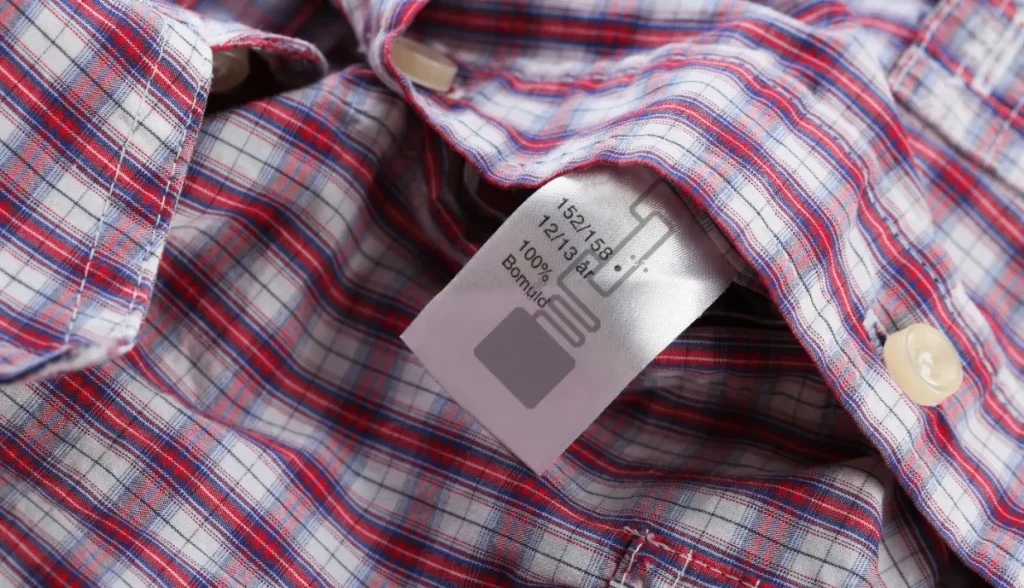
For any enterprise-level procurement, return on investment (ROI) is a core consideration. The lifespan and durability of apparel RFID labels directly determine their long-term value.
Expected Lifespan of Labels
The lifespan of RFID tags primarily depends on their type and operating environment.
Passive Labels: Without an internal power source, passive UHF RFID labels offer exceptionally long theoretical lifespans. Under ideal storage conditions—stable temperature and humidity, no physical damage—high-quality tags can last nearly 10 years or longer. This means their lifespan will far exceed the sales cycle of the garments they track if used solely for supply chain management.
Active Labels: Active labels contain batteries, limiting their lifespan to the battery’s charge capacity, typically 3 to 5 years. However, active labels are uncommon in apparel retail, primarily used for large assets or scenarios requiring ultra-long-range tracking.
Durability Challenges in Extreme Environments
Apparel RFID Labels must withstand various challenges throughout their lifecycle, from manufacturing to retail, particularly washing and dry cleaning.
Washability: RFID labels specifically designed for apparel, particularly sew-in or iron-on washable labels, are engineered to withstand repeated washing cycles, high temperatures, and chemical detergents. These labels typically employ specialized encapsulation technologies, such as thermoplastic polyurethane (TPU) or silicone, to shield the internal chip and antenna from water, heat, and detergent exposure.
Physical Stress: During transportation, handling, and inventory processes, labels may endure bending, compression, and friction. High-quality label designs account for antenna flexibility and the stability of chip-to-antenna connections to ensure functionality under physical stress.
Key Factors Affecting Lifespan
The actual lifespan of a label is influenced by several critical factors:
| Influencing Factors | Description | Countermeasures |
| Physical Damage | Labels torn, excessively bent, or punctured during handling. | Use more durable encapsulation materials; embed labels into hangtags or sew them into concealed areas of garments. |
| Chemical Corrosion | Labels exposed to strong acids, strong alkalis, or industrial detergents. | Employ chemically resistant encapsulation materials (e.g., TPU); ensure labels meet washing standards. |
| Temperature and Humidity | Extreme high or low temperatures, and high-humidity environments. | Select chips and substrates with wide operating temperature ranges; conduct rigorous environmental testing. |
| Electrostatic Discharge (ESD) | Chips subjected to electrostatic shocks during contact or handling. | Incorporate ESD protection circuits into label design; implement anti-static measures during handling. |
Recommendation: When selecting suppliers, request detailed durability test reports including data on wash cycle endurance, temperature tolerance range, and drop resistance testing. This ensures the purchased labels meet your supply chain and product lifecycle requirements.
Part Four: Application Scenarios of RFID in Apparel—From Factory to Retail Store

The application of RFID technology in the apparel supply chain has transcended simple inventory counting, reshaping the entire retail ecosystem.
Supply Chain and Warehouse Management
In factories and distribution centers, RFID technology enables automation and high efficiency.
Rapid Receiving and Shipping: When goods arrive at or depart from warehouses, RFID gates or handheld readers enable bulk scanning without opening boxes, significantly reducing receiving and shipping times while improving data accuracy.
Precise Inventory Counting: Tasks that once took hours or days can now be completed in minutes. This achieves a significant increase in inventory accuracy, reducing “ghost inventory” and stockouts.
Retail Store Operations
In retail stores, RFID applications directly enhance customer experience and operational efficiency.
Smart Fitting Rooms: Readers inside fitting rooms identify garments brought in by customers and display relevant information on the mirror surface (e.g., styling suggestions, availability of other colors or sizes), thereby enhancing the shopping experience.
Loss Prevention and Security: RFID labels can integrate with Electronic Article Surveillance (EAS) systems. When unpaid items are taken through store exits, the system triggers an alarm, ensuring merchandise security.
Express Checkout: At the point of sale (POS), RFID readers can simultaneously scan all labels in a shopping basket, streamlining checkout and boosting customer satisfaction.
Full Lifecycle Management
For premium brands or garments requiring recycling, RFID labels enable end-to-end lifecycle tracking.
Traceability: Labels record manufacturing locations, material composition, sales dates, and even wash/repair histories. This supports brands’ commitments to product quality and sustainability.
Resale & Recycling: In secondhand markets or recycling processes, RFID labels enable rapid authentication and history verification, accelerating circular economy development.
Conclusion
RFID technology is no longer the future of retail—it’s the standard configuration of today. For businesses seeking to optimize operations, enhance inventory accuracy, and ultimately boost customer satisfaction, investing in high-quality RFID tags is considered a strategic decision.
By gaining a deep understanding of the internal structure of RFID labels—the chip, antenna, and substrate—you can better evaluate products from different suppliers. Choosing a partner that offers industry-leading quality, custom logos and shapes, and optional eco-friendly materials is key to ensuring the success of your RFID solution.
Contact RFIDLabel today to discuss your specific project requirements. Our professional products and services will significantly enhance your supply chain efficiency and retail operations.
Recommended Product





