
Introduction
In today’s rapidly evolving event management landscape, the adoption of contactless technology has become an unstoppable trend. As global demands for safety, efficiency, and hygiene continue to rise, RFID (Radio Frequency Identification) technology is rapidly replacing traditional paper tickets and QR codes to become the solution of choice for large-scale events of all kinds. Whether it’s music festivals, sporting events, or high-end industry conferences, organisers are actively seeking smarter methods of access control and audience engagement. This shift not only enhances the participant experience but also delivers unprecedented operational efficiency and data insights to event organisers.
In this article, we will explore why the demand for RFID tickets is experiencing rapid growth and how this technology is revolutionising the standards of modern events. By analysing its advantages in admission speed, security, cashless payments, and data collection, you will understand why RFID is a key cornerstone for the success of future events.
How RFID Technology Is Revolutionizing the Event Entry Experience

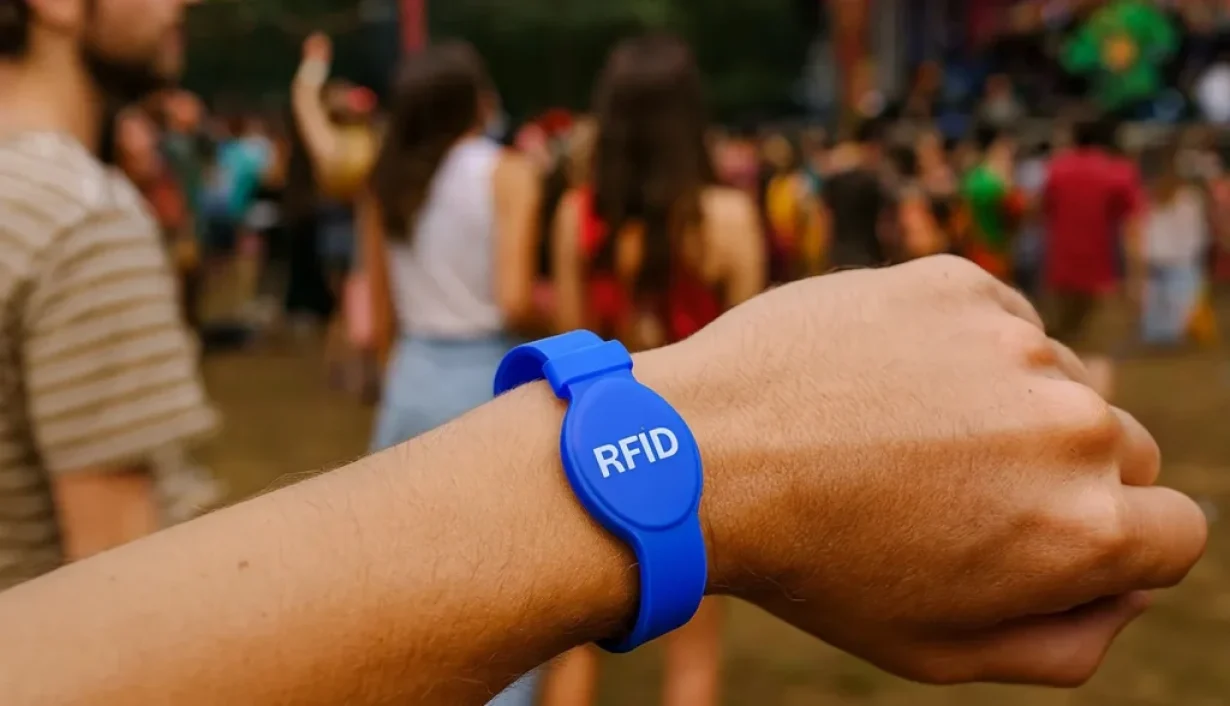
Traditional paper tickets or mobile QR code scanning often cause significant congestion at entry points. The scanning process typically requires each ticket to be manually aligned with a scanner and is susceptible to issues such as lighting conditions, screen brightness, or physical damage to the ticket. In contrast, RFID tickets operate on a “tap-and-go” contactless principle. Each RFID tag—whether embedded in a wristband, card, or ticket—contains a tiny chip and antenna. The authentication process is completed instantly when the tag is brought near a reader. Since this technology does not require line-of-sight alignment, entry is achieved quickly with a simple wave of the wristband or card.
Industry data indicates that RFID systems typically process entry 30% to 50% faster than traditional scanning methods. This increase in efficiency is crucial for managing large-scale events with tens of thousands of attendees. It not only reduces wait times but also significantly eases the burden on on-site staff. To illustrate this difference more clearly, the table below compares the performance of RFID tickets and traditional tickets across key operational metrics.
| Evaluation Criteria | Traditional Paper/QR Code Tickets | RFID Contactless Tickets |
| Entry Processing Speed | Slow (requires precise alignment for scanning) | Extremely fast (proximity sensing, tap-and-go) |
| Anti-counterfeiting Security | Low (easily copied or forged) | Extremely high (built-in encrypted chip, cannot be cloned) |
| Durability and Water Resistance | Poor (prone to tearing, susceptible to water) | Excellent (waterproof, wear-resistant, suitable for multi-day events) |
| Cashless Payment Integration | Not supported (requires additional system) | Native support (can be linked to an account for purchases) |
| Real-time Traffic Monitoring | Difficult (limited to entry data) | Simple (can track real-time crowd distribution across zones) |
| Re-entry Management | Cumbersome (requires a stamp or re-scanning) | Automated (the system automatically records entry and exit status) |
Enhanced security and anti-counterfeiting features
At any large-scale event, security is always considered a top priority. Traditional tickets are highly susceptible to counterfeiting or illegal duplication. This not only results in revenue loss for organisers but can also create safety hazards due to overcrowding. RFID tickets solve this problem through their unique digital fingerprints. Each RFID chip is assigned a globally unique UID (Unique Identifier) during production. Additionally, data is protected by complex encryption algorithms. This means that every ticket is unique and cannot be cloned.
Furthermore, RFID systems effectively curb ticket scalping. By linking RFID wristbands or cards to the holder’s personal information, organisers can ensure the legitimate use of tickets. If a ticket is lost or stolen, the system can immediately invalidate it in the back-end and issue a new credential to the customer. This level of security control is unimaginable in traditional ticketing systems. For well-known hotel brands or distributors, providing such highly secure admission credentials also serves as a reflection of their brand reputation.
Cashless Payments: A New Engine for Boosting Event Revenue
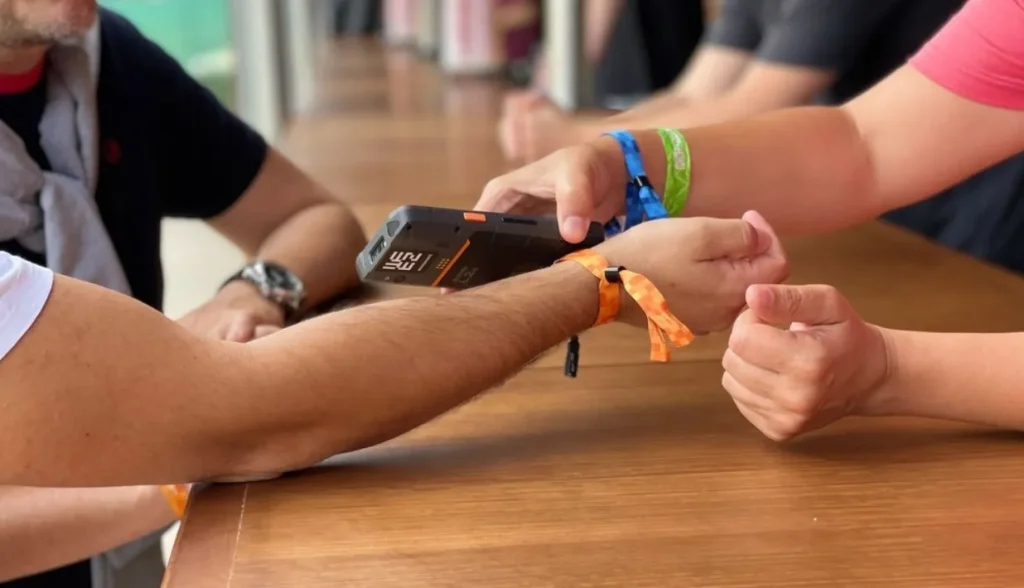
Beyond access control, one of the most exciting features of RFID tickets is their support for cashless payments. By linking credit cards or prepaid accounts to RFID wristbands, attendees can purchase food, beverages, or merchandise at the event without carrying a wallet. This “tap-to-pay” convenience significantly boosts spending. Studies show that at events utilising RFID cashless payment systems, per-person spending typically increases by 15% to 30%.
For event organisers, cashless systems not only speed up transactions and reduce wait times at booths but also eliminate the risks associated with cash handling. All transaction records are synchronised in real time to a back-end database, allowing organisers to clearly identify which products are most popular and during which time periods spending peaks. This transparent financial management is highly attractive to B2B partners and retailers (such as Walmart and Costco) because it greatly simplifies the settlement process.
Real-Time Data Analysis: The Source of Wisdom for Decision-Making

During an event, being able to track participants’ movements in real time is extremely valuable. An RFID system acts like an invisible network, recording participants’ movement patterns and dwell times within the venue. By installing RFID readers in different areas, organisers can generate real-time heat maps to identify which booths or performances are most popular.
This data is not only helpful for managing the current event—such as adjusting security personnel based on foot traffic—but also provides valuable insights for future event planning. By analysing participants’ behavioural preferences, organisers can more effectively attract sponsors and offer participants a more personalised experience. For example, subway operators can use this data to optimise station entry and exit management during peak hours, while distributors can use it to demonstrate to retailers the level of interest in specific products.
Conclusion
In summary, the rise of contactless events is no coincidence but rather the result of both technological advancements and market demand. With their exceptional entry efficiency, unbeatable security, strong ability to drive consumption, and precise data collection capabilities, RFID tickets are becoming an indispensable core component of modern events. As consumer expectations for seamless, secure experiences continue to rise, adopting RFID technology is no longer an option but a necessity for maintaining competitiveness.
As a professional RFID supplier deeply rooted in China and serving the global market, RFIDLabel is committed to providing the most reliable RFID solutions to our global partners. Our top-tier quality, flexible wholesale models, and commitment to eco-friendly materials make us the ideal partner for renowned brands, distributors, and businesses of all kinds. With our robust production capabilities and professional technical support, we can help ensure the complete success of your projects. We sincerely invite you to visit our official website and contact us to jointly embark on a new chapter in smart events.