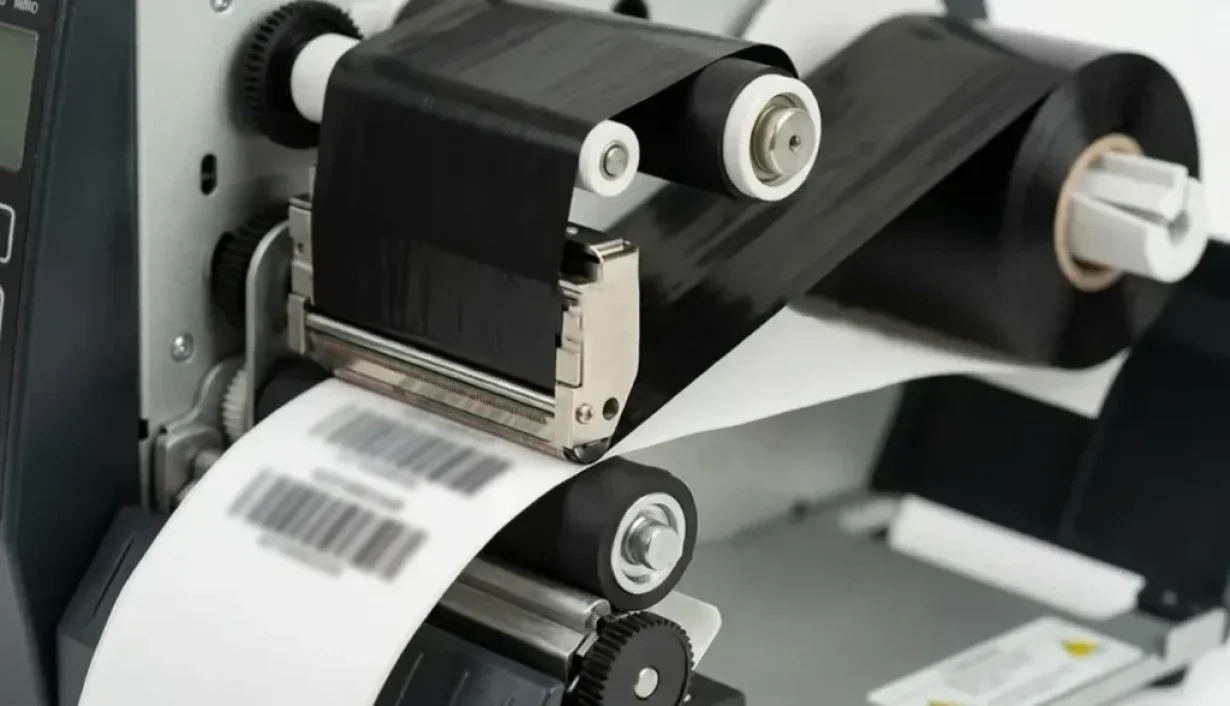

Thermal transfer ribbon for RFID labels should be chosen according to the label material, print durability requirements, and real working environment.
In RFID label projects, most attention goes to the chip, antenna, adhesive, and read range. Those details are important, but the printed surface should not be treated as an afterthought.
A label may encode correctly and still create problems if the barcode, serial number, SKU, logo, or human-readable text fades too quickly. Warehouse staff may still need to scan the printed barcode. Retail teams may check product codes. Quality control teams may rely on batch numbers or serial numbers. If that information becomes unreadable, the RFID label loses part of its value.
That is why ribbon selection should be linked to the label material, not chosen only by price.
Start with the RFID Label Material
Thermal transfer printing works by heating the ribbon and transferring ink onto the label surface. Different materials accept that ink differently. Coated paper, PET, PP, PVC, nylon, and specialty synthetic materials do not have the same surface structure.
A coated paper RFID label usually accepts wax or wax-resin ribbon well. A PET asset label often needs stronger resin ribbon. A nylon wash-care label has a different requirement again, because the print must survive washing and drying.
Common RFID label materials include coated paper, cardstock, PP synthetic paper, PET, PVC, jewelry label material, cable label material, asset label material, and nylon wash-care material.
Wax Ribbon for Paper RFID Labels
Wax ribbon is usually a practical starting point for paper-based RFID labels.
It works well on coated paper and is often used for shipping labels, retail product labels, warehouse labels, and short-term logistics labels. It prints clearly, offers good blackness, and keeps the printing cost under control for large-volume jobs.
Wax ribbon is suitable when the label is used indoors and does not need strong resistance against rubbing, moisture, alcohol, cleaning agents, or outdoor exposure.
Typical applications include retail labels, carton labels, warehouse receiving labels, short-term inventory labels, and general logistics labels.
The limitation is durability. If the printed area is handled often or rubbed against cartons and packaging, wax ribbon may wear down. The label may look good when it leaves the printer, but the barcode or text can become damaged during transport.
For ordinary paper RFID labels, wax ribbon is often enough. If the same paper label needs better rub resistance, wax-resin should be tested instead.

Wax-Resin Ribbon for Coated Paper and Hang Tags
Wax-resin ribbon sits between wax and full resin ribbon.
It is useful when the label is still paper-based, but the printed information needs to last longer. Compared with wax ribbon, wax-resin usually gives better scratch resistance, sharper barcode edges, and stronger adhesion on coated surfaces.
This makes it a better choice for apparel hang tags, product tags, warehouse carton labels, and labels that will be touched, scanned, packed, and moved several times before use.
Wax-resin ribbon is worth testing when you need cleaner small text, stronger rub resistance, or better print stability on coated paper.
For many coated paper RFID labels, wax-resin is the safer option when the label must remain readable through a full supply chain process.
Resin Ribbon for PET, PP, PVC, Jewelry, Cable, and Asset Labels
Synthetic RFID label materials usually need stronger ribbon performance.
PET, PP, and PVC surfaces are smoother and less absorbent than paper. A low-cost wax ribbon may still print on them, but the ink may not bond well. The first printed sample may look acceptable, then the text starts to scratch off after handling, cleaning, packing, or daily use.
When choosing thermal transfer ribbon for RFID labels made from PET, PP, PVC, or other synthetic materials, long-term adhesion matters more than first-print blackness.
Resin ribbon is commonly used for PET RFID labels, PP synthetic RFID labels, PVC labels, fixed asset labels, jewelry labels, cable labels, electronic product labels, cold-chain labels, and durable product identification labels.
Its main advantage is durability. Resin ribbon usually performs better against scratching, moisture, alcohol, cleaning agents, heat, and long-term wear.
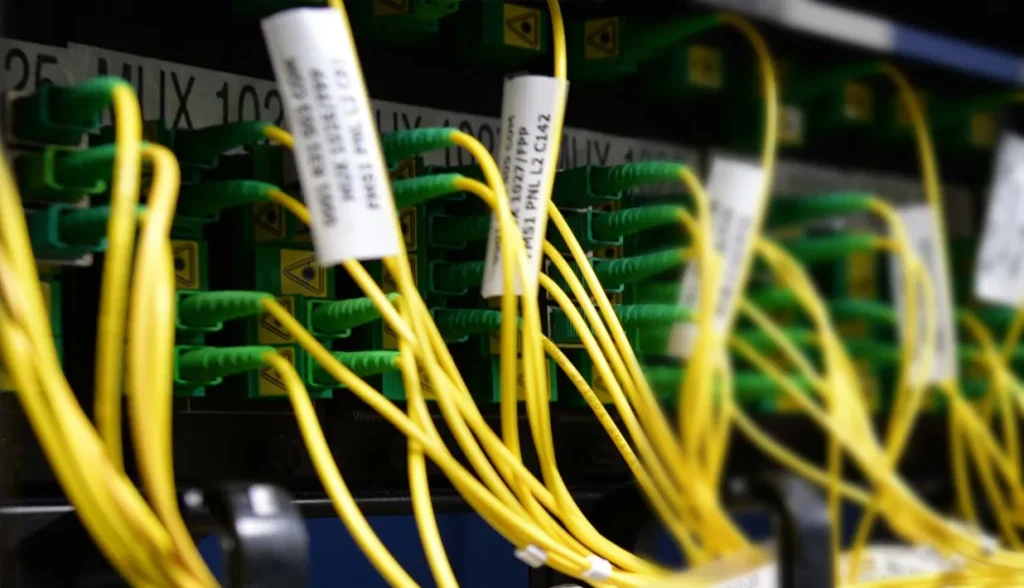
This is especially important for small labels. Jewelry RFID labels and cable labels often carry tiny text, serial numbers, product codes, or compact barcodes. If the ribbon does not bond well, the printed information can become unreadable very quickly.
Wash-Care Ribbon for Textile and Laundry RFID Labels
Textile RFID labels need separate consideration.
Standard wax, wax-resin, or general resin ribbon may not be suitable for washable labels. Garment and laundry applications can involve repeated washing, drying, ironing, detergent, friction, and heat.
For nylon wash-care labels or textile RFID labels, a dedicated wash-care resin ribbon should be tested.
Do not approve the ribbon only because the first print looks clear. The real question is whether the care information, barcode, or product code remains readable after washing and drying.
For apparel and laundry RFID applications, the label material, ribbon, printer settings, and washing conditions should be tested together.
Quick Reference: Ribbon Selection by RFID Label Material
| RFID Label Material | Recommended Ribbon Type | Common Application |
| Coated paper | Wax or wax-resin | Retail, logistics, warehouse labels |
| Cardstock / hang tag | Wax-resin | Apparel tags, product tags, ticket labels |
| PP synthetic paper | Wax-resin or resin | Waterproof labels, product labels |
| PET label material | Resin | Asset labels, electronics, cold-chain labels |
| PVC label material | Resin | Durable product labels, outdoor-use labels |
| Jewelry label material | Resin | Jewelry tags, small product labels |
| Cable label material | Resin | Wire and cable identification |
| Nylon wash-care label | Wash-care resin ribbon | Garment and laundry labels |
This table is only a starting point. Final selection still depends on the actual label surface, print content, printer model, and application environment.
Check the RFID Printer and Ribbon Specification
A suitable ribbon material still needs to fit the printer.
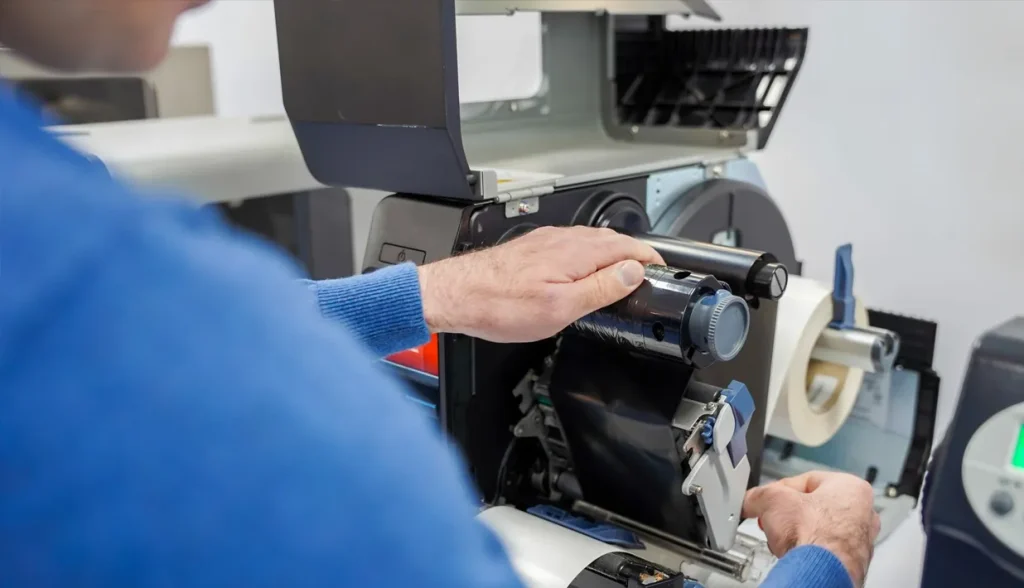
Desktop RFID printers often use smaller ribbon rolls, such as 12.7 mm core ribbons. Industrial RFID printers usually use larger rolls, often with a 25.4 mm core. Ribbon width, roll length, winding direction, and ink side also need to match the printer.
Before ordering thermal transfer ribbon for RFID labels, check the ribbon core size, ribbon width, ribbon length, ink side, printer model, maximum roll diameter, print speed, heat setting, label width, and print area.
The ribbon should usually be slightly wider than the label. If it is too narrow, part of the label may not print correctly. If it is too wide, it increases cost and waste.
For RFID labels, also pay attention to the inlay position. Some labels have slight thickness differences around the chip or antenna area. Print temperature, pressure, and speed should be adjusted to avoid uneven printing.
Do Not Approve a Ribbon After One Clean Print
A single good-looking print sample is not enough.
The ribbon should be tested in the same way the label will be used. A print that looks dark and sharp immediately after printing may still fail after friction, cleaning, storage, cold-chain handling, or washing.
Useful tests include rubbing the printed area by hand, applying tape over the print and peeling it off, scanning the printed barcode or QR code, bending the label if the product will bend, testing moisture exposure, testing alcohol or cleaning agents, testing low temperature for cold-chain labels, and testing washing and drying for textile labels.
The right thermal transfer ribbon for RFID labels is not always the one that produces the darkest first sample. It is the one that keeps the barcode, text, and product information readable in the actual use environment.
Summary
Choosing the right ribbon is not just a printing decision. It affects barcode readability, product identification, traceability, and long-term label usability.
Wax ribbon is suitable for standard paper RFID labels. Wax-resin ribbon is better when paper or coated labels need stronger rub resistance. Resin ribbon is usually a better choice for PET, PP, PVC, jewelry labels, cable labels, and fixed asset labels. Wash-care ribbon should be used for textile and laundry RFID labels.
Before mass production, test the label material, ribbon, printer, and application environment together. This helps prevent faded print, unreadable barcodes, failed scans, and unnecessary label rework later.
For more RFID label materials, printing guidance, and custom RFID label solutions, visit rfidlabel.com.
Recommended Product

4″x2″ 860-960MHz UHF RFID Label Impinj® Monza® 4D

Introducing our 4″x2″ UHF RFID Label, a fusion of size and technological excellence featuring the highly capable Impinj® Monza® 4D chip. Operating in the 860-960MHz frequency range, this label offers unparalleled read and write performance. Designed for versatility, its PP Synthetic Paper surface is fully compatible with thermal transfer label printers. Whether you’re in logistics, healthcare, or retail, you’ll find this label is built for precision, speed, and durability.