

With the rapid development of technology, Radio Frequency Identification (RFID) technology is being increasingly applied across various industries. Especially in asset management, logistics tracking, and supply chain management, RFID technology has demonstrated high efficiency and convenience. However, people also have certain concerns about personal privacy protection, security and compliance during RFID applications. This article will take an NXP ICODE® SLIX label with a size of 25.4×25.4mm as an example to explore the legal regulations on the use of RFID labels.
Overview of RFID Technology
RFID (Radio Frequency Identification) is a technology that uses radio frequency signals to automatically identify target objects and obtain related data. Compared to traditional barcodes, RFID has advantages such as contactless operation, long-distance readability, and large data storage capacity. The NXP ICODE® SLIX NFC label complies with the ISO15693 NFC Type-5 standard and finds widespread use in asset file management, library management, warehousing, and logistics.
Common Application Scenarios of Labels
In file management, RFID labels can achieve quick file search and location; in product anti-counterfeiting, RFID labels can effectively prevent the circulation of counterfeit and shoddy products; in warehousing and logistics, RFID labels can achieve rapid identification and management of items.
- Legal Regulations on the Use of Labels
Although the application of RFID technology brings many conveniences, it also faces issues such as privacy leakage and information security. Therefore, governments and relevant organizations around the world have formulated a series of laws, regulations, and standards to regulate the use of RFID labels.
- Privacy Protection Laws
To prevent the misuse of personal information, many countries have established corresponding privacy protection laws. After all, privacy protection is a critical consideration when using RFID labels. For example, the European Union’s General Data Protection Regulation (GDPR) sets standards for the collection, storage, and use of personal data. Any use of RFID technology to collect personal data must obtain explicit consent from the data subject and ensure the security and privacy of the data.
- Information Security Standards
To ensure the security of RFID label data, countries have also formulated corresponding information security standards. One example is the ISO 15693 NFC Type-5 standard. This standard defines the data transmission protocol and security requirements for NFC labels, ensuring that no one steals or tampers with data during transmission. Additionally, the NXP ICODE® SLIX NFC label has anti-collision features, ensuring accurate data transmission in complex RFID environments.
Environmental Regulations for Use
Different usage environments have different requirements for RFID labels. For example, when using RFID labels in the medical field, they must comply with relevant medical device regulations to ensure that the labels are harmless to humans. In the environmental protection field, the use of RFID labels must comply with relevant industrial standards to ensure that the labels can function normally in various complex environments.
RFID-related Laws in Various U.S. States
In the United States, many states have enacted or are considering enacting laws related to RFID to address issues such as privacy protection and security. Below are some typical state laws and regulations:
- Washington State HB 1031 (Electronic Rights Act)
Washington State proposed HB 1031 (Electronic Rights Act), which sets rules for how companies deploy RFID and retain personal information collected through this technology. However, the bill was sent back to the House Rules Committee and did not pass officially, indicating that despite legislative efforts, challenges remain in the legislative process.
- Michigan
The state of Michigan has implemented a payment incentive program, where government departments reduce farmers’ costs by ensuring they tag most livestock with RFID labels. Michigan has mandated the use of RFID labels for identifying cattle, and over a dozen other states have enacted laws restricting attempts to require livestock to use RFID. These mandatory measures aim to improve the efficiency and transparency of livestock management.
- Wisconsin
Wisconsin does not intend to mandate animal identification but provides an incentive plan similar to Michigan’s to promote the adoption of RFID technology in livestock management. These voluntary incentive measures help to promote the application of RFID technology while avoiding controversies that mandatory measures may cause.
- New Hampshire HB-203 Bill
The New Hampshire House of Representatives passed HB-203, requiring warning labels on consumer products and identification documents containing RFID labels or other tracking devices, and regulating the use of RFID to track individuals. The bill also establishes a committee to oversee the use of tracking devices by the government and businesses. The bill has now been sent to the New Hampshire Senate to designate a hearing committee.
- California SB 768 Identity Information Protection Act
California proposed SB 768 (2006 Identity Information Protection Act), the first state bill to address how RFID technology is used in government identification documents. The bill aims to ensure that the use of RFID technology in government identification documents complies with privacy protection and information security requirements.
Legal Compliance in the Use of Labels
To ensure the lawful use of RFID labels, companies and organizations need to take a series of measures to ensure compliance.
- Data Transparency
When using RFID technology, companies must clearly explain to users how they collect, store, and use data to ensure transparency in data processing. Users have the right to know how companies use their data and can request the deletion or modification of their data.
- Security Measures
Companies need to adopt technical means and management measures to ensure the security of RFID label data. For example, using encryption technology to protect data transmission, setting access control permissions, and preventing unauthorized access and tampering.
- Compliance Review
Before using RFID technology, companies should conduct a comprehensive legal compliance review to ensure that the RFID labels and systems used comply with relevant laws, regulations, and standards. For example, the NXP ICODE® Slix NFC label complies with the ISO15693 NFC Type-5 standard, and its legality and compliance in specific application scenarios need to be confirmed before use.
Conclusion
The widespread application of RFID technology brings great convenience to various industries but also poses challenges in terms of privacy protection and information security. Governments and relevant organizations have regulated the use of RFID labels through the formulation of privacy protection laws, information security standards, and usage environment regulations.
Companies must strictly comply with relevant laws and regulations when using RFID technology, ensure data transparency and security, and conduct comprehensive compliance reviews. The NXP ICODE® SLIX NFC label complies with the ISO15693 NFC Type-5 standard and can be widely used in asset file management and other fields. It improves management efficiency and security while ensuring legal compliance.
To learn more about RFID-related information, please visit rfidlabel.com. Through strict legal regulations and compliance management, RFID technology will play a unique role in more fields, bringing more convenience and value to society.
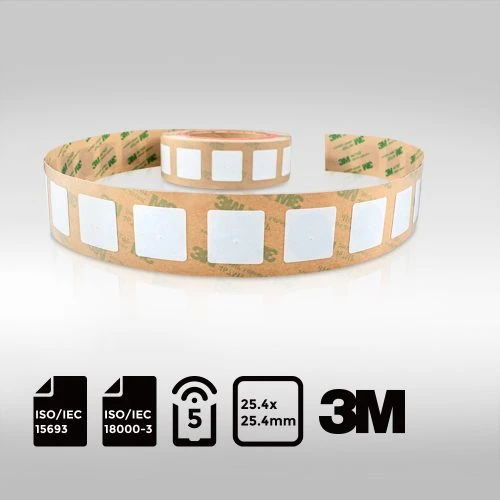
NFC Label 1×1 inch (25.4×25.4 mm) NXP ICODE® SLIX | ISO15693 NFC Type-5

Elevate your tracking precision with our compact and distinctive NFC Label, measuring 1×1 inch (25.4×25.4 mm) and featuring the trusted NXP ICODE® SLIX chip. Compliant with ISO15693 NFC Type-5 standards and equipped with a 3M adhesive backer, this label is your key to efficient and accurate tracking solutions.


