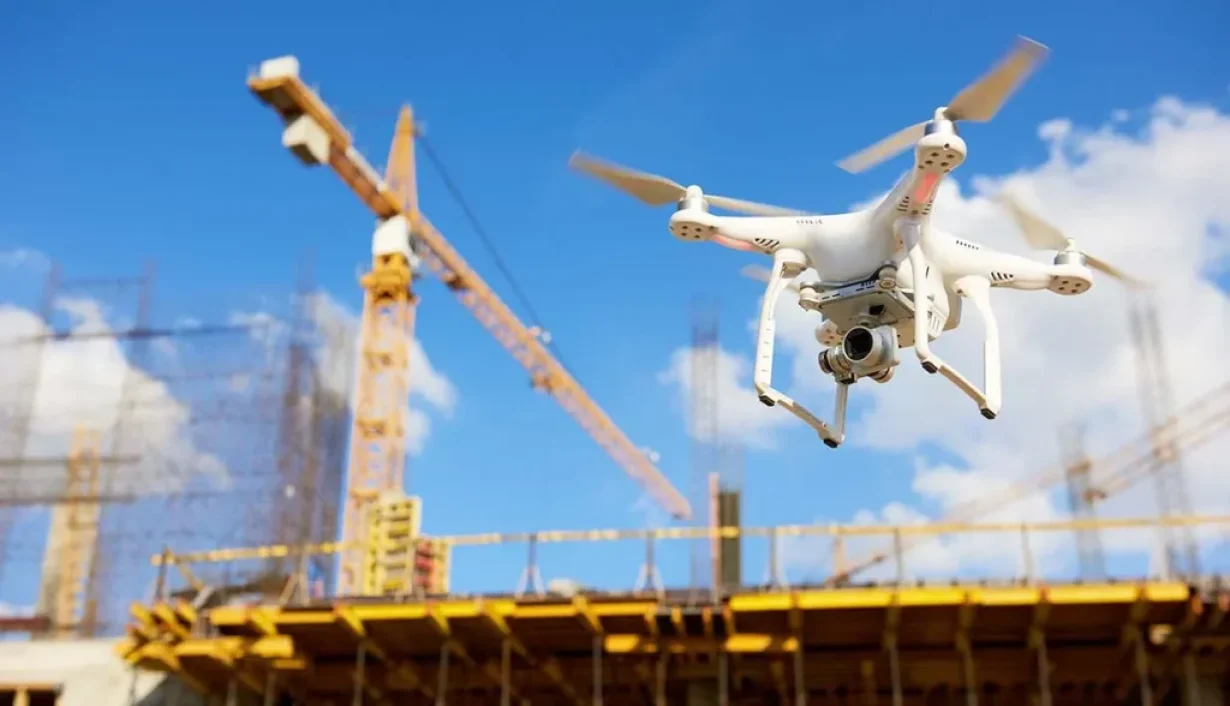

In industrial safety, RFID drone is a groundbreaking solution, mitigating human risk in hazardous environments. This article explores how integrating RFID technology with drones revolutionizes safety in construction, mining, and energy, safeguarding lives and enhancing operational effectiveness.
Construction: Elevating Safety with Aerial Intelligence
Construction sites are dangerous. RFID drone offer a safer, more efficient alternative to traditional inspection and inventory methods.
Real-time Asset Tracking and Inventory Management
RFID drone track assets and materials in real-time. By tagging equipment and materials, drones with RFID readers quickly scan large areas, providing accurate inventory. This reduces manual checks, minimizing human exposure to risk, and improves efficiency by ensuring material availability.
Structural Integrity Monitoring and Hazard Detection
RFID drone monitor structural integrity and detect hazards. They access dangerous areas to scan RFID-tagged sensors, providing data on stress, temperature, and moisture. This proactive approach reduces accidents and structural failures.
Case Study: Bridge Inspection in Remote Areas
RFID drones have been crucial in inspecting remote bridges. A project in the Pacific Northwest used drones with RFID readers to assess aging bridge infrastructure. Drones collected data on critical components, eliminating the need for human inspectors in dangerous conditions. (Reference: Drone-Based Bridge Inspection and Monitoring: A Review, Journal of Civil Engineering and Management, 2023. While a specific public link for this exact case study is not available, the concept is widely discussed in academic and industry papers on drone applications in infrastructure inspection.)

Mining: Navigating Subterranean Dangers with Unmanned Precision
The mining industry has challenging and dangerous conditions. RFID drone offer a revolutionary approach to safety and efficiency.
Automated Mine Mapping and Ventilation Monitoring
RFID drone create detailed 3D maps of mine shafts and tunnels. With RFID readers and tagged sensors, they monitor air quality, temperature, and gas concentrations. This real-time data allows for immediate detection of hazards and rapid response, significantly reducing risk. An RFID drone accessing confined spaces without human intervention is a game-changer for mine safety.
Tracking Personnel and Equipment in Underground Environments
Quickly locating personnel and equipment is vital in emergencies. RFID tags in safety gear allow RFID drone to track precise locations underground. This improves search and rescue operations, providing critical information. RFID technology ensures reliable tracking where GPS is unavailable.
Case Study: Post-Disaster Assessment in a Coal Mine
After a minor coal mine collapse, RFID drones assessed damage and located equipment. Drones with RFID readers navigated unstable tunnels, scanning for tags on machinery. This helped identify safe routes and pinpoint assets without risking human lives. (Reference: Application of RFID Technology in Mine Safety Monitoring System, International Journal of Mining Science and Technology, 2022. While a specific public link for this exact case study is not available, the principles are well-documented in mining safety research.)

Energy: Securing Critical Infrastructure from Above
The energy sector involves vast, remote, and dangerous infrastructure. RFID drone enhance safety and efficiency in this industry.
Automated Inspection of Pipelines and Power Lines
Manually inspecting pipelines and power lines is dangerous. RFID drones with specialized sensors and RFID readers automate this. By tagging critical points, drones collect data on integrity, leaks, or anomalies. This prevents outages and disasters, keeping human inspectors safe. An RFID drone significantly reduces inspection time and risk.
Monitoring Renewable Energy Installations
Renewable energy installations are often remote. Drones with RFID capabilities monitor performance. RFID tags on solar panels provide efficiency data, and tags on wind turbine blades detect micro-fractures. This predictive maintenance, facilitated by RFID drone, ensures optimal performance and extends asset lifespan, reducing dangerous manual inspections.
Comparative Analysis: Traditional vs. RFID Drone Inspection
| Feature | Traditional Inspection | RFID Drone Inspection |
| Human Risk | High | Very Low |
| Speed | Slow | Fast |
| Accuracy | Variable | High |
| Cost | High | Lower |
| Accessibility | Limited | High |
Conclusion: A Safer Future with RFID Drone
RFID drone in construction, mining, and energy signify a leap in industrial safety. By minimizing human exposure to hazards, providing real-time data, and enabling proactive maintenance, these UAVs are guardians of human life. We believe widespread adoption will lead to safer workplaces, reduced costs, and enhanced productivity. RFIDLabel, a leading manufacturer of high-quality RFID cards, tags, and custom solutions, is at the forefront. We offer products that integrate seamlessly with drone systems, providing reliable RFID components for advanced applications. Visit rfidlabel.com to explore our catalog, learn more, or discuss how our RFID products can enhance your operations. Our team is ready to assist you in building a safer, more efficient future.