
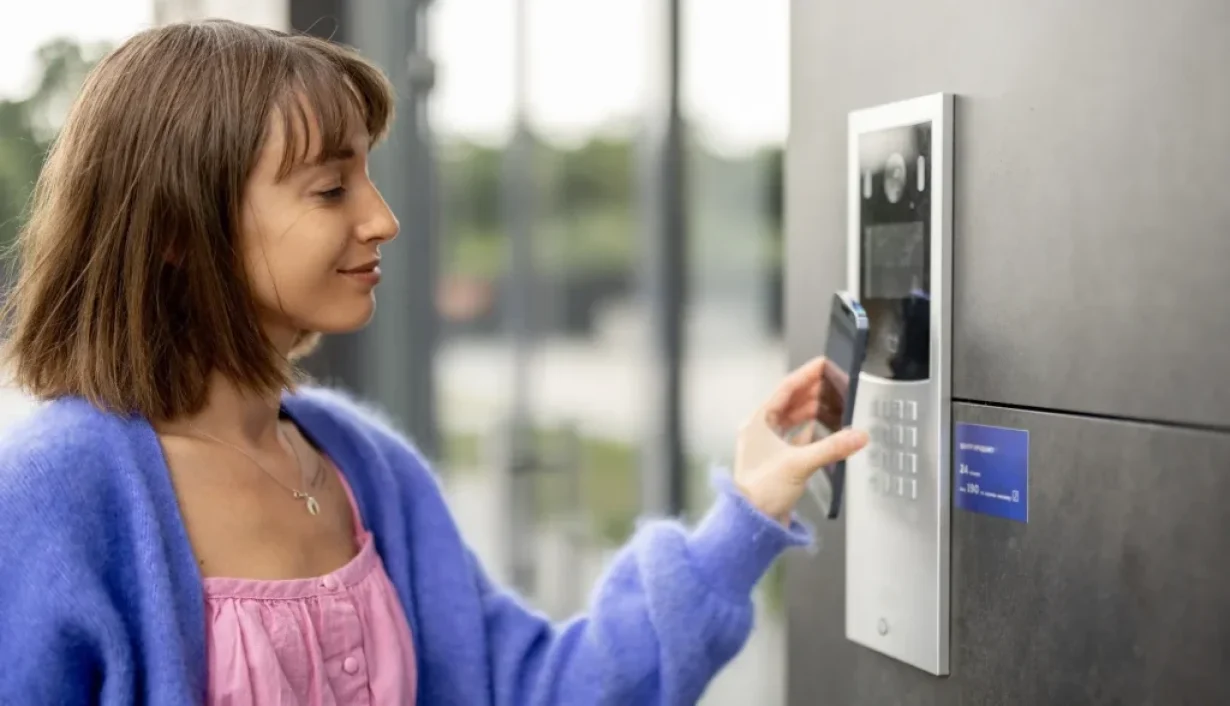

In today’s digital world, radio frequency identification (RFID) technology has been widely adopted across industries to enhance efficiency and ensure security. Historically, reading RFID tags was often considered to require expensive and complex specialized equipment. However, with continuous technological advancements, many RFID tags can now be easily read using the smartphone you carry daily. This capability is primarily enabled by the built-in Near Field Communication (NFC) functionality in smartphones, which itself is a key branch of RFID technology.
This article aims to showcase 10 exciting scenarios where it can be effectively used to read RFID with phone. These applications not only offer convenience for everyday tasks but, more importantly, deliver significant efficiency gains and cost savings for business-to-business (B2B) operations.
Technical Fundamentals of Mobile Phone RFID Reading
Before delving into specific applications, it is necessary to briefly understand the principle behind mobile phones reading RFID tags.
RFID, or Radio Frequency Identification, is a contactless automatic identification technology that transmits data via radio waves. A complete RFID system typically consists of an electronic tag, a reader/writer, and an antenna.
Smartphones are generally equipped with NFC chips designed as short-range high-frequency (HF) RFID readers. This means high-frequency (HF) RFID tags compliant with NFC standards (typically ISO/IEC 14443) can be read by mobile phones.
It is important to note that a phone’s NFC functionality generally cannot read Ultra-High Frequency (UHF) RFID tags, which are commonly used for long-range logistics and apparel inventory management. Reading UHF tags typically requires a dedicated handheld reader or an accessory with a UHF module.
| Features | Mobile NFC (HF RFID) | Dedicated UHF RFID Reader |
| Reading Distance | Extremely short range (0-10 cm) | Long range (several meters) |
| Tag Types | HF RFID (e.g., NFC tags, Mifare cards) | UHF RFID (e.g., apparel hangtags, logistics labels) |
| Reading Speed | Slow (one at a time) | Very fast (batch reading) |
| Device Cost | Extremely low (using existing mobile phones) | Higher (dedicated devices) |
| Primary Applications | Payments, access control, information exchange, individual item verification | Supply chain management, large-scale inventory counting, asset tracking |
10 Cool Things to Try: Read RFID with Phone!
Below are 10 practical applications demonstrating the immense potential of smartphones in reading RFID tags. These applications are key to enhancing operational efficiency and customer experience for your enterprise clients:
Simplified Asset Management and Inventory
Description: Asset management poses challenges for many businesses. By affixing RFID tags to office equipment, IT assets, or tools, employees can use their smartphones to quickly scan and record asset movements or status.
B2B Value: Inventory tasks become dramatically simplified. What once took hours can now be completed in minutes. Losses and misplacement of assets are effectively reduced, saving businesses replacement costs.
Enhanced Brand Authentication and Traceability
Description: Brands (e.g., apparel companies like Uniqlo, Zara, Nike, Adidas) can embed customized RFID tags into products. Consumers or retailers can use smartphones to read the tags, instantly verify product authenticity, and view production details and supply chain history.
B2B Value: Product credibility is significantly enhanced. The circulation of counterfeit goods is effectively curbed. This is crucial for maintaining brand image and protecting intellectual property.
Smart Hotel Key Card Management
Description: Your clients, such as renowned hotel chains, can leverage mobile NFC functionality to manage hotel key cards. For instance, staff can use smartphones to quickly check key card validity, room numbers, or even perform simple reprogramming during emergencies.
B2B Value: Hotel operational efficiency is optimized. Guest check-in and check-out processes can be accelerated. Key card management becomes more granular, reducing reliance on dedicated reader/writer devices.
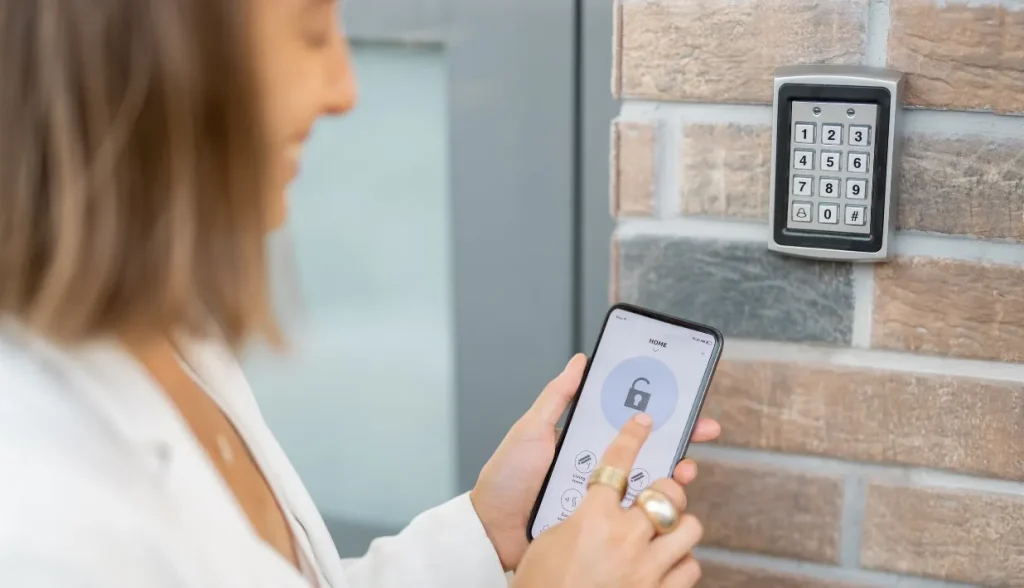
Rapid Access Control Verification
Description: In offices, factories, or restricted areas, access cards or RFID wristbands are used for personnel access control. Security personnel can use smartphones with specific apps to quickly verify an employee’s identity and access permissions by scanning their access card, eliminating the need to return to a central console.
B2B Value: Security screening processes can be streamlined. During large events or emergency evacuations, personnel identity verification can be completed rapidly.
Instant Retail Inventory Query
Description: Retail store employees (e.g., Walmart, Costco) can use their phone’s NFC functionality to read RFID tags on shelves or in storage rooms, instantly querying product inventory levels, prices, and locations.
B2B Value: Risks of stockouts and overstocking can be minimized. Customer service levels improve as staff locate items faster.
Patient Identification in Healthcare
Description: In hospitals, patients’ RFID wristbands contain critical medical information. Healthcare staff can use mobile devices to scan wristbands, quickly verify patient identity, and prevent medication errors or treatment mistakes.
B2B Value: Healthcare safety is significantly enhanced. Data entry and access are streamlined, reducing human error.
Industrial Maintenance and Equipment Inspection
Description: In factories or infrastructure, RFID tags are affixed to critical inspection points on machinery or pipelines. Maintenance personnel use mobile devices to read tags, accessing equipment maintenance histories, operating manuals, and recording current inspection results.
B2B Value: Maintenance processes become standardized and digitized. Equipment downtime is minimized, boosting production efficiency.
Smart Parking and Vehicle Management
Description: RFID tags installed on vehicles can be read by parking attendants via mobile devices to instantly verify vehicle identity and parking privileges. This proves particularly useful in temporary or small parking lots lacking automated readers.
B2B Value: Parking lot management efficiency improves. Vehicle entry/exit records can be accurately maintained.
Personal Information and Business Card Exchange
Description: Custom RFID cards can function as smart business cards. When exchanging cards with prospects or partners, they simply tap your card with their phone to instantly save your contact details.
B2B Value: Business communication efficiency is enhanced. Your brand image becomes modernized and professionalized.
Interactive Marketing and Customer Experience
Description: In retail settings or exhibitions, customized RFID tags can be placed on posters or product displays. When customers tap their phones on the tag, they instantly access product videos, coupons, or online purchase pages.
B2B Value: Customer engagement is enhanced. Marketing campaign effectiveness can be tracked and analyzed in real time.
3. Comparative Analysis of B2B Applications for Mobile RFID Tag Reading
To better understand the positioning of mobile NFC reading in B2B solutions, the table below compares its key differences with traditional barcode scanning and dedicated RFID readers:
| Features | Mobile NFC Reading | Traditional Barcode Scanning | Dedicated RFID Reader |
| Reading Method | Contactless, Electromagnetic Waves | Contact or Proximity, Optical | Contactless, Electromagnetic Waves |
| Data Writing | Writable (Depends on Tag Type) | Non-writable | Writable |
| Batch Reading | Not Supported (One at a Time) | Not Supported (One at a Time) | Supported (multiple at once) |
| Environmental Requirements | No light required, resistant to soiling | Requires good lighting, susceptible to soiling | No light required, resistant to soiling |
| Device Cost | Zero cost (using existing phone) | Low cost (scanner) | High cost (specialized equipment) |
| Applicable Scenarios | Access control, item verification, information exchange | Retail checkout, basic inventory management | Large-scale inventory counts, supply chain tracking |
Analysis: The advantages of mobile NFC reading lie in its zero equipment costs and operational convenience. It is well-suited for B2B applications requiring single-point verification, on-site information exchange, or low-frequency asset management. This means businesses can begin experiencing the benefits of RFID without additional hardware investments.
Conclusion
Smartphones’ ability to read RFID tags has brought this technology from specialized fields into everyday operations. From streamlined asset management and enhanced brand anti-counterfeiting to optimized customer experiences, these 10 “super cool things” represent just the tip of the iceberg in RFID’s application potential.
For renowned hotel chains, distributors, major retailers, and any enterprise requiring efficient identification solutions, integrating mobile NFC functionality into your operational workflows represents a low-cost, high-efficiency starting point for digital transformation.
As your trusted partner, RFIDLabel is committed to delivering high-quality RFID products to support your innovative applications. Our custom RFID tags and solutions integrate seamlessly into your mobile NFC-based systems.
We sincerely invite you to contact us immediately to discuss your specific project requirements.
Recommended Product

On-Metal Mobile NFC Label NXP NTAG® 213 Ø30mm

The Ø30mm NXP NTAG® 213 On-Metal Mobile NFC Label is a specialized NFC label designed to work on metal surfaces. Featuring the advanced NXP NTAG® 213 chip and complying with ISO14443-A standards, this label provides fast and stable data transmission. It is ideal for a wide range of applications, including asset management, smart home controls and retail marketing. Engineered with anti-interference technology and a weather-resistant adhesive, this NFC tag delivers unmatched performance on phone’s surfaces. From triggering smart appliance controls to enabling self-checkout and counterfeit-proof verification in retail, it seamlessly bridges physical objects and digital actions across everyday environments.



