


Phone tag technology is transforming the way we interact with our smart devices, creating seamless connections between physical objects and digital experiences. As NFC (Near Field Communication) capabilities become standard in modern smartphones, the potential applications for this technology continue to expand across industries. This comprehensive guide explores how phone tag technology is revolutionizing our daily interactions with smart devices and opening new possibilities for businesses and consumers alike.
Understanding Phone Tag Technology: The Basics
1. What Exactly Is Phone Tag?
Phone tag refers to the technology that enables smartphones to communicate with NFC-enabled tags or labels. These small, programmable tags contain microchips that can store and transmit data wirelessly when brought into proximity with an NFC-capable device. Unlike traditional RFID systems that may require specialized readers, phone tag technology leverages the NFC capabilities built into most modern smartphones, making it accessible to billions of users worldwide.
2. The Technical Foundation: How NFC Powers Phone Tag
NFC operates on the principle of electromagnetic induction between two loop antennas. When an NFC-enabled smartphone comes within approximately 4 centimeters of a phone tag, it creates a magnetic field that powers the passive tag and enables data exchange. This technology operates at 13.56 MHz and transfers data at rates ranging from 106 to 424 kilobits per second, providing quick response times for users.
The beauty of phone tag technology lies in its simplicity and efficiency:
- Passive operation: Tags require no battery or power source
- Compact size: Can be embedded in stickers, cards, or wristbands
- Cost-effective: Inexpensive to produce and deploy at scale
- Secure communication: Supports encryption for sensitive applications
The Evolution of Phone Tag Technology
1. From QR Codes to NFC: A Brief History
The journey toward modern phone tag technology began with earlier solutions like QR codes and barcodes. While these visual markers served similar purposes, they required line-of-sight scanning and offered limited data capacity. The timeline below highlights key developments:
| Year | Development | Impact |
| 2004 | NFC Forum founded | Established standards for NFC technology |
| 2010 | First NFC-enabled smartphones | Limited adoption in select Android devices |
| 2014 | Apple introduces NFC in iPhone 6 | Initially restricted to Apple Pay |
| 2017 | Apple expands NFC capabilities | iOS 11 allows reading NFC tags |
| 2020 | Widespread adoption | NFC becomes standard in most smartphones |
| 2023 | Advanced phone tag applications | Integration with IoT and smart city initiatives |

Phone Tag for Business: Implementation Strategies
1. Selecting the Right Tag Solution
When implementing tag technology for business applications, organizations must consider several factors:
- Tag type and form factor: Cards, stickers, wristbands, or embedded tags
- Memory requirements: Data storage capacity needed
- Security features: Encryption and authentication capabilities
- Environmental considerations: Durability in various conditions
- Integration requirements: Compatibility with existing systems
- Customization options: Branding and design possibilities
2. Cost-Benefit Analysis of Phone Tag Implementation
The following table provides a comparative analysis of implementing tag technology across different business scales:
| Business Size | Implementation Cost | Annual Maintenance | ROI Timeline | Primary Benefits |
| Small Business | $5,000-$15,000 | $1,000-$3,000 | 12-18 months | Customer engagement, brand differentiation |
| Mid-Market | $15,000-$50,000 | $3,000-$10,000 | 9-15 months | Operational efficiency, inventory management |
| Enterprise | $50,000-$250,000+ | $10,000-$50,000 | 6-12 months | Supply chain optimization, data analytics |
3. Integration with Existing Systems
For maximum effectiveness, phone tag solutions should integrate seamlessly with:
- Inventory management systems
- Customer relationship management (CRM) platforms
- Point-of-sale (POS) systems
- Enterprise resource planning (ERP) software
- Marketing automation tools

Technical Considerations for Phone Tag Implementation
1. NFC Tag Types and Their Applications
The NFC Forum has defined several tag types, each with specific capabilities:
- Type 1: Basic tags with 96 bytes to 2 KB memory
- Type 2: Similar to Type 1 but with anti-collision support
- Type 3: Based on Sony FeliCa, higher memory capacity
- Type 4: Compatible with existing contactless card standards
- Type 5: Based on ISO/IEC 15693 standard, extended range
2. Choosing the Right Tag for Your Application
The selection of the appropriate tag type depends on specific use cases:
| Tag Type | Memory Capacity | Read/Write Speed | Cost | Best For |
| Type 1 | 96 bytes – 2 KB | Moderate | Low | Simple applications, business cards |
| Type 2 | 48 bytes – 2 KB | Moderate | Low | Product identification, simple URL storage |
| Type 3 | Up to 1 MB | Fast | High | Ticketing, access control, payments |
| Type 4 | Up to 32 KB | Fast | Medium | Multi-application scenarios, secure transactions |
| Type 5 | Up to 32 KB | Moderate | Medium | Inventory management, supply chain |
3. Security Considerations for Phone Tag Deployments
As with any technology, phone tag implementations must address security concerns:
- Data encryption: Protecting sensitive information stored on tags
- Authentication mechanisms: Ensuring only authorized devices can read or write to tags
- Anti-cloning features: Preventing unauthorized duplication of tags
- Privacy protections: Limiting tracking capabilities to protect user privacy
- Secure key management: Properly handling encryption keys

Transformative Applications of Phone Tag Technology
Today, this technology has matured significantly, with both Android and iOS devices supporting robust NFC functionality. Modern implementations offer:
1. Retail Revolution: Enhancing Customer Experiences
In retail environments, phone tag technology is creating new opportunities for customer engagement and operational efficiency. Major retailers like Walmart are implementing NFC-based solutions to:
- Enable contactless payments
- Provide product authentication
- Deliver interactive product information
- Streamline inventory management
- Create personalized shopping experiences
For example, fashion retailers like Uniqlo and Zara use RFID and NFC tags on merchandise to enable quick inventory checks and provide customers with detailed product information through their smartphones. This technology helps reduce out-of-stock situations while enhancing the shopping experience.

2. Smart Packaging: Beyond the Barcode
Product packaging enhanced with phone tag technology creates new channels for brand communication and consumer engagement. When consumers tap their phones to NFC-enabled packaging, they can:
- Verify product authenticity
- Access detailed product information
- View instructional videos
- Register products automatically
- Participate in loyalty programs
- Reorder products easily
The wine industry has embraced this technology to combat counterfeiting and enhance consumer education. By embedding NFC tags in bottle labels or caps, wineries enable consumers to authenticate products and access information about vineyard history, tasting notes, and food pairing recommendations with a simple tap of their smartphone.
3. Access Control and Security Applications
Phone tag technology has revolutionized access control systems across various sectors:
- Hospitality: Hotel key cards with NFC capabilities allow guests to use their smartphones for room access
- Corporate environments: Employee ID badges with embedded NFC provide secure building access
- Transportation: Contactless payment cards for public transit systems
- Healthcare: Secure access to sensitive areas and equipment
- Residential: Smart locks that respond to NFC-enabled smartphones or cards
4. Smart Home Integration
Phone tag technology is becoming increasingly important in smart home ecosystems:
- Tap-to-setup for new devices
- Simplified guest access
- Automation triggers based on presence
- Device authentication and pairing
- Simplified control of smart appliances
5. Personal Health and Fitness Tracking
NFC-enabled wristbands and devices allow users to:
- Track workout sessions
- Access gym equipment
- Monitor vital signs
- Store emergency medical information
- Manage dietary preferences and restrictions

6. Healthcare: Improving Patient Care and Asset Management
In healthcare settings, tag technology enables:
- Patient identification and tracking
- Medication authentication and administration
- Equipment location and maintenance tracking
- Staff access control to restricted areas
- Streamlined check-in processes
7. Transportation and Logistics Innovations
The transportation sector has widely adopted phone tag technology for:
- Contactless ticketing systems
- Fleet management and maintenance tracking
- Package tracking and delivery confirmation
- Vehicle access control
- Passenger information services

8. Integration with Other Emerging Technologies
Phone tag technology will increasingly intersect with:
- Artificial Intelligence for predictive analytics
- Blockchain for secure, verifiable transactions
- Internet of Things (IoT) for expanded connectivity
- Augmented Reality for enhanced user experiences
- 5G networks for faster, more reliable connections
Choosing the Right Phone Tag Provider
When selecting a phone tag technology provider, consider:
- Manufacturing capabilities: Production capacity and quality control
- Customization options: Ability to meet specific design requirements
- Technical support: Availability of implementation assistance
- Compliance certifications: Adherence to industry standards
- Scalability: Ability to grow with your business needs
- Integration expertise: Experience connecting with existing systems

Conclusion: Embracing the Phone Tag Revolution
As smartphones continue to serve as the primary interface between physical and digital worlds, the importance of this technology will only increase. Organizations that strategically implement tag solutions position themselves to enhance operational efficiency, improve customer experiences, and gain competitive advantages in their industries.
After exploring the transformative potential of phone tag technology, you may be interested in implementing these solutions for your own business needs.
At RFIDLabel, we specialize in providing high-quality, customizable RFID and NFC solutions. Our experienced team can help you select the right products for your specific requirements and guide you through the implementation process. Visit rfidlabel.com to explore our product range or contact us directly to discuss your technology needs.
Recommended Product
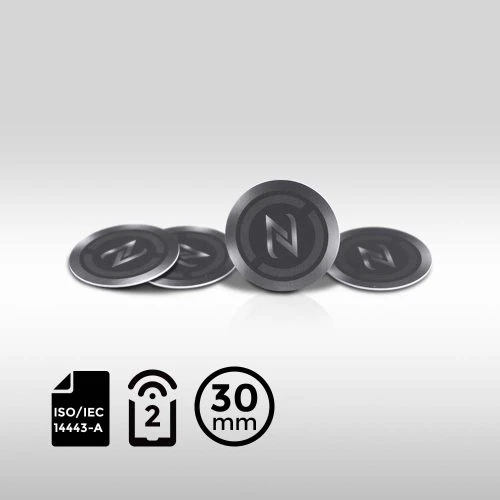
On-Metal Mobile NFC Label NXP NTAG® 213 Ø30mm

The Ø30mm NXP NTAG® 213 On-Metal Mobile NFC Label is a specialized NFC label designed to work on metal surfaces. Featuring the advanced NXP NTAG® 213 chip and complying with ISO14443-A standards, this label provides fast and stable data transmission. It is ideal for a wide range of applications, including asset management, smart home controls and retail marketing. Engineered with anti-interference technology and a weather-resistant adhesive, this NFC tag delivers unmatched performance on phone’s surfaces. From triggering smart appliance controls to enabling self-checkout and counterfeit-proof verification in retail, it seamlessly bridges physical objects and digital actions across everyday environments.



