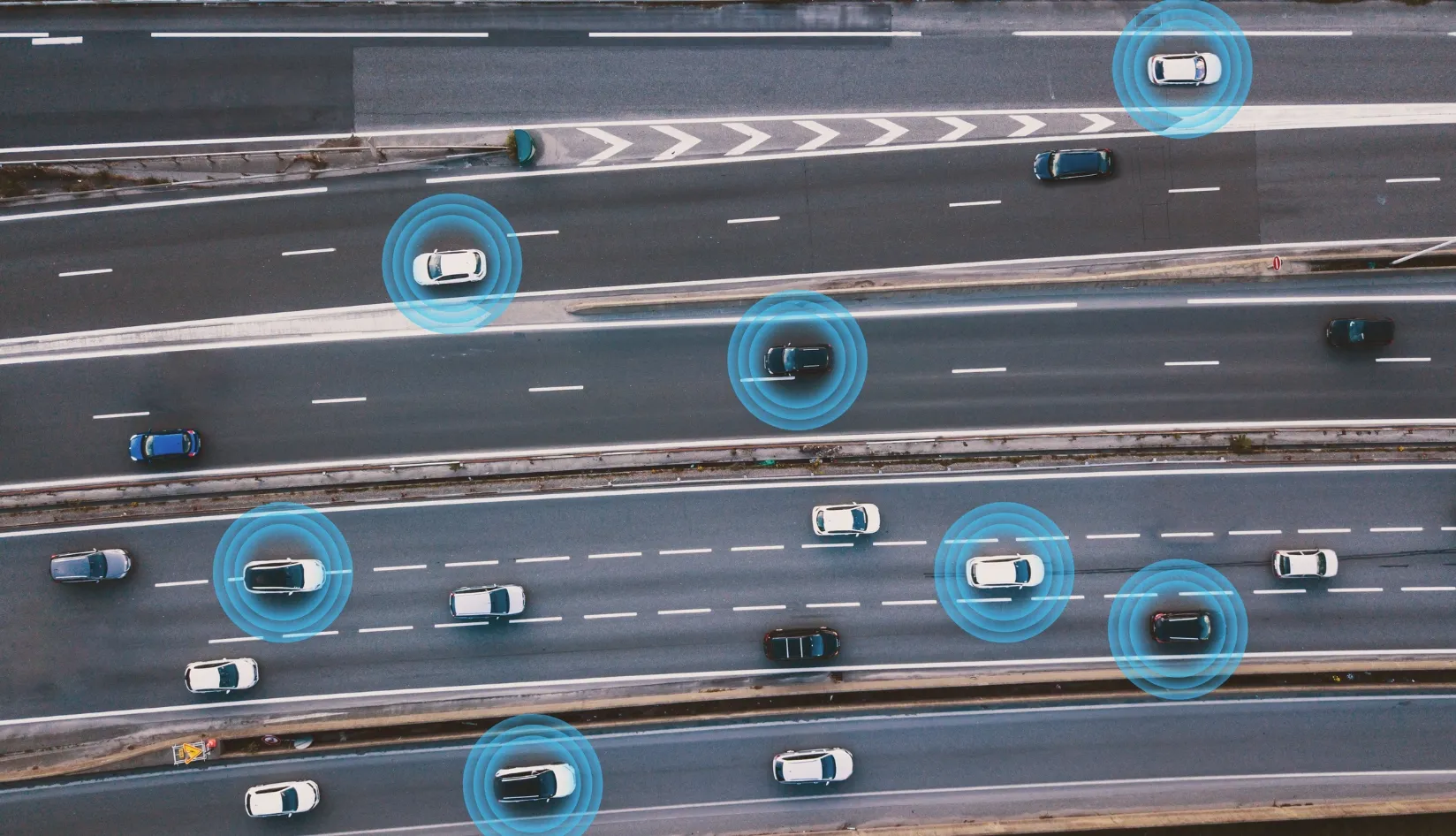
Today, RFID technology is widely used in logistics and warehousing, retail and manufacturing industries. Enterprises use RFID technology to interact with data and information to achieve asset tracking, inventory counting, and product authentication. According to the different operating frequencies, RFID systems can be divided into three frequency bands: low frequency, high frequency and ultra-high frequency. Among them, HF and UHF as the more common two frequency bands, they have different technical characteristics as well as advantages. This blog will be a comprehensive comparison of the two frequency bands of HF vs UHF, to provide users with a reference in the choice of technology.
Overview of High-frequency RFID
Frequency range and technical characteristics
The operating frequency of high-frequency RFID systems is typically 13.56 MHz. This is a frequency band mainly open to industrial, scientific and medical institutions and requires no licenses or fees. Because the wavelength of high-frequency is relatively long, high-frequency RFID systems can maintain stable performance and have excellent anti-interference capabilities in environments with liquids and metals. Among them, NFC technology, as a special type of high-frequency RFID system, has been popularized in fields such as non-contact payment, access control and data transmission.
Application scenarios
Because high-frequency RFID systems have stability and compatibility characteristics, they are widely used in the following aspects:
- Payment and access control: Access control systems, bus cards and bank payment cards all use high-frequency RFID technology. Through its close-range reading characteristics, the security and reliability of data information are effectively ensured.
- Library management: Most libraries have begun to use high-frequency RFID labels to classify and manage books. At the same time, the efficiency of borrowing and returning books has also been significantly improved.
- Medical industry: In the medical industry, patient identification verification, and medicine and medical equipment supervision are also accomplished through high-frequency RFID systems. Due to its excellent anti-interference characteristics, it is suitable for complex medical environments.
- Smart card and ticketing system: For example, public transportation cards, concert tickets, etc. also use high-frequency RFID technology to achieve rapid inspection and data storage.
Advantages and limitations
- Advantages
HF RFID performs well in environments where metal or liquid is present, which allows it to work stably in complex environments. Since high-frequency RFID uses the globally common 13.56 MHz frequency band, equipment and labels can be interoperable on a global scale. high-frequency RFID supports encrypted communications and is particularly suitable for applications that require high security, such as payment and access control.
- Limitations
The reading range of high-frequency RFID is typically between a few centimeters and 1 meter, which limits its use in applications that require long-distance reading. Compared with ultra high-frequency RFID, high-frequency RFID has a slower data transmission rate and is not suitable for high-throughput data transmission requirements.
Overview of Ultra High-frequency RFID
Frequency range and technical characteristics
The operating frequency range of ultra high-frequency RFID systems ranges from 860 MHz to 960 MHz, and the specific frequency band varies by region. Because the wavelength of ultra high-frequency is relatively short, ultra high-frequency RFID systems can achieve longer reading distances and faster data transmission rates. Unlike high-frequency RFID, ultra high-frequency RFID uses far-field communication technology, allowing it to transmit data over distances of several meters or even tens of meters.
Application scenarios
Due to its long reading distance and efficient data transmission capabilities, ultra high-frequency RFID is widely used in the following fields:
- Supply chain & logistics management: Ultra high-frequency RFID labels are widely used in warehouse and transportation management to track inventory, manage goods and optimize supply chain processes.
- Retail industry: Many large retailers use ultra high-frequency RFID labels for inventory management and product theft prevention, monitoring inventory levels and ensuring efficient supply chain operations.
- Asset tracking: In manufacturing, medical equipment management and air baggage tracking, ultra high-frequency RFID helps companies achieve comprehensive monitoring of assets and reduce losses and errors.
- Access control & event management: With its long-range reading capabilities, ultra high-frequency RFID is widely used in large-scale events, parking lot management and factory access control systems.
Advantages and limitations
- Advantages
The reading range of ultra high-frequency RFID is usually 1 meter to 10 meters, or even more, making it suitable for applications that require long-range tracking. ultra high-frequency RFID can quickly transmit large amounts of data and is suitable for data processing scenarios that require high efficiency. With the popularization of technology, the cost of ultra high-frequency RFID labels has gradually decreased, making them ideal for large-scale deployments.
- Limitations
ultra high-frequency RFID signals are susceptible to interference from metals and water, which may affect their performance in certain environments. Due to the different allocations of ultra high-frequency bands in different regions around the world, equipment may need to be adjusted or replaced when used across regions.
How to choose the right RFID frequency band?
When selecting RFID frequency bands, companies should fully consider their application needs, environmental conditions and budget constraints. High-frequency and ultra high-frequency have their advantages and disadvantages, and the key is to choose the technology that is most suitable for practical application scenarios. If close-range, high-security applications are needed, such as payment systems or access control, high-frequency RFID is undoubtedly the best choice. If long-distance, fast reading and large-scale deployment are required, such as logistics management, asset tracking or retail inventory management, ultra high-frequency RFID is more advantageous. Companies should also consider future scalability and cross-regional deployment possibilities to ensure that the RFID system they choose can adapt to the needs of different markets.
Conclusion
The two RFID frequency bands, HF vs UHF, have obvious differences in terms of application areas, technical characteristics and advantages. When enterprises choose to use which RFID frequency band, should fully consider their own needs and the performance and cost trade-offs. To ensure that they do not exceed their budget at the same time, but also to meet the current and future application needs. Users only comprehensive understanding of the differences between the two and the advantages and disadvantages, to successfully deploy the most suitable for their business RFID system, to achieve more efficient operations and intelligent management.
If you are interested and still need more information, you can contact our sales experts, who will provide you with the suitable solutions and the professional purchasing advice according to your needs. In addition, you can also visit our official website (www.rfidlabel.com) to browse the relevant information about different RFID frequency bands.
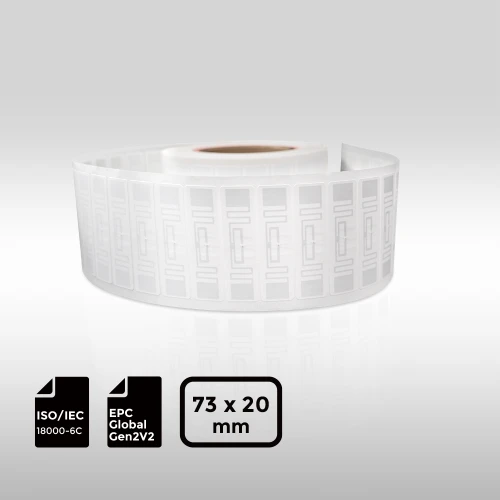
UHF RFID Label Impinj® M730 73×20mm | ISO18000-6C

The M730 RFID Label is a high-performance, versatile label designed for various industrial and commercial applications. Leveraging the advanced Impinj® M730 chip, this label enables solutions for high-speed inventory counting, loss prevention, frictionless self-checkout, and seamless product returns. With a range of EPC and user memory configurations, including cryptographic authentication capabilities, the M730 RFID Label provides unparalleled versatility and security for diverse applications.