


Electronic Medical Record (EMR) management has always been a key challenge in modern healthcare. Efficient EMR management can significantly improve hospitals’ operational efficiency, enhance patient experience, and reduce management costs. Radio Frequency Identification (RFID) technology has introduced innovative solutions to optimize EMR management. This guide of RFID in healthcare will take you on an in-depth look at how RFID can be applied, especially the value of its application in electronic medical record management.
What Is RFID and Its Value in Healthcare?
RFID is a technology that transmits information through radio waves. Different from traditional barcodes, RFID can directly read tag information from a certain distance without relying on line-of-sight scanning. It has the characteristics of fast data processing speed and large storage capacity. The core value of RFID lies in efficient data tracking and identification. In the medical care field, it can help medical institutions manage patient information and supplies more accurately and quickly.
The main values of RFID applications in healthcare:
- Automation: Reduce manual input and data errors.
- Accuracy: Higher precision data tracking ensures accurate information.
- Real-time: Control the status of medical assets and medical records in real-time.
- Security: Protect patient data through encryption technology to meet compliance requirements for medical data privacy.
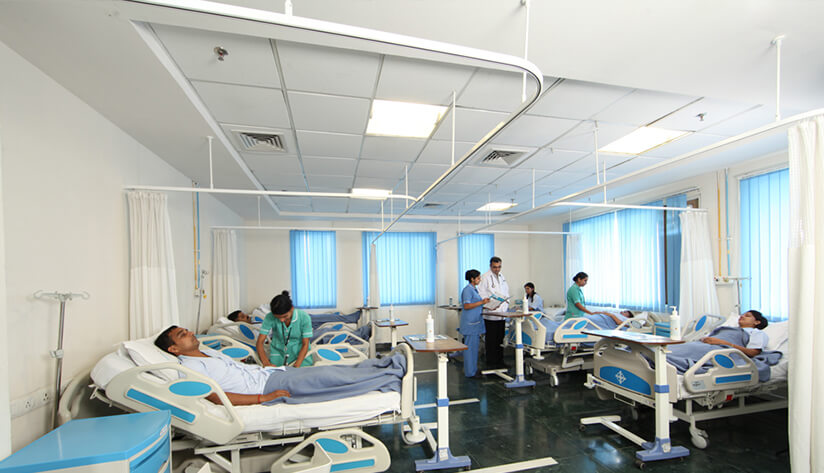
Main Benefits of RFID Technology in Healthcare Management
The application of RFID technology in healthcare has brought significant improvements in patient safety, operational efficiency, data management, and resource utilization. The following are the key benefits of implementing RFID solutions in healthcare environments.
Improve Data Accuracy and Patient Identification
- Automated patient identification: RFID technology enables healthcare providers to automatically capture and verify patient information without relying on manual input. RFID wristbands linked to patient records help ensure that medical procedures, medication administration, and treatments are performed for the correct patient, reducing the risk of identification errors.
- Accurate medical data management: RFID systems can integrate with electronic medical record (EMR) systems and other hospital platforms, ensuring that patient information is updated and shared accurately across departments. This improves data consistency and supports more coordinated patient care.
Enhance Healthcare Operational Efficiency
- Rapid information access: RFID technology allows healthcare workers to quickly access patient information, treatment records, and medical resources, reducing time spent searching for documents or equipment and allowing more focus on patient care.
- Real-time tracking of medical resources: RFID-enabled tracking helps hospitals locate medical records, equipment, and other critical assets in real time, improving workflow efficiency during patient transfers, emergencies, and daily operations.
Strengthen Data Security and Privacy Protection
- Encrypted data protection: RFID solutions can use secure chips and encryption technologies to protect sensitive healthcare information and reduce the risk of unauthorized data access.
- Controlled information access: Access permissions can be configured to ensure that only authorized healthcare personnel can read or manage RFID-related data, helping healthcare organizations comply with privacy regulations such as HIPAA.
Optimize Medical Equipment and Inventory Management
- Medical asset tracking: RFID enables hospitals to monitor medical equipment, pharmaceuticals, and supplies in real time, improving asset utilization and reducing the risk of missing, misplaced, or unavailable resources.
- Intelligent inventory management: By providing accurate inventory visibility, RFID helps hospitals optimize stock levels, automate replenishment processes, and prevent both shortages and excessive inventory.
Enable Real-Time Data Insights and Healthcare Optimization
- Data-driven decision making: RFID-generated data provides valuable insights into patient flow, equipment utilization, and resource consumption, helping healthcare managers optimize resource allocation and operational planning.
- Continuous quality improvement: RFID data can support reporting and analysis of healthcare processes, helping organizations identify inefficiencies, improve workflows, and enhance overall service quality.

Key Areas Where Medical Institutions Use RFID to Optimize EMR Management
The process of using RFID technology to optimize EMR management in medical institutions mainly focuses on the following key areas. Optimization in each area not only improves hospital operational efficiency but also strengthens patient safety and the accuracy of data management.
Patient Identification and Medical Record Management
- Accurate patient identification: RFID wristbands provide each patient with a unique digital identity, allowing healthcare professionals to quickly verify patient information and reduce medical errors caused by incorrect identification.
- Electronic medical record integration: RFID systems can connect patient identification data with electronic medical record (EMR) systems, enabling accurate information sharing and improving the efficiency of medical documentation management.
Medication and Treatment Management
- Medication tracking: RFID tags attached to medication packages allow healthcare providers to track drug distribution and usage, ensuring that patients receive the correct medication according to treatment plans.
- Inventory monitoring: RFID technology enables automated pharmaceutical inventory management by monitoring stock levels, expiration dates, and usage patterns, helping hospitals prevent shortages and reduce waste.
Medical Equipment and Asset Tracking
- Real-time equipment location: RFID tags attached to medical equipment such as wheelchairs, surgical instruments, and diagnostic devices allow hospitals to locate assets quickly and improve equipment utilization.
- Asset lifecycle management: RFID helps healthcare organizations monitor equipment usage, maintenance schedules, and availability, ensuring critical resources are always ready when needed.
Surgical and Nursing Workflow Optimization
- Surgical safety improvement: RFID helps verify patient identity, surgical information, and related instruments before procedures, reducing the risk of errors during surgery.
- Nursing workflow management: Healthcare professionals can access patient information quickly and track care activities, helping improve nursing efficiency and ensure timely treatment.
Hospital Resource and Patient Flow Management
- Patient flow optimization: RFID enables real-time monitoring of patient movement within hospitals, helping medical institutions optimize emergency department workflows and reduce waiting times.
- Bed and resource management: RFID tracking provides real-time visibility into bed availability and resource utilization, allowing hospitals to improve scheduling and operational efficiency.
Data Analytics and Healthcare Decision Support
- Operational insights: RFID-generated data provides valuable information about patient flow, equipment usage, and medical resource consumption, helping hospital managers make data-driven decisions.
- Resource optimization: By analyzing RFID data, healthcare organizations can improve staff allocation, equipment deployment, and overall operational planning.

RFID EMR Management vs Traditional Paper Record Management
In healthcare, there are significant differences between RFID electronic medical record management and traditional paper-based record management. Not only does RFID electronic medical record management offer advantages in terms of efficiency, accuracy, and patient safety, but it also excels in information sharing and data analytic. Below is a detailed comparison of RFID electronic medical records management and traditional paper records management.
- Information storage and access
| Point of comparison | RFID EMR Management | Traditional Paper Record Management |
| Information storage methods | Data is stored on RFID tags, in the cloud or in a database, electronically and easily managed | Recorded on paper charts, reliant on manual filing and retention |
| Information access efficiency | Instant access to case information for healthcare professionals by scanning RFID tags or electronic systems | Time-consuming to manually locate, borrow, and return medical records |
| Multi-disciplinary sharing | RFID supports cross-departmental information sharing, all departments can access the same medical records in real time, improving work synergy. | Medical records need to be passed and borrowed manually, sharing information across departments is slow and prone to be lost. |
- Data accuracy and reliability
| Point of comparison | RFID EMR Management | Traditional Paper Record Management |
| Data entry accuracy | Data can be automatically entered and stored in the system to avoid human input errors | Relying on manual writing or entry is prone to errors such as blurred writing and missing data |
| Data integrity and consistency | RFID technology can realize real-time synchronization of information, ensuring data consistency and reducing repeated input and storage errors | Omission and duplication of records may occur during the transfer of medical records from one department to another. |
| Timeliness of information update | RFID system supports real-time data updating, so that medical staff can obtain the latest medical record news at any time. | Slow updating of information, data modification needs to be changed manually, and the delivery of medical records to the relevant personnel may be delayed. |
- Efficiency and cost management
| Point of comparison | RFID EMR Management | Traditional Paper Record Management |
| Operating efficiency | Automatic entry of medical record information, rapid query and update, significantly improving hospital operational efficiency | Reliance on manual recording and searching, which is time-consuming to access and manage and affects work efficiency |
| Long-term costs | Higher initial equipment investment, but lower maintenance and operating costs, and reduced paper consumption | High cost of printing, preserving and archiving paper medical records, and high long-term paper demand |
| Human resource requirements | RFID automated management system reduces reliance on manual labor and reduces manpower requirements and related management expenses. | Relying on a large amount of manual operation and manpower, medical records access, filing and management require manpower. |
- Patient Safety and Privacy
| Point of comparison | RFID EMR Management | Traditional Paper Record Management |
| Patient identification | RFID tags can help healthcare professionals quickly and accurately identify patients when administering medications, surgeries, and nursing care | Requires manual checking of medical records and identity, increasing the risk of wrong identification |
| Privacy and data protection | RFID data can be encrypted and accessed only by authorized personnel, effectively protecting patient privacy. | Paper-based medical records are easy to leak, difficult to realize access control, and weaker privacy protection |
| Information security | Data exists in the electronic system, with backup mechanism and encryption measures, | Medical records are easily damaged or lost, and it is difficult to recover data in case of fire, flood, etc. |
- Real-time tracking and location
| Point of comparison | RFID EMR Management | Traditional Paper Record Management |
| Patient identification | RFID tags can help healthcare professionals quickly and accurately identify patients when administering medications, surgeries, and nursing care | Requires manual checking of medical records and identity, increasing the risk of wrong identification |
| Privacy and data protection | RFID data can be encrypted and accessed only by authorized personnel, effectively protecting patient privacy. | Paper-based medical records are easy to leak, difficult to realize access control, and weaker privacy protection |
| Information security | Data exists in the electronic system, with backup mechanism and encryption measures, | Medical records are easily damaged or lost, and it is difficult to recover data in case of fire, flood, etc. |
- Data analysis and decision support
| Point of comparison | RFID EMR Management | Traditional Paper Record Management |
| Patient identification | RFID tags can help healthcare professionals quickly and accurately identify patients when administering medications, surgeries, and nursing care | Requires manual checking of medical records and identity, increasing the risk of wrong identification |
| Privacy and data protection | RFID data can be encrypted and accessed only by authorized personnel, effectively protecting patient privacy. | Paper-based medical records are easy to leak, difficult to realize access control, and weaker privacy protection |
| Information security | Data exists in the electronic system, with backup mechanism and encryption measures, | Medical records are easily damaged or lost, and it is difficult to recover data in case of fire, flood, etc. |
- Environmental impact
| Point of comparison | RFID EMR Management | Traditional Paper Record Management |
| Patient identification | RFID tags can help healthcare professionals quickly and accurately identify patients when administering medications, surgeries, and nursing care | Requires manual checking of medical records and identity, increasing the risk of wrong identification |
| Privacy and data protection | RFID data can be encrypted and accessed only by authorized personnel, effectively protecting patient privacy. | Paper-based medical records are easy to leak, difficult to realize access control, and weaker privacy protection |
| Information security | Data exists in the electronic system, with backup mechanism and encryption measures, | Medical records are easily damaged or lost, and it is difficult to recover data in case of fire, flood, etc. |

Conclusion
RFID technology has revolutionized electronic medical record management in healthcare. By improving the accuracy of data collection, enhancing the efficiency of information finding, and enhancing data security, RFID has become a powerful tool for hospitals to improve management efficiency and patient satisfaction. We hope this guide provides a practical reference for healthcare organizations to understand the application of RFID in electronic medical record management, and we welcome users interested in rfidlabel.com to make inquiries and customize their optimized solutions.





