With the rapid development of Internet of things technology, RFID (Radio Frequency Identification) technology has been widely used in logistics, retail, security and other fields because of its unique advantages. In RFID system, as a key component of signal transmission, the selection and installation of antenna is very important to the performance of the system. Focusing on the theme of “cable end types”, this paper deeply discusses the importance of antenna, the installation mode of antenna and the selection and application of cable in RFID technology.
Overview of RFID Technology of cable end types and importance of Antenna
RFID technology is a non-contact information exchange and data identification technology through radio frequency signals. In the RFID system, as a bridge between the reader and the tag, the antenna is responsible for transmitting the radio frequency signal and receiving the response signal from the tag. Therefore, the performance of the antenna directly affects the read-write distance, recognition speed and stability of the RFID system.
There are two main ways to install the antenna: internal and external. The built-in antenna is usually integrated inside the reader, requiring no additional wiring and easy to install. On the other hand, the external antenna needs to be connected with the reader through cable, which can achieve longer read-write distance and more flexible deployment. In the case of external antenna, the choice of cable is particularly important.
Cable end types internal antenna and external antenna
- Internal antenna
The RFID tag or device integrates the built-in antenna, making it compact, portable, and protected by the shell. A reader can usually only have one antenna, which has good durability. It is suitable for situations where the distance between reading and writing is not high, space is limited or rapid deployment is needed. For example, in small retail stores, libraries and other places, due to limited space, the use of built-in antennas can save space and simplify the installation process. In addition, the built-in antenna also has the advantage of low cost, which is suitable for cost-sensitive application scenarios.
- External antenna
The external antenna offers higher gain and reading distance due to its large size and flexible design, and can be customized to meet application requirements and adapt to various complex environments. Each interface of the reader connects to an antenna, allowing a reader with multiple interfaces to function as multiple readers. It is suitable for situations that require high read-write distance, flexible deployment or need to cover a large area. For example, in large warehouses, parking lots and other places, the use of external antennas can achieve longer reading and writing distance and wider coverage. Additionally, users can customize and adjust the external antenna to meet the needs of different application scenarios.
How to choose a cable when using an external antenna for cable end types
When choosing an external antenna cable, you need to consider the following factors:
- Cable Type
Different types of cables have different electrical characteristics and transmission capabilities. Select the appropriate cable type based on the application scenario and antenna type. For example, choose coaxial cable for long-distance transmission due to its low impedance and low loss, or opt for optical fiber cable when high-bandwidth transmission is required.
- Cable length
Consider cable length carefully when choosing a cable. Too long cable length will lead to signal attenuation and transmission delay, which will affect the performance of RFID system. Therefore, when selecting the cable, it is necessary to determine the appropriate cable length according to the actual application scenario and the read-write distance.
Take the 5-meter and 15-meter cables introduced by RFID Label® as an example, the 5-meter cable is suitable for antennas with 5dB gain, and the 15-meter cable is suitable for antennas with 9dB and 12dB gain.
- Cable quality
The quality of cable directly affects the stability and reliability of RFID system. When choosing cables, we need to choose cable products of reliable quality and in line with the relevant standards. At the same time, we also need to pay attention to the protection level and weather resistance of the cable to ensure that the cable can work properly in a variety of environments.
- Consideration of cable end types
Consider the type of cable end when selecting a cable. Different cable end types are suitable for different connection methods and application scenarios. For quick connection and disassembly, select cables with pluggable connectors, while threaded or welded connections are ideal for fixed connections. Ensure compatibility and matching of cable end types to maintain a stable connection between the cable, reader, and antenna.
FAQs
1. How to judge whether the read-write distance of RFID system meets the requirements?
To determine if the RFID system’s read-write distance meets requirements, gradually move away from the reader during the test and observe the tag recognition until it stops. The distance at this time is the maximum read-write distance of the RFID system.
2. How to choose a suitable RFID antenna?
Selecting a suitable RFID antenna needs to consider a number of factors, including read-write distance, coverage, application environment and so on. Choose based on actual needs. For long-distance reading and extensive coverage, select antennas with high gain and good directivity. For rapid deployment and cost sensitivity, opt for built-in antennas.
3. What is the effect of cable length on the performance of RFID system?
The length of cable has a certain influence on the performance of RFID system. Too long cable length will lead to signal attenuation and transmission delay, thus affecting the read-write distance and recognition speed of the RFID system. Therefore, when selecting the cable, it is necessary to determine the appropriate cable length according to the actual application scenario and the read-write distance. At the same time, we also need to pay attention to the protection level and weather resistance of the cable to ensure that the cable can work properly in a variety of environments.
Recommend Products
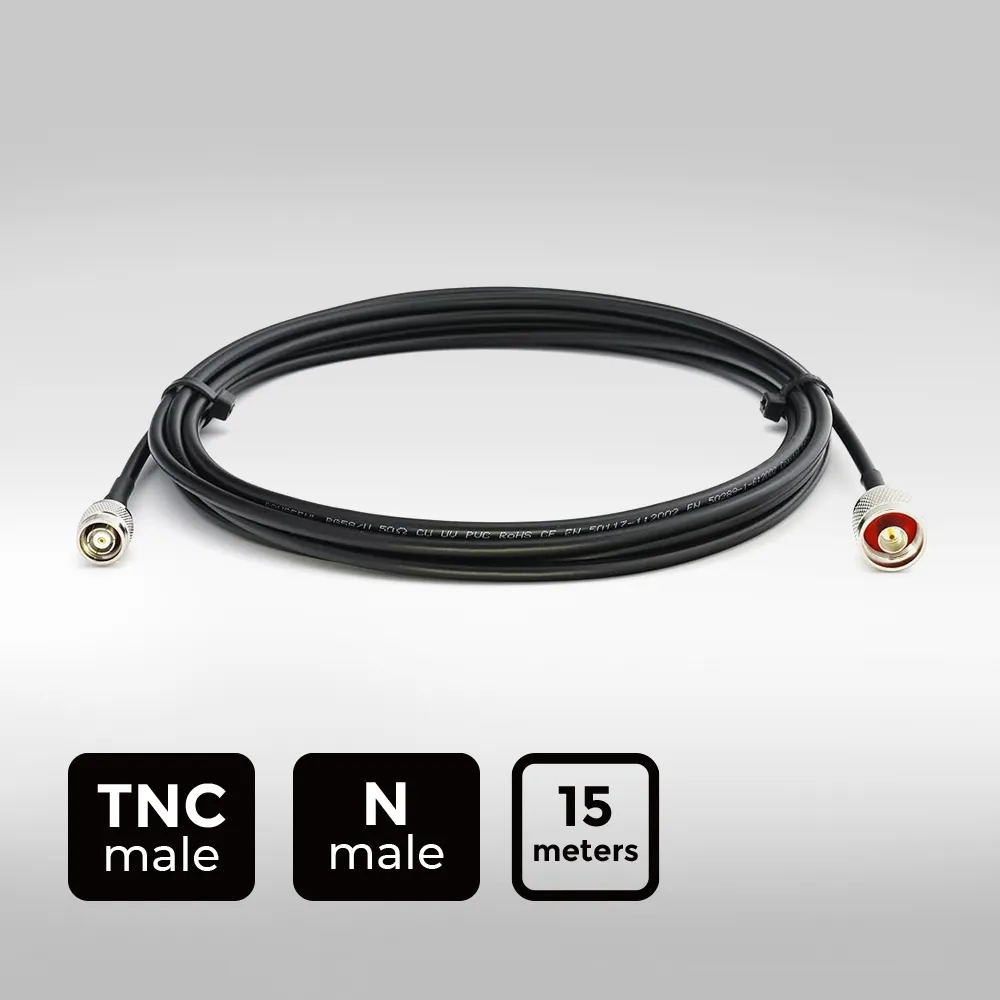
15-Meter Cable for UHF RFID Fixed Reader AZF-M1
RP-TNC male – N male, for AZF-M1 with 9-12 dBi antenna, 15 meters.
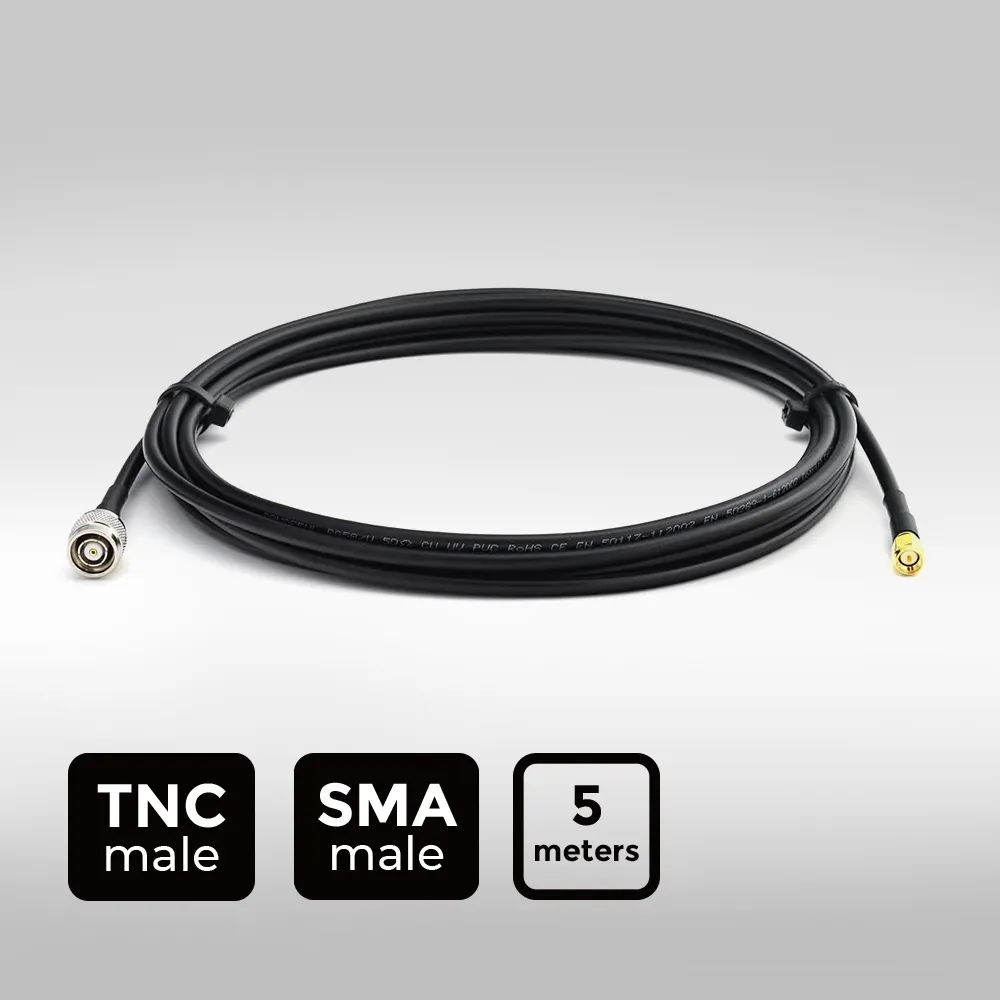
5-Meter Cable for UHF RFID Fixed Reader AZF-M1
RP-TNC male – SMA male, for AZF-M1 with 5 dBi antenna, 5 meters.