


Introduction
In recent years, the operational model of the global retail industry has been undergoing a profound transformation. Within this shift, radio frequency identification (RFID) technology has been identified as a key driver for achieving supply chain efficiency and inventory accuracy. Recently, globally renowned retail giants are breaking the RFID news today: to expand its commodity-level RFID deployment to nearly all product categories across its entire enterprise. This decision is seen as a clear signal that RFID technology in retail has formally transitioned from early pilot projects to becoming a mandatory, comprehensive industry standard.
This large-scale deployment plan impacts not only retailers’ own operations but also imposes new requirements on tens of thousands of global suppliers. For suppliers wishing to maintain partnerships with these major retailers, understanding and complying with the new RFID tagging requirements has become an urgent task.
The RFID Wave in Retail: From Apparel to Department Stores

RFID technology’s initial adoption in retail primarily focused on apparel and footwear. Fashion brands like Zara and Uniqlo achieved near-perfect inventory accuracy by attaching RFID tags to every item. This success significantly reduced stockouts and greatly enhanced the customer shopping experience.
As the technology matures and costs decline, RFID’s application scope is rapidly expanding. Major retailers recognise that the value of item-level visibility extends far beyond apparel. When every product—be it electronics, home goods, sporting equipment, or toys—can be tracked in real time, operational efficiency gains are substantial.
Case Focus: Deployment Requirements of Global Giants
To ensure supply chain transparency and efficiency, leading global retailers have begun requiring their suppliers to RFID-tag merchandise before shipment.
Walmart’s RFID mandate stands as one of the industry’s most closely watched developments. Following successful implementation in apparel, the retailer has progressively expanded requirements across broader merchandise categories.
| Department Category | Mandatory Tagging Timeline (Implemented/Planned) | Deployment Objectives |
| Apparel | Early Implementation (Completed) | Improve inventory accuracy, reduce theft and shrinkage |
| Home Goods | Starting September 2022 | Optimize shelf management, support omnichannel fulfillment |
| Electronics | Starting September 2022 | Track high-value items, prevent counterfeiting and loss |
| Sports Goods | 2023-2024 | Enhance item visibility, streamline returns process |
| Automotive Supplies | 2023-2024 | Ensure accurate parts inventory, improve supply chain efficiency |
| General Merchandise | Effective August 1, 2025 | Achieve enterprise-wide item-level visibility |
This enterprise-wide deployment plan aims to standardise processes, ensuring precise identification and tracking of all goods entering its distribution network. Suppliers are mandated to use tags compliant with RAIN RFID standards to guarantee global interoperability.
The Value Proposition of Commercial-Grade RFID: Why It’s Indispensable
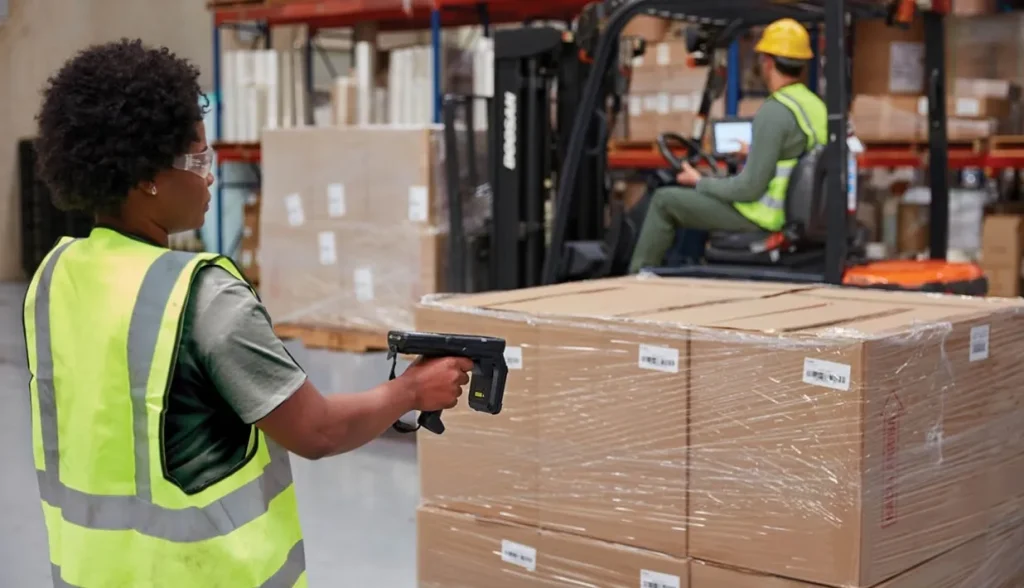
The deployment of commercial-grade RFID tags goes beyond merely meeting retailer requirements; it delivers multiple, far-reaching benefits across the entire supply chain. These advantages are primarily manifested in the following areas:
Significantly Enhanced Inventory Accuracy
Traditional inventory management often involves time-consuming and error-prone physical counts. Manual inventory checks or barcode scanning frequently fall short of achieving ideal accuracy levels. However, by leveraging RFID technology, inventory accuracy can be elevated to over 98%.
| Feature Comparison | Traditional Inventory Management (Barcodes) | RFID Inventory Management (Item-Level Tags) |
| Inventory Speed | Slow, requires scanning each item individually | Fast, supports batch reading (hundreds per second) |
| Accuracy | Moderate, susceptible to human error | High, achieving over 98% accuracy |
| Visibility | Visible only at scanning points | Real-time visibility, tracks item location |
| Labor Costs | High, requires significant manual involvement | Low, highly automated inventory processes |
| Omnichannel Support | Weak, inventory data lags | Strong, precise inventory data enables seamless online-offline integration |
Effectively Reduce Merchandise Loss (Shrinkage)
Merchandise loss, encompassing theft, administrative errors, and fraud, poses a significant challenge for retailers. By enabling item-level tracking, RFID tags deliver enhanced security. When merchandise is unlawfully removed from stores or warehouses, the system triggers immediate alerts, effectively minimising losses. Furthermore, precise inventory data aids in identifying and rectifying stock discrepancies caused by administrative errors.
Optimising Omnichannel Fulfilment Capabilities
In today’s retail landscape, consumers expect flexible shopping options such as “Buy Online, Pick Up In Store” (BOPIS) or “Buy Online, Return In Store.” These omnichannel services rely on real-time, accurate data about store inventory. If store inventory data is inaccurate, customers may arrive to find items out of stock, leading to decreased satisfaction. Item-level RFID ensures store associates can quickly locate requested merchandise and confidently commit to fulfilment times to customers.
Supplier Responses and Opportunities: From Compliance to Competitive Advantage
Challenge: Rapid Compliance Implementation
The primary challenge lies in achieving label compliance swiftly and efficiently. Retail giants impose stringent requirements on label types, encoding standards (e.g., EPC Gen 2 V2), and quality. Suppliers must identify a reliable partner capable of delivering:
- Industry-leading quality: Ensuring labels maintain high performance and reliability throughout the supply chain.
- Customisation capabilities: Addressing specific needs for diverse products and packaging, such as customised logos and shapes.
- Sustainable options: Offering eco-friendly material choices to align with growing brand commitments to sustainability.
Opportunity: Enhancing Supply Chain Efficiency
By proactively embracing RFID technology, suppliers not only meet retailer demands but also transform compliance costs into internal efficiency gains.
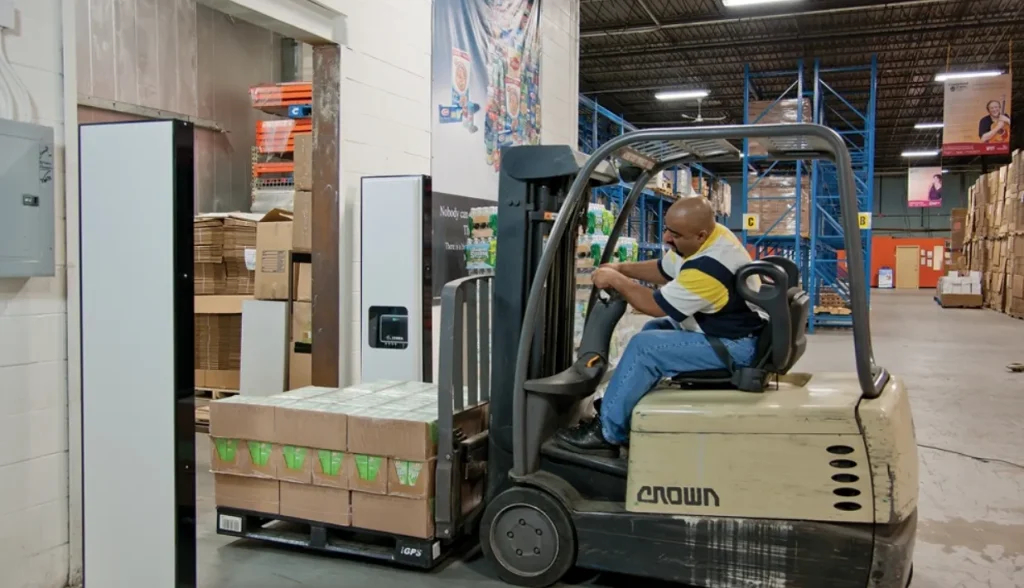
- Streamlined Shipping Processes: At the factory or warehouse level, RFID readers enable bulk, rapid case packing and shipment verification, replacing time-consuming barcode scanning.
- Enhanced Inventory Management: Suppliers can leverage RFID technology to manage raw material and finished goods inventories, improving production planning accuracy.
- Winning New Business: Suppliers with mature RFID tag solutions gain a distinct competitive edge over unprepared competitors.
Conclusion
A major retailer has announced an enterprise-wide, item-level RFID deployment plan, marking a new milestone for RFID technology in commercial applications. This technology is no longer merely an “option,” but a cornerstone of modern retail and supply chain operations.
For any business seeking to remain competitive in key export markets such as North America, Europe, and Australia—whether apparel brands or large retailers—investing in high-quality RFID solutions is a strategic decision.
We sincerely invite you to explore how our RFID labels and customised RFID solutions can help your business achieve compliance and exceed emerging industry standards.
Contact us today to ensure your supply chain transitions seamlessly into the new era of commodity-level RFID.





