
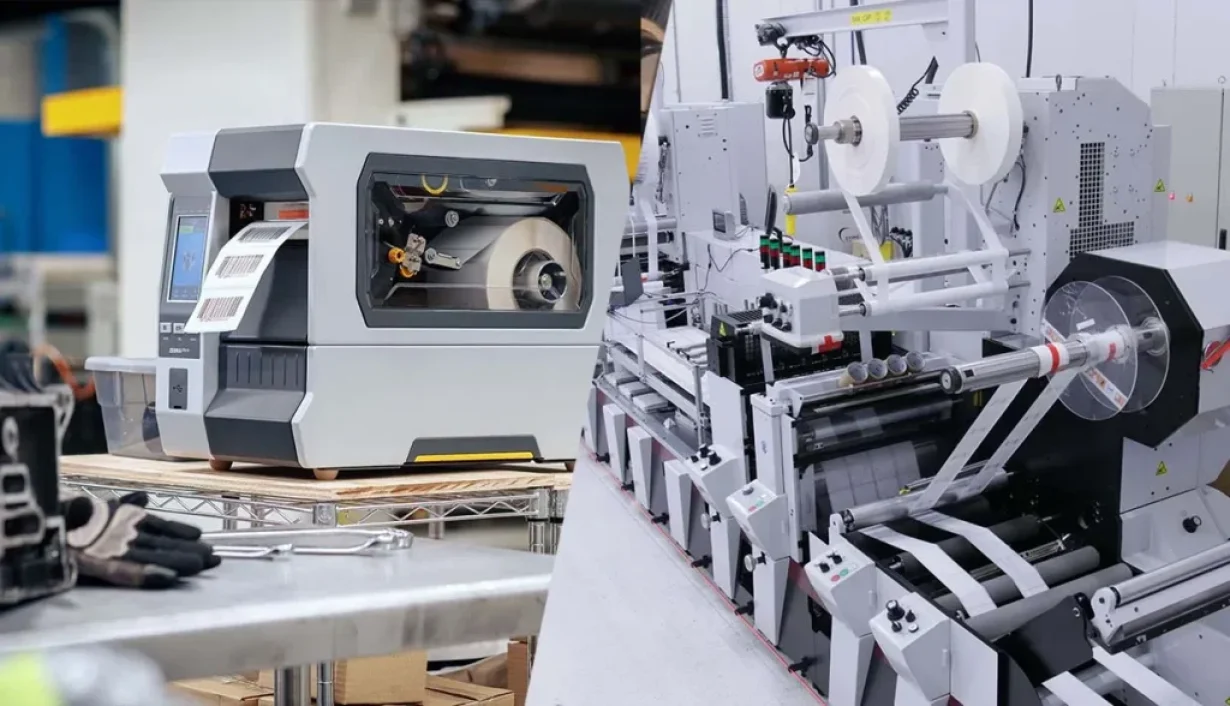

Choosing the right RFID label printer is crucial for optimizing your operations and managing tagging costs. This guide compares desktop and industrial models to help you find the best fit for your business needs.
Understanding Desktop RFID Label Printers
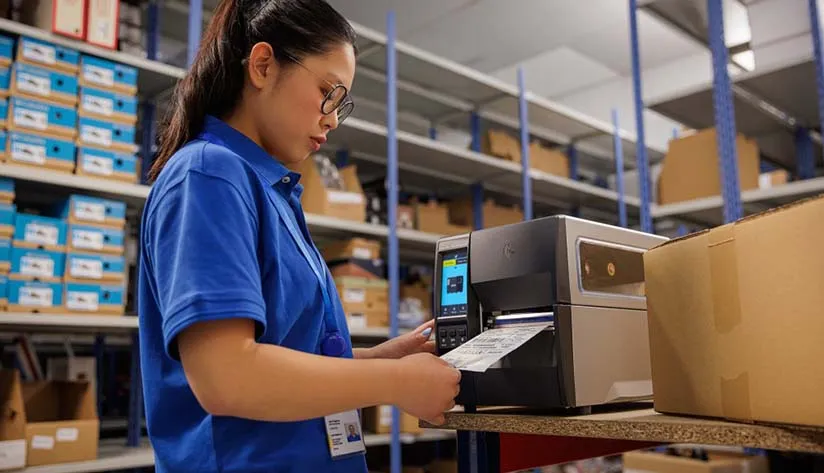
Desktop RFID label printer models are ideal for lower-volume printing, suitable for small to medium-sized businesses, retail, or office environments. They are compact, user-friendly, and have a lower initial investment, making them a cost-effective solution for various applications.
Key Characteristics of Desktop RFID Printers
- Compact Size: Fits easily on a desk, suitable for limited space.
- Ease of Use: Intuitive interfaces and simple media loading.
- Lower Initial Investment: More affordable upfront cost.
- Print Volume: Best for hundreds to a few thousand labels daily.
- Connectivity Options: Standard USB, Ethernet, and sometimes Wi-Fi.
Ideal Applications for Desktop RFID Printers
Desktop RFID printers excel in environments requiring flexibility and moderate volume, such as:
- Retail: On-demand tagging for items, returns, or promotions.
- Healthcare: Tracking patient records, samples, or medical equipment.
- Office Environments: Asset tracking for IT equipment or documents.
- Small Warehouses/Inventory Management: Labeling incoming goods or managing small inventory batches.
Exploring Industrial RFID Label Printers
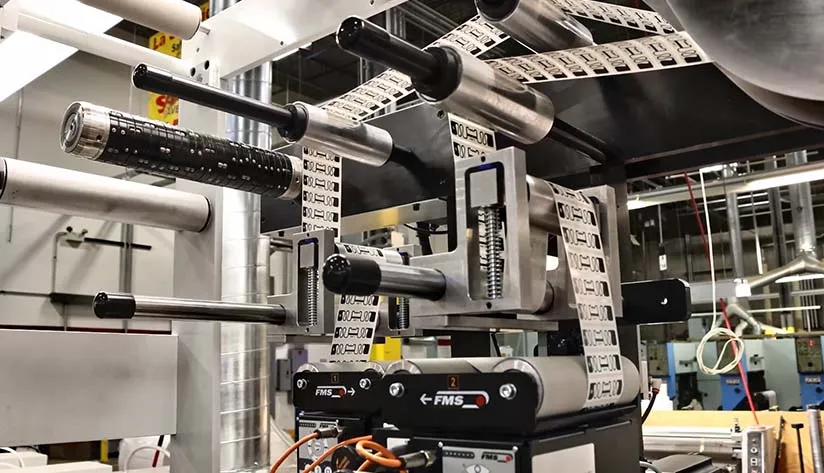
Industrial RFID label printer models are built for demanding, high-volume environments, engineered for continuous operation and harsh conditions. They are indispensable for consistent, high-speed printing of thousands of RFID labels daily.
Key Characteristics of Industrial RFID Printers
- Durability and Robustness: Metal frames and durable components for challenging environments.
- High Print Volume and Speed: Optimized for continuous, high-speed printing of large batches.
- Advanced Features and Connectivity: Wider range of features and robust network options.
- Larger Media Capacity: Accommodates larger rolls, reducing downtime.
- Higher Initial Investment: Greater upfront cost, but lower long-term TCO for high-volume users.
Ideal Applications for Industrial RFID Printers
Industrial RFID printers are essential for large-scale RFID deployments, commonly found in:
- Manufacturing: Tagging products throughout the production process.
- Warehousing and Logistics: High-speed labeling in large distribution centers.
- Supply Chain Management: Tracking goods across complex global supply chains.
- Asset Management: Tracking vast inventories in large organizations.
Desktop vs. Industrial RFID Label Printers: A Comparative Analysis
Choosing between a desktop and an industrial RFID label printer requires evaluating your operational needs, budget, and growth. Here’s a comparative analysis:
Key Differences at a Glance
| Feature | Desktop RFID Label Printer | Industrial RFID Label Printer |
| Print Volume | Low to Moderate | High to Very High |
| Durability | Lighter construction | Robust, heavy-duty construction |
| Footprint | Compact | Larger |
| Initial Cost | Lower | Higher |
| Operating Cost | Potentially higher per label at high volumes | Lower per label at high volumes |
| Maintenance | Simpler, often user-serviceable | More complex, may require professional servicing |
| Connectivity | Standard (USB, Ethernet, Wi-Fi) | Advanced (USB, Ethernet, Wi-Fi, Serial, Parallel, GPIO) |
| Media Capacity | Smaller rolls, more frequent changes | Larger rolls, less frequent changes |
| Typical Use Case | Retail, small offices, healthcare clinics | Manufacturing, large warehouses, logistics, supply chain |
Factors to Consider When Choosing Your RFID Label Printer
When selecting your RFID label printer, consider:
- Volume Requirements: Assess current and projected daily printing volume.
- Operating Environment: Evaluate conditions (office vs. warehouse).
- Budget & TCO: Consider initial cost, consumables, maintenance, and downtime.
- Integration Needs: How it fits with existing IT and ERP systems.
- Future Scalability: Anticipate growth in RFID tagging needs.
- Label and Tag Types: Compatibility with specialized media.
Optimizing Your Investment: Beyond the Initial Purchase
Beyond the initial price, consider the total cost of ownership (TCO) for your RFID label printer. This includes consumables, maintenance, and downtime. Industrial printers often offer better efficiency for high volumes, leading to lower per-label costs over time. While desktop printers are simpler to maintain, industrial models are built for reliability, minimizing costly downtime in high-volume operations.

Future Trends in RFID Printing Technology
The RFID landscape is evolving, bringing enhanced integration, intelligence, and sustainability to RFID label printer solutions. Future printers will feature seamless integration with enterprise systems for greater automation, leverage edge computing for local data processing, and prioritize eco-friendly options, ensuring your tagging infrastructure remains competitive and efficient.
Conclusion
Choosing the right RFID label printer is a pivotal decision that can significantly impact your operational efficiency and cost savings. Whether a desktop model suits your smaller-scale needs or an industrial powerhouse is required for your high-volume demands, understanding the nuances of each type is key. We hope this detailed comparison has provided you with the insights necessary to make an informed decision, optimizing your investment and streamlining your RFID tagging processes. For further information on our high-quality, customizable RFID solutions, or to explore our extensive range of RFID cards, tags, and labels, we invite you to visit rfidlabel.com. Our team is ready to assist you in finding the perfect RFID solution to meet your unique business requirements.
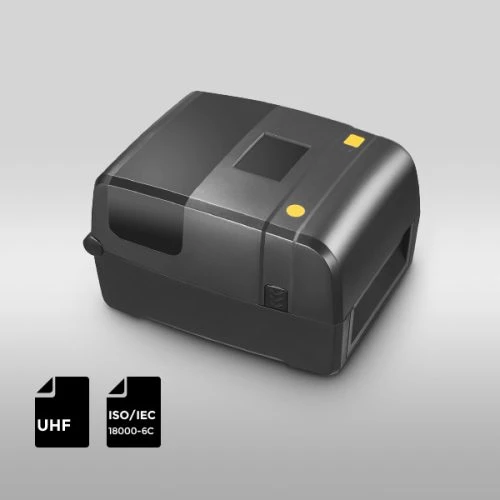
UHF RFID Printer AZ-CP30
Print speed up to 8 ips. With RFID function supporting UHF RFID, 860–960 MHz, and EPC C1G2 (ISO 18000–6C), with the function to automatically identify the printer head with 203 dpi and 300 dpi and automatically configure the printer without PC settings. With super large storage, DDR2 RAM 128 MB, Flash 256MB. Support multiple interfaces, USB HOST, B-type USB, Ethernet port for standard, Wi-Fi, and Bluetooth module for optional.



