


RFID supply chain monitoring is no longer a futuristic concept; it is the essential backbone for businesses seeking true end-to-end transparency and operational excellence in a competitive global market. When production exceeds actual market demand, companies face mounting costs, wasted resources, and diminished profitability. However, implementing RFID technology fundamentally changes how manufacturers approach inventory management and production planning. By providing real-time visibility into stock levels and consumption patterns, RFID overproduction of goods solutions enable businesses to shift from reactive manufacturing to demand-driven operations.
Understanding Overproduction in Modern Manufacturing
Overproduction occurs when manufacturers produce more goods than the market demands, creating excess inventory that ties up capital and warehouse space. This waste stems from several interconnected factors:
- Inaccurate demand forecasting – Traditional methods rely on historical data that may not reflect current market trends
- Communication delays – Information gaps between sales, procurement, and production departments lead to misaligned production schedules
- Lack of real-time visibility – Without instant access to inventory data, production managers cannot adjust output quickly
- Safety stock misconceptions – Excessive buffer inventory accumulates as a precaution against supply disruptions
The consequences are significant. According to industry research, manufacturers typically carry 20-30% more inventory than necessary, directly impacting cash flow and operational efficiency. This is where RFID overproduction of goods prevention becomes critical.

How RFID Technology Addresses Overproduction
RFID overproduction of goods solutions work by creating an automated, transparent supply chain where every item is tracked from production through distribution. Unlike barcode systems that require line-of-sight scanning, RFID tags communicate wirelessly with readers, enabling batch scanning and continuous monitoring.
The Inventory Visibility
RFID systems provide manufacturers with instantaneous data on inventory levels across production floors, warehouses, and distribution centers. This visibility enables production teams to see exactly what stock exists at any moment, eliminating the guesswork that typically drives overproduction. When managers know current inventory levels, they can adjust production schedules to match actual demand rather than estimated demand.
Demand-Driven Production Planning
By integrating RFID data with enterprise resource planning (ERP) systems, manufacturers implement pull-based production models. Instead of pushing products into the market based on forecasts, teams pull inventory based on actual customer orders and consumption data. This shift dramatically reduces RFID overproduction of goods incidents.
Automated Reorder Points
RFID systems can be configured to trigger automatic reorder notifications when stock levels fall below predetermined thresholds. This prevents both stockouts and overstock situations, maintaining optimal inventory levels that balance availability with cost efficiency.

Real-World Application: Fashion and Retail
The fashion industry demonstrates how RFID overproduction of goods prevention delivers tangible results. Leading apparel manufacturers have implemented RFID tracking throughout their supply chains, from factory floors to retail stores. These implementations have achieved remarkable outcomes:
- Inventory accuracy improvements of 25-30% compared to manual counting methods
- Out-of-stock reductions up to 50%, ensuring products reach customers when needed
- Labor cost savings of up to 90% in warehouse operations through automated tracking
- Cycle count acceleration by 25 times, allowing more frequent inventory audits

Implementation Strategies for Reducing Overproduction
Phase 1: Supply Chain Mapping
Begin by identifying all touchpoints where inventory data should be captured. This includes manufacturing facilities, quality control stations, warehouses, and distribution centers. Proper placement of RFID readers at these locations ensures comprehensive tracking that prevents blind spots where overproduction might occur undetected.
Phase 2: Integration with Existing Systems
Connect RFID infrastructure to your ERP and inventory management systems. This integration transforms raw RFID data into actionable insights that automatically inform production decisions. When systems communicate seamlessly, production teams receive alerts about inventory levels before overproduction becomes a problem.
Phase 3: Data Analysis and Optimization
Use RFID-generated data to identify patterns in consumption, seasonality, and demand fluctuations. This historical analysis enables more accurate forecasting and helps teams understand which products tend toward overproduction, allowing for targeted interventions.

Key Benefits Beyond Overproduction Prevention
While preventing RFID overproduction of goods is the primary benefit, RFID systems deliver additional advantages:
| Benefit | Impact |
| Enhanced traceability | Quickly locate products and identify quality issues |
| Improved customer satisfaction | Faster order fulfillment and product availability |
| Reduced shrinkage | Better control over inventory loss and theft |
| Compliance support | Easier documentation for regulatory requirements |
| Sustainability gains | Less waste through optimized production and reduced obsolescence |
Choosing the Right RFID Solution
Successfully implementing RFID supply chain monitoring requires more than just technology—it also depends on a reliable manufacturing and delivery partner. When selecting RFID systems to combat RFID overproduction of goods, consider these factors:
- Customization capabilities – Your RFID tags should accommodate your specific products, whether apparel, electronics, or industrial goods. Custom tag shapes, sizes, and mounting options ensure seamless integration into your manufacturing process.
- Scalability – Choose solutions that grow with your business. Whether you operate five production lines or fifty, your RFID infrastructure should expand without requiring complete replacement.
- Eco-friendly options – Modern manufacturers increasingly prioritize sustainability. Select RFID providers offering recyclable or biodegradable tag materials that align with environmental commitments.
- Integration flexibility – Your RFID system must communicate with existing software platforms. Look for providers offering robust API support and proven integration with major ERP systems.

Conclusion
RFID overproduction of goods prevention represents a fundamental shift in how manufacturers approach inventory management. By implementing RFID technology, companies transition from reactive, forecast-driven production to intelligent, demand-responsive operations. The result is optimized inventory levels, reduced waste, improved profitability, and enhanced customer satisfaction.
At RFIDSolution, we understand the critical role that quality RFID products play in your manufacturing success. Our customizable RFID cards, tags, labels, and wristbands are designed specifically for manufacturers seeking to eliminate overproduction and streamline operations. Whether you need high-quality RFID labels for retail applications, durable RFID tags for industrial environments, or custom solutions tailored to your unique requirements, we deliver products that integrate seamlessly into your supply chain. Visit rfidsolution.com to explore our comprehensive product range and discover how we can help your organization achieve true inventory optimization. Our team is ready to discuss flexible minimum order quantities and wholesale pricing that fits your business model.
FAQs
1. How quickly can RFID systems reduce overproduction in an existing manufacturing operation?
Most manufacturers observe measurable improvements within 3-6 months of RFID implementation. Initial results typically include improved inventory accuracy and faster cycle counts. Significant reductions in overproduction usually become evident within 6-12 months as teams optimize production schedules based on RFID data insights. The timeline depends on your operation’s complexity, existing system integration capabilities, and staff training effectiveness.
2. What is the typical return on investment (ROI ) for RFID systems focused on preventing overproduction?
ROI varies by industry and operation size, but many manufacturers report payback periods of 18-36 months. Benefits include reduced inventory carrying costs, decreased obsolescence, improved cash flow from optimized production, and labor savings from automated tracking. Retailers implementing RFID for inventory management often see ROI within 2-3 years through reduced stockouts, improved sales, and operational efficiency gains. The key is accurately calculating your current overproduction costs to establish a baseline for measuring improvement.
Recommended Product
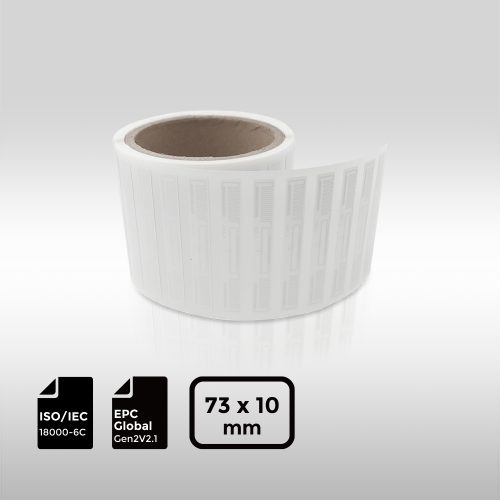
Avery Dennison® ARC Certified NXP® UCODE® 9 RFID Label | 73×10mm

The AD Longbow U9 ARC-certified RFID label is a narrow-format solution for space-limited retail and industrial applications worldwide. With its ultra-compact 73×10 mm size and NXP UCODE® 9 chip, it delivers reliable read/write performance even in challenging conditions. Its adaptive capabilities make it effective on difficult-to-tag or low-detuning materials like cardboard and plastic and in close-coupled applications, supporting inventory management, supply chain tracking, and brand protection for large retail systems like Dillard’s.
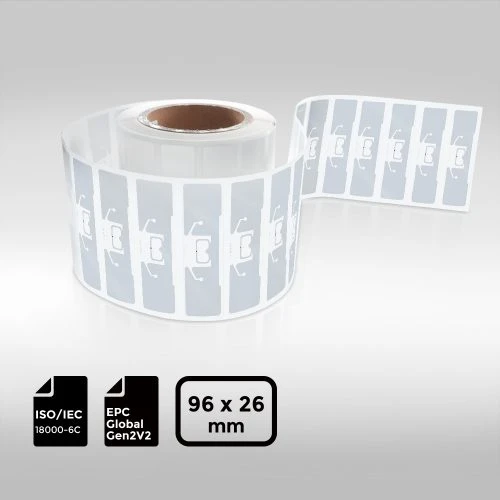
Avery Dennison® ARC Certified Impinj® M830 UHF RFID Label | 96×26mm
The 96×26 mm Avery Dennison® ARC Certified Impinj® M830 RFID Label is designed for reliable item-level identification in retail, logistics, and supply chain applications. Built with the advanced Impinj® M830 chip, this UHF RFID label delivers stable read performance, fast inventory capture, and dependable data accuracy across high-volume RFID operations. With its ARC-certified inlay, it provides a practical solution for inventory management, shipment tracking, retail tagging, and supply chain visibility.

ARC Certified Impinj® M730 Coated Paper RFID Label 47x31mm
This ARC-certified RFID label can be used in clothing retail, supply chain management, and brand protection. They not only fully conform to the ISO/IEC 18000-6C and EPCglobal Gen2v2 standards, but their inlays have also completely passed the ARC certification tests, ensuring stable performance and reliable tracking. Ideal for retail chains such as Walmart and Dillard’s, it helps streamline inventory management, enhance supply chain visibility, and maintain brand integrity.



