As RFID technology has gained wide popularity worldwide, RFID has changed people’s lifestyles and work patterns. Whether it is logistics and warehousing, retail, medical, manufacturing and so on. All industries can see the application of RFID technology. However, different countries and regions have strict regulatory requirements for the use of RFID frequency bands, so there are obvious differences in the application of RFID frequency bands in various countries and regions. A comprehensive understanding of the differences in frequency bands between countries and regions, as well as the key frequencies, will be necessary for organizations wishing to deploy RFID technology in the global marketplace. This blog will explain in detail the RFID frequency bands in each country and region of the world and how to deal with the challenges posed by the differences in frequency bands.
Introduction of RFID Frequency Band
Depending on the frequency range, RFID systems are mainly divided into three types: low-frequency, high-frequency and ultra high-frequency. These frequency bands all have different characteristics and application areas:
- Low-frequency: Low-frequency range from 30 kHz to 300 kHz, while commonly used low frequencies are between 125 kHz and 134.2 kHz. This frequency band signal has excellent penetration and is suitable for use in environments with liquids or metals. Generally speaking, low-frequency RFID application areas include animal identification, vehicle access control, etc.
- High-frequency: The frequency band of high-frequency ranges from 3 MHz to 30 MHz and the commonly used high-frequency band is 13.56 MHz. This frequency band is prominent in close reading and anti-interference and is widely used in payment systems, library management, and smart cards.
- Ultra High-frequency: The frequency band of ultra high-frequency ranges from 300 MHz to 3 GHz. Commonly used ultra high-frequency band is between 860 MHz and 960 MHz. This frequency band allows long-distance reading and data transmission speeds are faster than the other two. Ultra high-frequency RFID often appears in logistics, warehousing and supply chain management.
Allocation of RFID frequency bands in different regions of the world

North America
For example, countries in North America such as the United States, Mexico, and Canada use the RFID frequency band mainly between 902 MHz and 928 MHz. In addition, when they use this frequency band, they will be subject to regulation by the FCC organization. The organization’s regulation of frequency bands is to ensure that companies use them in the fields of industry, medicine and science. Compared with other regions, North America has a relatively wide frequency band range and can provide larger spectral bandwidth. This greatly improves the data transmission rate and read range. So the North American market is a very attractive area for companies that want to deploy UHF RFID applications.
European region
The RFID frequency band used in Europe is usually between 865 MHz and 868 MHz. Enterprises will be subject to supervision by the ETSI organization when using this frequency band. Although this frequency band is relatively narrow, only 3 MHz. But for the European region, it can already meet the needs of most applications. Because the width of the frequency band is relatively limited, corresponding adjustments need to be made when using RFID labels and readers. For example, their transmission power can avoid signal interference. In addition, deploying RFID technology in Europe also needs to consider whether it will interfere with other wireless services. If it affects other wireless services, you may face penalties by relevant regulations and standards. Regulation in this regard will be stricter in Europe.
Asia Pacific region
The Asia-Pacific region includes multiple countries and regions, and the frequency bands used vary between countries and regions. Here are the frequency bands of some major countries:
- China: The RFID frequency band used in China is mainly between 920 MHz and 925 MHz and is subject to the management of the Ministry of Industry and Information Technology. Although China’s RFID frequency band is relatively narrow, it can still meet most RFID applications.
- Japan: Japan’s RFID frequency band is between 916.7 MHz and 923.5 MHz, and frequency allocation is relatively complex. More importantly, companies in some cases require an official license to use specific frequencies.
- India: The RFID frequency band used in India is between 865 MHz and 867 MHz. India’s RFID frequency range is the same as Europe’s. In India, RFID technology is often used in the logistics and retail industries.
Latin America
In Latin America, most countries use the RFID frequency band between 902 MHz and 928 MHz, which is almost the same as in North America. Therefore, RFID equipment has excellent compatibility between North American and Latin markets. However, regulatory regulations and market needs are different between countries, so the actual frequency of use will also vary. For example, the RFID frequency bands used in Brazil are between 902 MHz and 907.5 MHz and between 915 MHz and 928 MHz.
Middle East and Africa
The allocation of RFID frequency bands in the Middle East and Africa has diverse characteristics compared with other regions. But it is generally similar to Europe and North America. Some countries use the frequency band between 865 MHz and 868 MHz, while others use the frequency band from 902 MHz to 928 MHz. Companies need to pay special attention to frequency compatibility when deploying RFID technology in these Middle East and Africa regions.
How to deal with frequency band differences?
Select globally compatible equipment
To simplify cross-regional deployment, companies can choose to support multi-frequency bands of RFID devices. These devices can not only work in different frequency bands but also ensure global compatibility. In addition, RFID manufacturers can provide programmable readers that allow companies to switch frequency bands based on actual needs to adapt to different markets.
Ensure compliance
When companies deploy RFID systems globally, they need to understand the spectrum management policies of the target market in detail and ensure that the equipment and frequency bands used comply with local regulations. In addition, companies should conduct spectrum planning and field testing in advance to avoid deployment delays or fines caused by inconsistent frequency bands.
Collaborate with professional teams
In complex global markets, companies should work with experienced professional RFID teams or consultants. Effectively help enterprises cope with the challenges and problems brought by differences in frequency bands. These experts can not only provide technical support and regulatory advice but also assist companies in cross-regional system optimization.
Conclusion
Only with a comprehensive understanding of RFID bands and key frequencies around the world can enterprises better deploy RFID systems successfully in the corresponding markets. Despite the differences in frequency bands between countries and regions, enterprises can effectively solve these challenges by choosing devices with excellent compatibility and by planning for the frequency spectrum in advance. As RFID technology continues to improve and expand, the regulation and standardization of frequency bands will continue to be optimized. Enterprises should always keep an eye on industry trends and the latest standards to ensure that the RFID system deployed is always in a leading position globally.
After reading this blog, do you have enough knowledge about global RFID frequency bands? If you still need more information, you can contact our sales experts, who will provide you with the suitable solutions and the professional purchase advice according to your needs. Besides, you can also visit our official website (rfidlabel.com) to browse more information.
Recommended Product
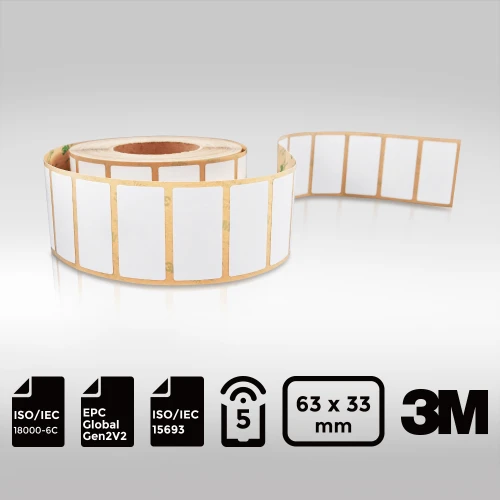
UHF+NFC Dual Frequency RFID Label EM4425 (EM|echo-V) 63x33mm

Optimize your asset management and customer engagement with our 63x33mm EM4425 (EM|echo-V) dual-frequency RFID label. Compliant with ISO/IEC 180006C, EPC Gen2, ISO15693, and NFC Tag Type 5 protocols, this PET-faced label with 3M adhesive offers robust tracking and interactive capabilities in one versatile package.