


Circular polarized antennas are revolutionizing how we approach RFID deployments, especially in challenging environments. We understand that in today’s fast-paced world, efficient and reliable data capture is paramount for businesses, and the right antenna technology can make all the difference. This article will delve into the unique advantages of circular polarization and how it ensures superior performance where traditional linear antennas often fall short.
The Fundamental Advantage of Circular Polarization
In the realm of Radio Frequency Identification (RFID), the orientation of an antenna’s electromagnetic field plays a crucial role in its ability to read tags. Linear polarized antennas emit waves in a single plane, meaning that if an RFID tag is not perfectly aligned with this plane, the read rate can drop significantly. This is a common issue in real-world scenarios where tags might be oriented randomly, such as on pallets of goods or in dynamic inventory systems.
Overcoming Orientation Challenges with Circular Polarized Antennas
Circular polarized antennas, on the other hand, emit electromagnetic waves that rotate as they propagate. This rotating field ensures that the antenna can effectively read tags regardless of their orientation. Imagine a corkscrew motion of the radio waves; this continuous rotation increases the probability of the tag’s antenna aligning with the reader’s signal at some point during the read cycle. This inherent flexibility makes circular polarization ideal for applications where precise tag alignment is impractical or impossible.
Enhanced Read Reliability in Complex Settings
Dense RFID environments, characterized by numerous tags in close proximity and the presence of various materials that can interfere with radio signals, pose significant challenges. Metallic surfaces, liquids, and even other RFID tags can create signal reflections and multipath interference, leading to missed reads and reduced system accuracy. This is where the robust nature of a circular polarized antenna truly shines.
Mitigating Multipath Interference
Multipath interference occurs when radio waves bounce off multiple surfaces before reaching the reader, causing signals to arrive at different times and phases. This can lead to signal cancellation and poor read performance. Circular polarization helps to mitigate this effect because the rotating wave is less susceptible to phase cancellations caused by reflections. The antenna is more likely to receive a strong, consistent signal, even in highly reflective environments like warehouses or manufacturing facilities.
Applications Where Circular Polarized Antennas Excel
The versatility of circular polarized antennas makes them indispensable across a wide range of industries. From retail and logistics to healthcare and manufacturing, their ability to provide reliable reads in challenging conditions translates directly into improved operational efficiency and data accuracy.
Inventory Management in a Retail Environment
Consider the large retail store utilizing RFID for inventory management. Products are often stacked haphazardly on shelves, and tags can be oriented in any direction. A linear antenna would struggle to achieve high read rates, leading to inaccurate inventory counts and potential stockouts. However, by deploying circular polarized antennas at key checkpoints, such as receiving docks and sales floors, the store can achieve near-perfect read rates, ensuring real-time inventory visibility. This allows for optimized restocking, reduced shrinkage, and an enhanced customer experience.

Key Considerations for Implementing Circular Polarized Antennas
When integrating circular polarized antennas into an RFID system, several factors should be considered to maximize their benefits. These include antenna gain, beamwidth, and environmental factors.
Antenna Gain and Beamwidth
| Feature | Description |
| Antenna Gain | A measure of an antenna’s ability to direct radio frequency energy in a particular direction. Higher gain means a more focused beam and longer read range. |
| Beamwidth | The angular width of the antenna’s radiation pattern. A wider beamwidth is suitable for broader coverage areas, while a narrower beamwidth is better for precise, targeted reads. |
Selecting the appropriate gain and beamwidth for your specific application is crucial for optimal performance. For example, a wide beamwidth circular polarized antenna might be ideal for a portal reader at a warehouse entrance, while a narrower beamwidth might be preferred for reading individual items on a conveyor belt.
Conclusion
In conclusion, the strategic deployment of circular polarized antennas offers a powerful solution for overcoming the complexities of modern RFID environments. Their inherent ability to handle random tag orientations and mitigate multipath interference ensures superior read reliability and accuracy. For businesses seeking to optimize their RFID operations and achieve robust data capture, understanding and leveraging the advantages of circular polarization is key. We invite you to explore our comprehensive range of RFID products and solutions at rfidlabel.com to discover how our expertise can help you achieve your operational goals. Visit rfidlabel.com today to learn more or to inquire about our customizable RFID solutions.
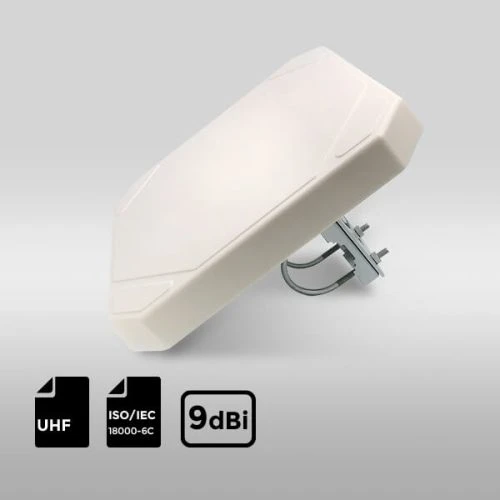
UHF 9-dBi RFID Antenna ISO 18000-6C
The UHF RFID Antenna 9dBi features high-speed reading and writing, supporting long-distance, high-volume tag identification with high data security and outstanding performance. It is compact, lightweight, low-profile, and easy to install, boasting an IP67 high protection rating. It can be widely used in logistics, warehousing, transportation, retail, medical, power, finance, ticketing, animal husbandry, etc.



