


Introduction
In the grand narrative of modern commerce, efficiency and visibility have become cornerstones of corporate success. From the warehouses of global logistics giants to bustling retail stores and seamless check-in experiences at luxury hotels, automated systems are reshaping our operational models at unprecedented speed. Yet behind every efficient automation system lies a “central brain” that continuously and accurately delivers information. This central brain is the Radio Frequency Identification (RFID) label.
This article will delve into the professional perspective of how RFID labels serve as the core driving force behind auto ID systems and how they can bring revolutionary change to your business.
Part One: Understanding RFID—The “Neurons” of Automated Systems
To understand the importance of RFID labels, we first need to grasp their fundamental operating principles. RFID, or Radio Frequency Identification, is a contactless automatic identification technology. It automatically identifies target objects and acquires relevant data via radio frequency signals, requiring no manual intervention and functioning reliably in various harsh environments.
Basic Components of RFID
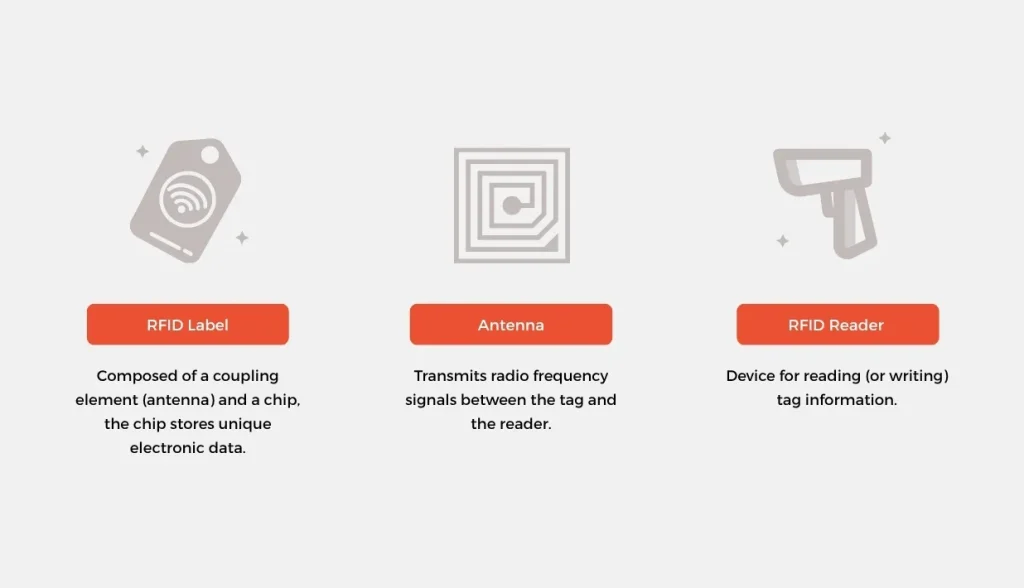
A complete RFID system typically consists of three fundamental parts:
label: This is our core product. labels consist of a coupling element (antenna) and a chip storing unique electronic data. Based on power supply methods, labels are categorized into passive, active, and semi-active types. Passive labels derive energy from the electromagnetic field emitted by readers, offering low cost and serving as the mainstream choice in retail and logistics. Active labels incorporate batteries, enabling longer read ranges and suitability for asset tracking and location services.
Reader: A device used to read (or write) label information. Readers transmit radio frequency signals via antennas and receive signals returned by labels. They can be fixed installations at doors, gates, or production lines, or mobile devices carried by staff.
Antennas: Transmit RF signals between labels and readers. Antenna shape and size determine read range and directionality, making them critical factors in system performance.
Real-Time Data Transmission Mechanisms and Frequency Selection
RFID labels serve as the “core brain” of automated systems primarily due to their real-time data delivery capability. This real-time functionality relies on RF communication across different frequencies.
Real-time functionality manifests in several aspects:
Continuous Data Stream: In logistics, warehousing, or production lines, items bearing RFID labels can be tracked uninterruptedly as they pass through multiple readers. The system instantly knows “who, when, and where” each label is read, forming a continuous, real-time movement trail. This data stream provides enterprises with unprecedented end-to-end visibility.
Instant Status Updates: Data within labels can be updated in real time (for writable labels). For example, during manufacturing, a product’s label data can be immediately updated to “completed” status after finishing a process, providing instant instructions for the next automated step. This instant feedback mechanism is essential for achieving flexible manufacturing and intelligent warehousing.
Obstacle-Free Identification: Unlike barcodes requiring line-of-sight, RFID labels can be read through cardboard, plastic, clothing, and even certain non-metallic barriers. This significantly streamlines automated processes—for instance, enabling inventory counts without opening packaging—drastically reducing manual intervention and errors.
Impact of Frequency Selection on Real-Time Capabilities:
| Frequency Type | Typical Frequency | Read Range | Application Examples |
| Low Frequency (LF) | 125 kHz – 134 kHz | Short (< 10 cm) | Animal identification, access control, automotive anti-theft. |
| High Frequency (HF) | 13.56 MHz | Medium (< 1 m) | Hotel key cards, library management, payment applications (NFC). |
| Ultra-High Frequency (UHF) | 860 MHz – 960 MHz | Long (1 m – 10+ m) | Supply chain logistics, retail inventory, asset tracking. |
Part Two: Comparing RFID labels with Traditional Identification Technologies—The Inevitable Path to Automation Upgrades
To more clearly demonstrate the advanlabeles of RFID labels in automated systems, it is necessary to compare them with traditional barcode technology. This comparison will highlight RFID’s superior performance in data capacity, reading efficiency, and security, proving it to be the inevitable choice for automation upgrades.
| Features | RFID labels | Traditional Barcodes (1D/2D) | Advanlabeles in Automated Systems |
| Reading Method | Contactless, no line-of-sight required | Contact or proximity scanning, line-of-sight required | High automation: No manual alignment needed; embeddable inside items for “blind reading”. |
| Reading Speed | Extremely fast, supports batch reading (hundreds at once) | Relatively slow, reads one item at a time | High efficiency: Significantly reduces inventory and warehouse processing times, enabling batch handling. |
| Data Capacity | Large (ranging from several KB to several MB) | Small (1D codes: tens of kilobytes; 2D codes: thousands of kilobytes) | High Information Capacity: Stores extensive product details and historical records, supporting complex traceability. |
| Reusability | Reusable with erasable data | Data fixed and unchangeable once printed | Low Cost/Sustainability: Recyclable for asset management, logistics pallets, etc., aligning with eco-friendly trends. |
| Security | Features password protection and encryption mechanisms | Prone to duplication and counterfeiting | High Security: Suitable for access cards, payments, anti-counterfeiting, etc., safeguarding data integrity. |
| Environmental Adaptability | Withstands harsh conditions (high temperatures, humidity, dust, metal adhesion) | Susceptible to contamination and wear | High Reliability: Suitable for demanding environments like factories, outdoor settings, and cold chain logistics. |
Conclusion: In automated systems demanding high efficiency, accuracy, and security, RFID labels—with their contactless, bulk-read, and rewritable capabilities—have become the ideal upgrade solution for barcodes. For modern enterprises seeking real-time data and end-to-end visibility, the benefits delivered by RFID technology far outweigh its initial investment.
Part Three: Applications of RFID labels in Core Target Industries—Realizing the Value of Real-Time Data
Hotel and Access Control Management: Seamless Experience and Security Assurance
For renowned hotel brands, customer experience is paramount. Our hotel key cards and access cards serve as the perfect medium for seamless check-in and secure management.
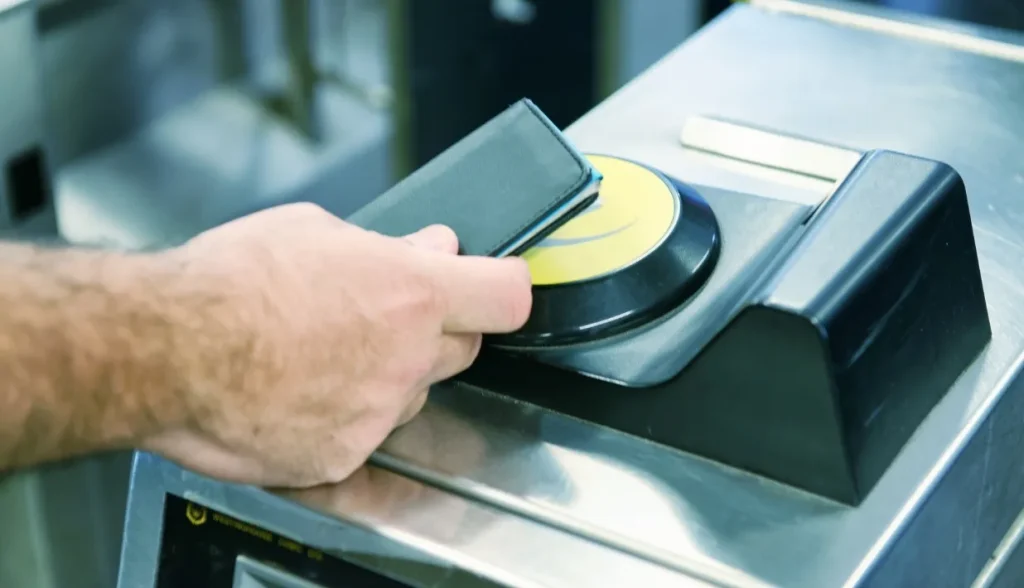
Automated Check-in Process: Guests simply tap their room card to complete identity verification and unlock their room—a swift and elegant process. The high-security chip in High-Frequency (HF) RFID cards ensures the confidentiality of guest information.
Employee Access Control: RFID access cards restrict staff entry to designated areas, ensuring secure and orderly back-of-house operations. The system records employee entry/exit times in real-time, providing accurate data for workforce management and security audits.
Asset Tracking and Linen Management: Within the hotel, RFID labels track high-value assets like equipment, uniforms, and linens. Wash-resistant RFID labels embedded in linens enable automated inventory counts and wash cycle tracking, significantly reducing loss and operational costs.
Retail and Apparel Industry: Real-Time Inventory Visibility and Precision Marketing
For retailers like Walmart and Costco, as well as apparel brands such as Uniqlo, Zara, Nike, and Adidas, inventory management is critical to profitability. Ultra-high frequency (UHF) RFID labels provide “X-ray vision” capabilities in this context.
Real-Time Inventory Counting and Accuracy Improvement: Staff using handheld readers can complete inventory counts for entire sections in minutes, not hours. This elevates inventory accuracy from the traditional 60%-70% range to over 95%. Real-time, precise inventory data directly translates to higher sales (by reducing out-of-stocks) and lower operational costs (by decreasing safety stock).
Loss Prevention and Anti-Counterfeiting: RFID labels integrate with EAS (Electronic Article Surveillance) systems for smarter loss prevention. Custom RFID labels also serve as brand authentication tools, allowing consumers to verify product authenticity via NFC (an HF label application), safeguarding brand value.
Omnichannel Fulfillment: Real-time, accurate inventory data is the foundation for omnichannel retail models like “Buy Online, Pickup In-Store” (BOPIS) and “Store Fulfillment” (SFS). Only with real-time inventory visibility can orders be accurately allocated and swiftly fulfilled.
Logistics and Supply Chain: Dynamic Tracking and Efficiency Optimization
In B2B logistics and supply chain operations, RFID labels and customized RFID labels are central to achieving efficient, transparent transportation.
Cargo Tracking and Location: UHF RFID labels affixed to pallets, containers, or individual packages automatically record their location information as they pass through loading docks and sorting lines. This end-to-end real-time visibility empowers businesses to proactively manage transportation risks and provide customers with precise delivery time estimates.
Automated Sorting: In large sorting centers, high-speed readers instantly identify labels on packages and direct them to the correct paths, significantly boosting sorting efficiency and accuracy. Mass reading capability is key to achieving high-throughput sorting.
Cold Chain Monitoring: RFID labels integrated with temperature sensors continuously record and transmit environmental data during transit. This critical information ensures product quality and compliance for temperature-sensitive goods like food and pharmaceuticals.
Industrial & Manufacturing: Production Line “Digital Fingerprints” and Flexible Manufacturing
Within factories and production lines, RFID labels serve as the “digital fingerprint” for each work-in-process (WIP) item.
Production Traceability: labels document every processing step from raw materials to finished goods, including elapsed time, operator details, and equipment information, enabling complete lifecycle traceability. This is vital for quality control, recall management, and regulatory compliance.
Flexible Manufacturing: Different products can be labelged with distinct RFID labels. Automated equipment (such as robotic arms) can automatically adjust workflows based on read label information, enabling flexible production of small batches and diverse product varieties. This allows factories to rapidly respond to market changes and enhance production efficiency.
Public Transportation and Payments: The Fusion of Convenience and Security
For public transportation systems like subway companies, our RFID cards and RFID labels are central to enabling fast, secure payments and access.
Contactless Payments: High-frequency (HF) RFID cards (such as city transit cards) allow passengers to swiftly pass through turnstiles, significantly improving passage efficiency and reducing queue times.
Asset Management: Metro operators can also utilize RFID labels for efficient tracking and maintenance management of track equipment, tools, and critical assets.
Conclusion
The future of automation systems is one driven by real-time data. As the central brain within this network, RFID labels deliver invaluable real-time information to enterprises with unprecedented precision and efficiency.
We sincerely invite distributors, retailers, and any businesses seeking RFID solutions to connect with RFIDLabel. Let us leverage our industry-leading manufacturing capabilities and flexible customization services to tailor RFID products perfectly suited to your automation needs.
Recommended Product





