
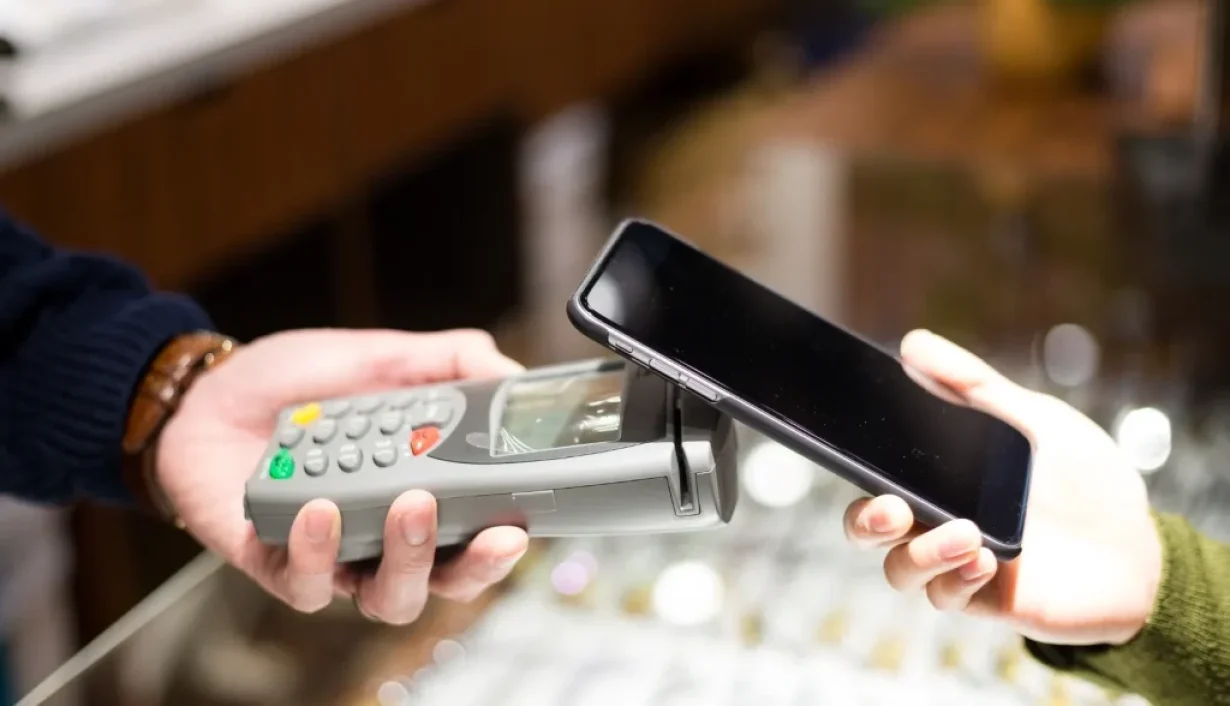

In today’s increasingly interconnected world, Near Field Communication (NFC) technology has become a key tool for simplifying our daily lives and workflows. From contactless payments to smart posters and inventory management, the applications of NFC tags are ubiquitous. However, as you prepare to program important or even sensitive information onto these small tags, a crucial question arises: Is this data truly secure?
For any business considering adopting NFC technology in its operations—whether it’s a hotel, retailer, or event organiser—understanding NFC security is the first step toward making informed decisions. This article will delve into the security mechanisms of NFC tag, potential risks, and how to protect your data, ensuring your application is both efficient and secure.
The Basics of NFC Technology: How Does It Work?

First, we need a brief understanding of how NFC works. NFC is a short-range wireless technology, typically operating within a distance of 4 centimeters (about 1.5 inches). It allows two NFC-enabled devices (such as an NFC tag and a smartphone) to exchange data by being brought close together.
This extremely short communication distance is its first natural line of defence. Unlike Wi-Fi or Bluetooth, a hacker cannot intercept an NFC signal from across the room or in a parking lot. They must be physically very close to your NFC tag to interact with it, which significantly reduces the risk of unauthorised access.
Security Risks of NFC Tags: What Should You Be Aware Of?
Although the short-range nature of NFC provides basic protection, data can still be at risk in certain situations. Understanding these potential threats is key to developing an effective defence strategy.
Eavesdropping
While extremely difficult, an attacker with highly specialised equipment could theoretically attempt to intercept the data being transmitted at the moment of communication between NFC devices. However, due to the extremely short communication distance and weak signal, this type of attack is very rare in the real world and requires the attacker to be almost touching the device.
Data Corruption/Modification
If an NFC tag is not properly locked, anyone can bring their own NFC device close to it and rewrite or delete the data within. Imagine the damage to your brand reputation and customer experience if your smart poster link is maliciously changed or product information is replaced.
Cloning/Spoofing
For tags that store unencrypted, static information (such as a simple URL or text), an attacker can read the information and copy it onto a new tag, thereby creating a clone. This may not be a major issue in some applications, but it poses a serious security vulnerability if the tag is used for access control or authentication.
How to Protect Your NFC Tags: Key Security Measures

Fortunately, there are several mature methods available to protect the information programmed into NFC tags. As a professional RFID and NFC product manufacturer, we at RFIDLabel always advise customers to choose the appropriate security level based on their specific application scenario.
Set the Tag to “Read-Only” Mode
This is the most basic and most important step. Most NFC tags can be set to “Read-Only” mode after data is written. Once the tag is locked, its content cannot be modified or deleted. This effectively prevents data from being accidentally or maliciously tampered with.
- Applicable Scenarios: Smart posters in public places, product information labels, electronic business cards, and other static information displays.
- Action Suggestion: After completing data programming and testing, be sure to use your NFC writing application to lock the tag.
Use NFC Chips with Encryption Capabilities
For applications that require handling sensitive information, such as payments, access control, or authentication, you should choose NFC chips with built-in encryption capabilities. These advanced chips support data encryption standards (such as AES), ensuring that even if the data is intercepted, an attacker without the key cannot read its true content.
Common NFC Chip Types and Their Security Feature Comparison
| Chip Type | Security Level | Key Features | Typical Application Scenarios |
| NTAG213 | Basic | Password protection, UID (Unique ID) | Marketing promotions, smart posters, and simple task initiation |
| NTAG215 | Basic | Similar to NTAG213, but with a larger capacity | Amiibo, game interaction, and applications requiring more storage space |
| NTAG216 | Basic | Larger capacity, also supports password protection | Electronic business cards, complex URL links |
| MIFARE Classic® | Medium | Proprietary encryption algorithm (Crypto1) | Transit cards, campus cards, membership cards (security is debated) |
| MIFARE DESFire® | High | Supports 3DES/AES encryption, hardware crypto-coprocessor | Payments, access control, government IDs, high-security projects |
| ICODE® SLIX2 | Medium | Password protection, EAS/AFI functions | Library management, supply chain, asset tracking |
Dynamic Data and Server-Side Verification
The most secure application model typically does not store sensitive information directly on the NFC tag itself. Instead, the tag only stores a unique, encrypted ID. When a user scans the tag, this ID is sent to a secure backend server for verification. After the server confirms the ID’s validity, it then performs the corresponding action (such as opening a door, completing a payment, or displaying user information).
The advantages of this method are:
- No Sensitive Data on the Tag: The tag itself is just a secure “key,” and the real “lock” and data are on the cloud server.
- Dynamic Management: You can revoke or change the permissions of a tag from the server side at any time without physically touching the tag.
- Anti-Cloning: Even if the tag’s ID is copied, if the server side includes additional security logic (such as one-time tokens or dynamic passwords), the cloned tag will not pass verification.
Choosing the Right NFC Security Strategy for Your Business
As a business owner or project manager, you need to balance cost, convenience, and security based on your specific needs.
- For Marketing and Information Display: A standard NTAG series tag set to “Read-Only” is usually sufficient. It is cost-effective and effectively prevents information tampering.
- For Hotel Key Cards or Corporate Access Control: It is highly recommended to use high-security chips that support strong encryption standards like AES, such as the MIFARE DESFire® series. This ensures that only authorised cards can gain access, effectively preventing illegal duplication.
- For Payment and Financial Applications: The highest level of security measures must be adopted, including hardware encryption chips and server-side verification. This usually requires cooperation with payment processors and adherence to strict industry standards.
- For Apparel and Retail Inventory Management: Using RFID/NFC tags with unique IDs, combined with a backend inventory management system, can achieve efficient and accurate tracking, while password protection prevents unauthorised bulk reading or modification.
Conclusion
Returning to our initial question: “Is your NFC tag secure?” The answer is: Yes, as long as you take the correct precautions, it is secure.
NFC technology is designed with security in mind, and its extremely short communication distance is a natural physical barrier. However, true security comes from a comprehensive understanding of the technology, risks, and protective measures. By choosing the appropriate NFC chip, locking the tag to “Read-Only” mode after programming, and adopting advanced strategies like encryption and server-side verification when dealing with sensitive data, you can confidently utilize NFC technology to enhance efficiency, improve customer experience, and protect your business.
At RFIDLabel, we do more than just manufacture RFID and NFC products. Our expertise is in helping you understand and select the solution that best fits your needs. If you have any questions about choosing the most secure NFC tag for your project, or if you would like to learn about our customised RFID solutions, please feel free to contact us. We look forward to working with you to build a smarter, safer world.
Recommended Product

NXP NTAG® 424 DNA PP Synthetic Paper NFC label Ø30mm

The Ø30mm NXP NTAG® 424 DNA Eco-Friendly PP Synthetic Paper NFC label offers advanced security and performance, making it an ideal solution for a wide range of applications. Powered by the NXP NTAG® 424 DNA chip, this label provides enhanced data protection with its unique, built-in authentication features, ensuring secure communication. Its eco-friendly PP (polypropylene) Synthetic paper construction makes it both durable and sustainable, meeting the growing demand for environmentally conscious solutions. The compact 30mm size is perfect for applications that require small yet powerful NFC tags, such as product authentication, brand protection, and smart packaging. With its high-quality design, this label not only guarantees optimal performance but also supports your sustainability goals.
Note: Labels are supplied in factory-default condition, with no data pre-encoded. For pre-encoding to enable immediate verification, please contact us for pricing.



