

Introduction
In today’s digital marketing landscape, every interaction between a brand and a consumer is critical. As a leading global manufacturer of RFID cards and tags based in China, RFIDlabel is committed to providing state-of-the-art identification and interactive solutions to world-renowned hotel brands, retailers, and distributors. When developing marketing strategies, businesses often face a key decision: whether to use traditional QR codes or adopt more advanced NFC (Near Field Communication) smart posters.
This article will provide an in-depth, professional analysis of these two technologies. For apparel brands such as Uniqlo, Zara, and Nike, as well as retail giants like Walmart and Costco, selecting the right interactive tool is not just a matter of cost, but also one of user engagement, data security, and brand image enhancement.
1. Technical Background: What Are NFC Smart Posters and QR Codes?

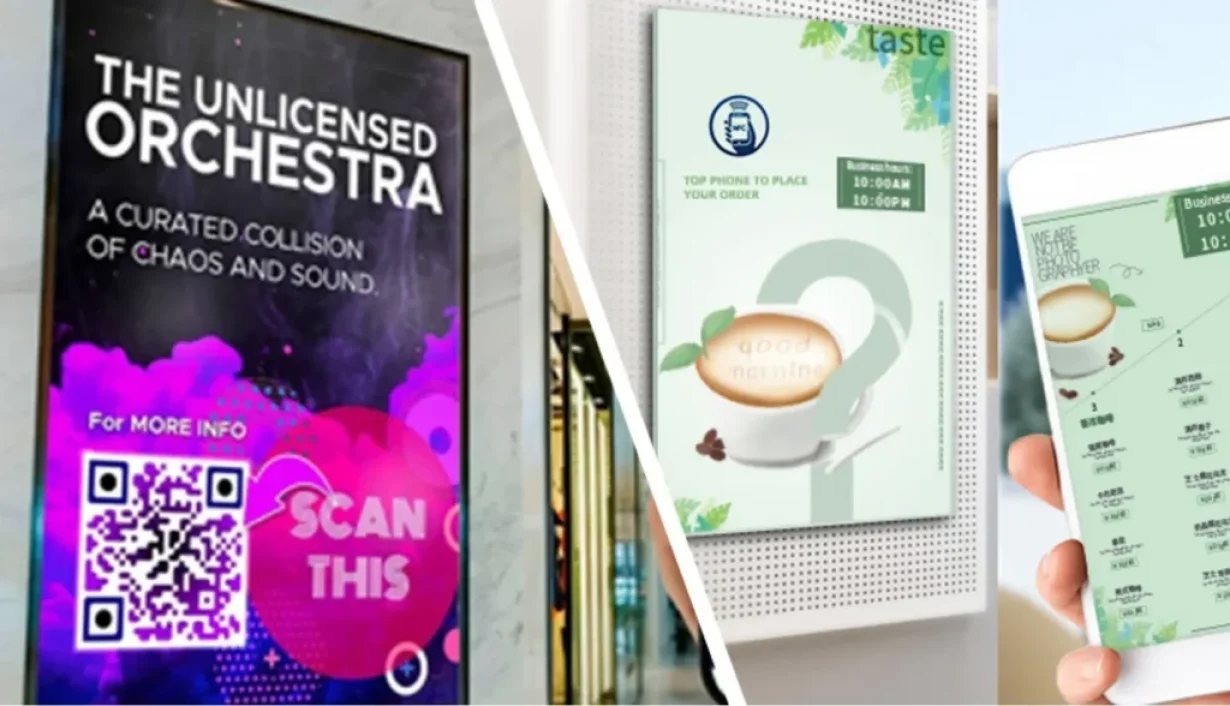
As a two-dimensional barcode, QR codes are read by scanning them with a camera. Since the widespread adoption of smartphones, QR codes have been widely used globally due to their extremely low printing costs. However, the limitations of QR codes are also evident: they require well-lit environments, users must open the camera app and focus, and QR codes are easily damaged or tampered with.
In contrast, NFC smart posters offer more powerful functionality because ultra-thin RFID chips are embedded within the posters. This technology allows users to instantly trigger pre-set actions—such as opening a webpage, downloading an app, or connecting to Wi-Fi—simply by tapping their phone against the poster. NFC does not require the camera to be opened and is not affected by lighting conditions. For RFIDLabel’s clients, NFC tags can be customised into various shapes and embedded in eco-friendly materials, which aligns perfectly with modern brands’ commitment to sustainability.
2. Comparison of Core Features: NFC vs. QR Codes
To illustrate the differences between the two more clearly, the table below summarises key metrics related to boosting user engagement:
| Evaluation Criteria | NFC Smart Posters | QR Codes |
| Interaction Speed | Instant activation; no need to open an app | Requires opening the camera, focusing, and scanning |
| User Experience | Extremely smooth; “one-touch access” | Multiple steps; highly susceptible to environmental interference |
| Security | Chip-level encryption; extremely difficult to counterfeit | Easily overwritten; susceptible to phishing risks |
| Durability | Waterproof and scratch-resistant, with a lifespan of several years | Prone to fading, moisture damage, and tearing |
| Brand Image | High-end, tech-savvy, and professional | Ordinary, cheap-looking, and mass-market |
| Environmental Adaptability | Performs excellently in dark, outdoor, and humid environments | Difficult to scan in bright or low light |
| Data Collection | Precise tracking; can distinguish between different tags | Basic statistics; difficult to distinguish between originals and copies |
As shown in the table, while QR codes offer a cost advantage, NFC smart posters clearly have the edge when it comes to fostering high-quality user interactions and protecting the brand.
3. Why does NFC have such a decisive advantage in terms of interactivity?

User engagement is at the heart of modern marketing. In a fast-paced business environment, consumers typically have only a few seconds of attention. Therefore, the NFC smart posters provided by RFIDlabel demonstrate significant advantages in this context.
First, “seamless connectivity” is considered the essence of NFC technology. Unlike QR codes, which require users to follow a three-step process of “opening the camera, focusing, and clicking the link,” NFC only requires “tapping to connect.” For brands like Uniqlo or Zara, incorporating NFC tags into clothing tags or in-store posters means customers can access size information, inventory status, or styling suggestions more quickly. According to industry research data, the average engagement rate for NFC posters is approximately 25% higher than that of QR codes.
Second, NFC has a broader range of use cases. Since NFC tags can be embedded in various durable materials, they are widely used in outdoor advertising, public transportation (such as posters in subway stations), and even care labels. For brands like Nike or Adidas, this durability means marketing campaigns can last longer without worrying about posters becoming ineffective after being exposed to rain or sunlight.
4. Security: The Key to Brand Protection

In RFIDLabel’s primary export markets—North America, Europe, and Australia—consumers are highly sensitive to personal data security and product authenticity. A major risk associated with QR codes is their susceptibility to tampering. Fraudsters can easily carry out phishing attacks simply by placing a QR code containing a malicious link over the original one.
This issue is addressed at the hardware level by NFC smart posters. Every NFC tag produced by RFIDLabel features a unique UID (Unique Identifier) and supports advanced encryption algorithms. This is crucial for high-end hotel brands and distributors. By utilising NFC technology, hotels can ensure that guests’ financial information is strictly protected when they scan the poster to book a room or make a payment. Additionally, NFC tags are widely used for anti-counterfeiting and traceability. Brands can use NFC to verify product authenticity, thereby combating counterfeit goods in the market and safeguarding their reputation.
5. Data Collection and Targeted Marketing
For retail giants like Walmart or Costco, data is money. While QR codes can track total scan counts, NFC smart posters provide deeper data insights.
Since each NFC tag is a standalone hardware device, the back-end system can precisely track which specific poster at which location was triggered. For example, a hotel group has placed posters in locations across different cities worldwide. Through the customised NFC solution provided by RFIDLabel, management can see in real time which regions have the highest user engagement, allowing them to dynamically adjust marketing strategies.
Furthermore, NFC tags are rewritable. This means that when the theme of a marketing campaign changes, brands do not need to reprint posters; they can simply update the link stored in the chip via software. This flexibility not only reduces long-term operational costs but also aligns with RFIDLabel’s commitment to environmental protection and sustainability.
6. Industry Case Studies: Real-World Performance of NFC Smart Posters

To better understand how NFC smart posters can boost user engagement, let’s take a look at some application examples from RFIDLabel’s key client groups.
Hospitality and Tourism
In well-known hotel chains, NFC smart posters are placed at guest room doors or in the front desk area. Guests simply tap the poster with their phone to check in, obtain Wi-Fi passwords, or order room service. For well-known hotel brands, this service not only boosts guest satisfaction but also reduces the workload at the front desk. In contrast, QR codes are often difficult to scan in dimly lit hallways or on reflective glass surfaces, resulting in a significantly diminished user experience.
Retail and Apparel Industry
Brands such as Uniqlo and Zara have embedded ultra-thin NFC chips into clothing tags. When customers spot an item they like in-store, simply touching the tag allows them to view the garment’s care instructions, fabric composition, and real-time inventory of different colours and sizes on their phones. This interaction significantly enhances the shopping experience and directly drives purchasing decisions. Additionally, the waterproof properties of NFC tags ensure that brand information remains intact even during the washing process.
Public Transportation and Payments
Subway companies and urban transit systems are integrating NFC technology into station posters. Passengers can purchase tickets or top up their transit cards directly by tapping the posters. Since NFC communication is encrypted, this payment method is more secure than QR codes and effectively prevents account information from being stolen.
Conclusion
In summary, while QR codes still have their place in certain low-frequency, low-value scenarios, NFC smart posters are undoubtedly the better choice for commercial marketing campaigns that prioritise high engagement, high security, and a strong brand image.
Whether you are a hotel manager looking to enhance the guest experience or a retailer seeking to boost brand engagement through smart packaging, RFIDLabel can provide you with the most professional support. If you are interested in our NFC smart posters or other RFID solutions, please feel free to contact us.





