
With the widespread adoption of RFID technology, more and more industries are adopting RFID labels to improve their product traceability, management efficiency, and customer experience. However, when using RFID labels, many people may not be aware of what information can be printed on RFID labels or how to optimize the data on the labels. This article will provide a complete guide to RFID label printing and explore the various types of data that can be printed on RFID labels and what to look for when printing data.
1. Technical details of RFID Label printing
Printing RFID labels is more than just printing information onto the surface of the label; it also involves how to store data at different layers of the label, how to choose the right printing technology, and how to optimize the durability and readability of the tag. Here is an in-depth look at some of the technical details.
1.1 RFID Label data storage and reading
The chip of an RFID tag is one of its core components, and the storage structure and capacity of the chip directly affect the amount of information that can be stored. Generally speaking, the chip of an RFID tag can store two types of data.
- Permanent Data: This type of data can not be modified once written, such as the product’s manufacturer information, serial number, date of production and so on. This data is usually set when the tag is first written and remains constant throughout the life of the tag.
- Variable Data: This type of data is dynamic and can be updated or modified at any time. Examples include inventory information, product prices, location data, etc. This type of data is usually updated through the RFID reader.
When printing, you can choose to print the permanent data on the tag along with the variable data, or only part of the information as needed.
1.2 Printing Technology: Thermal Transfer Printing vs. Direct Thermal Printing
RFID labels are usually printed using two mainstream printing technologies: thermal transfer printing and direct thermal printing. These two technologies have their own advantages and disadvantages, and organizations can choose the appropriate printing method according to their specific needs.
- Thermal Transfer Printing: the ink is transferred to the label surface by heating the ribbon. It provides high-resolution printing and is suitable for labels that require long-term durability, especially when the label needs to be exposed to extreme environments (e.g., high temperatures, moisture, strong friction). Thermal transfer printed labels are highly durable and can cope with some wear and tear.
- Direct Thermal Printing: This method produces an image or text by heating a thermal material directly through a thermal head. Thermal printers are less expensive and are suitable for labels that are produced in large quantities and do not require too much durability. The disadvantage of thermal printing labels is that they are prone to fading due to heat, sun exposure or friction, making them suitable for short-term use.
| Printing technology | Advantages | Disadvantages | Applicable Scenarios |
| Thermal transfer printing | High resolution, high durability, adaptable to harsh environments | Higher cost, slower printing speed | Long-term use, where durable labels are required (e.g. asset management, industrial applications) |
| Direct thermal printing | Low cost, fast print speed, suitable for mass production | Poor durability, susceptible to environmental influences | Short-term use, high-volume, low-cost labeling needs (e.g., retail, warehouse management) |
1.3 Printing quality and anti-interference of RFID labels
When printing RFID labels, it is important to ensure that the print content of the label is clear and accurate. If the surface of the RFID label is blurred or damaged, it may affect the accuracy of the data read by the RFID reader. To ensure the print quality, the following factors need to be considered:
- Print Resolution: print resolution has a direct impact on the clarity of the printed content. High-resolution printers can clearly print small fonts, barcodes, QR codes and other details to ensure that the data can be read accurately at a later stage.
- Label Finish: The surface material of the label will affect the print results. Some surfaces may be rough or too smooth for the ink to adhere evenly. Select the surface material suitable for printing and appropriate surface treatment can ensure print quality.
- Anti-Interference Design: RFID label antennas and chips are very sensitive to electromagnetic interference. High-quality RFID labels usually use an anti-interference design to ensure that the printed content will not affect the normal operation of RFID labels.
1.4 Durability and Environmental Adaptability of RFID Labels
RFID labels are often used in many different environments, especially in outdoor or harsh industrial environments. Therefore, the durability and adaptability of the label is very important. When choosing RFID labels, you need to consider the following aspects:
- High-Temperature Resistance: Some industries, such as logistics, automotive manufacturing or chemical transportation, require high-temperature resistance for labels. High temperatures may cause fading or damage to the printed content on the label surface. Therefore, in these environments, RFID labels specifically designed for use in high-temperature environments should be selected.
- Water and Moisture Resistance: When using RFID labels in humid environments, the water resistance of the tag material is critical. If the label material is not effectively waterproof, the performance of the label may be affected, resulting in data loss or read failure.
- Friction Resistance: For applications that require frequent friction (e.g. asset management, transportation, etc.), the friction resistance of the label cannot be ignored. High-quality RFID labels should be able to resist friction, scratches and impacts to ensure data stability over time.
1.5 Environmentally Friendly Materials and Sustainability
As global environmental awareness increases, more and more companies are paying attention to the environmental friendliness of RFID labels. The environmental friendliness of RFID labels usually includes the following aspects:
- Use of Recyclable Materials: Using recyclable plastic, paper or polymer materials to produce RFID labels reduces resource waste and complies with environmental regulations.
- Reduced Use of Chemicals: Some traditional RFID labels use hazardous chemicals, such as lead-containing materials or harmful dyes. Eco-labeling reduces the use of these hazardous substances to ensure that the labeling process is environmentally friendly.
- Life-Cycle Management: Sustainability is not just about the production process, but the life-cycle management of the tag is equally important. Companies can produce labels with more environmentally friendly materials so that they can be recycled and disposed of at the end of their life.
2. Common Data Types for RFID Label Printing

2.1 Product Information
Product information is one of the most common data types for RFID labels, especially in the retail and logistics industries. It includes:
- Product Name: The name or a short description of the product is usually printed on the label to help warehouse or retail store employees quickly identify the item.
- SKU (Stock Keeping Unit): SKU is a unique identifier for each item in the retail system. By printing SKUs on RFID labels, inventory can be tracked and managed efficiently.
- Brand Name: Some companies choose to print the brand name on the label to increase brand recognition and improve anti-counterfeiting capabilities during the flow of goods.
Application Examples
- Retail Industry: Printing product information, size, colour, style, etc. on apparel, home furnishing and other commodities facilitates quick inventory management and customer information queries.
- Pharmaceutical Industry: Drug labels can be printed with key information such as drug names, ingredients, indications, etc. to ensure product traceability during transportation and storage.
2.2 Unique Identifier (UID)
Each RFID label has a unique identifier (UID), which is preset by the RFID chip manufacturer and cannot be changed. UID is the only mark that distinguishes the label from other labels and is usually used for identity authentication, asset management, etc.
- UID: This is a unique code consisting of a string of numbers and letters. Each label’s UID is unique globally.
- Serial Number: Sometimes companies add a custom serial number to the UID to help further distinguish different items of the same type.
Application Examples
- Asset Management: Print unique UIDs on equipment and assets in an organization to track asset location and maintenance history.
- Document Management: Hospitals, archives, and other locations where large numbers of documents or items need to be identified and tracked, tagging each document with a UID.
2.3 Batch Number
A batch number is a unique identifier for a batch of products. It is usually used for identification during the production process to help track a specific batch of goods. Batch numbers are usually stored together with information such as production date and expiration date.
- Production Lot Number: Used to identify a batch of goods in the production process, usually for quality control and product traceability.
- Expiration Date/Shelf Life: For products that need to be labeled with an expiration date or expiration date, such as food, pharmaceuticals, etc.
Application Examples
- Food Industry: Printing batch number, production date and shelf life on food packaging to ensure food safety and quality.
- Chemical Industry: Marking batch numbers on products such as chemicals and pharmaceuticals to facilitate traceability and handling of possible problems.
2.4 Production date and expiration date
Production date and expiration date are important data related to the life cycle of goods, especially common in FMCG, food, pharmaceuticals, etc. RFID labels can mark the production date, expiration date or expiration date of each product to help consumers and businesses make appropriate decisions.
- Production Date: Used to indicate when the product was produced.
- Expiry Date/Shelf Life: Usually applied to products with time-sensitive limitations, such as food, pharmaceuticals and chemicals.
Application Examples
- Pharmaceutical Industry: Printing the production date and expiration date on RFID labels for pharmaceuticals ensures that the drugs are used before they expire.
- Food Industry: expiration dates on food labels in supermarkets to ensure consumers get fresh products.
2.5 Product Price and Inventory Information
Product price and inventory information is one of the common data types in retail and e-commerce platforms. Price data and inventory information on RFID labels can be dynamically updated to help retailers and consumers better manage their goods.
- Product Price: Reflects the current selling price of an item in real-time.
- Inventory Quantity: Inventory data can help businesses understand the inventory of a particular item in real time for inventory replenishment and sales forecasting.
Application Examples
- Retail Store: Price and inventory information is printed on RFID labels, so customers and store staff can scan the RFID labels to get the latest price and inventory status of products.
- Commerce Warehouses: E-commerce platforms update the inventory quantity of products in real-time through RFID labels to ensure the accuracy of warehouse management.
2.6 Barcode and QR Code
Although RFID labels have been equipped with automatic identification capabilities, barcodes and QR codes are still common auxiliary data types on some occasions. They can be printed in parallel on RFID labels for use during contactless scanning and manual input.
- Barcode: A traditional coding method widely used to identify a variety of goods.
- QR Code: A more information-intensive encoding method, commonly used to store web addresses, contact information, etc.
Application Examples
- Retail: Stores use RFID labels to print barcodes or QR codes at the same time, making it easy for customers to scan and search by themselves.
- Logistics Management: Logistics companies use RFID labels to print barcodes at the same time so that data can be read by barcodes when there is no RFID reading device.
2.7 Location data (for asset tracking)
RFID labels are not only used for the identification of goods and assets but can also be used to mark the location of items. Where accurate location tracking is required, RFID label[s can be stored or used with a location tracking system.
- Warehouse Location: In warehouses or distribution centers, RFID labels can be used with location tracking systems to record where items are stored.
- Equipment Location: In some high-value equipment (e.g., medical equipment in hospitals, books in libraries, etc.), the specific location where the item is located can be marked to facilitate quick positioning and management.
Application Examples
- Warehouse Management: Using RFID labels and a location tracking system, real-time access to the storage location of inventory items to improve inventory management efficiency.
- Hospital Management: RFID labels can help track the location of medical equipment and patients to improve management and service efficiency.
2.8 Access Control Data
In access control systems, RFID labels can be used for authentication and rights management. In this application scenario, RFID labels usually store the user’s permission data, such as access area, valid time and other information.
- Access Rights: RFID labels store the identity information of employees or visitors and their permission levels to control access areas.
- Valid Time: Some RFID labels are used to store the valid time period for access privileges, ensuring that access is only possible during the valid time.
Application Examples
- Office Building: Employees enter an office building using RFID-tagged access cards, which are scanned to verify identity and control access.
- Hospitality Industry: Hotels control customer access to specific floors or rooms with RFID key cards to improve management and security.
3. Key benefits of RFID label printing

3.1 Improve the efficiency of inventory management
RFID labels have obvious advantages in inventory management. By using RFID labels, companies can manage inventory data more accurately and efficiently, reduce errors in manual operations, and increase the speed of inventory counting.
- Real-Time Inventory Updates: RFID labels are capable of transmitting data in real-time, and changes in inventory can be updated instantly. Compared to traditional bar code systems, RFID can automatically record the movement of products in and out of inventory without manual intervention.
- Fast Inventory: Inventory counting is much faster with RFID labels. Instead of scanning barcodes one by one, all label information can be obtained by simply scanning a specific area with an RFID reader.
- Reduced Inventory Discrepancies: As RFID labels automatically track the flow of products, human error is reduced, resulting in a significant reduction in inventory discrepancies and out-of-stocks.
3.2 Improve supply chain traceability
The use of RFID labels allows information about goods, assets, and shipments to be tracked in real-time throughout the supply chain. This helps to ensure that every item can be traced, and is especially important for industries such as food and pharmaceuticals where safety and quality need to be assured.
- Tracking: RFID labels provide the precise location and status of each item, allowing each link in the supply chain to be informed in real-time of the exact location, status and movement of goods.
- Enhance Transparency: Through the RFID system, enterprises can view the production, transportation, storage and sales of each product in real-time, thus improving the transparency of the supply chain, reducing fraud and enhancing consumer trust.
3.3 Enhance production efficiency
RFID labels can help manufacturers achieve more efficient management and control in the production process. The production process through RFID labels real-time records of each process, and the status of each piece of equipment, can effectively reduce the production line downtime, and improve production efficiency.
- Intelligent Production Scheduling: RFID technology can automate the production process and help factories monitor production progress and equipment status in real-time to ensure the efficiency of the production process.
- Process Tracking: Each production process, each piece of equipment and each employee can be monitored in real-time by RFID labels, ensuring that the production process runs smoothly and avoiding production standstill or quality problems.
- Reduce Production Bottlenecks: With accurate production data and inventory information, RFID technology can help identify production bottlenecks and optimize production scheduling.
3.4 Reduced Labor Costs
RFID labels can significantly reduce the need for manual operations, reducing labour costs and the risk of misuse. Compared with traditional bar code scanning, RFID technology can complete the information reading without direct contact, reducing the complexity of manual scanning.
- Automated Identification: RFID systems can automatically identify information on labels without human intervention, reducing the time and labour costs associated with manual operations.
- Reduce Errors: Due to the automatic identification of RFID labels, misreading and omission in traditional barcode scanning are reduced, reducing the risk of incorrect operation and further reducing the cost loss due to manual errors.
3.5 Enhanced Security and Anti-counterfeiting
RFID labels help to improve the security of goods and assets, especially in situations where theft or counterfeiting needs to be prevented. By combining RFID technology with other security systems, organizations can achieve smarter and more efficient security management.
- Anti-Counterfeiting Function: RFID labels have a unique UID (Unique Identifier) that makes each label unique and difficult to forge or copy. Therefore, it is an effective tool for anti-counterfeiting and anti-theft.
- Real-Time Monitoring: RFID labels can be integrated with security systems to help companies monitor the movement of products or assets in real-time, and take immediate action in case of anomalies.
- Restricted Access Control: RFID labels can be used in access control systems to control the access rights of personnel and ensure that only authorized personnel can enter a specific area.
3.6 Enhancing Customer Experience
The role of RFID labels in enhancing the customer experience should not be overlooked. Through RFID technology, merchants are able to provide faster and more convenient services, especially in the retail and hospitality industries, where RFID technology helps merchants better serve their customers and enhance the overall experience.
- Fast Checkout: RFID labels allow consumers to quickly complete the payment process through self-checkout systems, saving time waiting in line.
- Intelligent Guiding: Hotels, museums and other venues can provide personalized guiding services through RFID technology, pushing relevant information according to customer needs.
- Personalized Recommendation: In retail places, through RFID labels, merchants can obtain customers’ purchasing habits and preferences, so as to push personalized product recommendations.
3.7 Environmental Protection and Sustainable Development
RFID labels can also be integrated with environmental and sustainability goals. Many RFID labels have the option of being manufactured using environmentally friendly materials, helping to reduce plastic use and waste.
- Environmentally Friendly Materials: Modern RFID labels are increasingly made from recyclable and environmentally friendly materials, such as biodegradable plastics or paper labels, to reduce the burden on the environment.
- Resource Optimization: RFID labels enable companies to optimize the use of resources, such as more efficient inventory management and supply chain management, thus reducing resource waste and overproduction.
4. The process of RFID label printing

4.1 Label Design and Data Entry
Before RFID label printing can take place, label design and data entry are required first. This step determines the appearance of the label, the information content, and the programming of the RFID label chip.
Step content
- Label Design: designers according to the needs of the design of the label size, shape, colour, and above the need to display the text, two-dimensional code, bar code and other information. The design also takes into account the functionality and environmental requirements of the RFID label (e.g., whether it needs to be resistant to water, high temperature, etc.).
- Selection of Data Content: In addition to designing the appearance, it is also necessary to enter the data information that the label needs to store, such as product number, batch number, date, manufacturer information, etc. According to different application scenarios, the information on the label can include but not limited to:
- Product name, manufacturer information
- Unique serial number (UID)
- Batch number, production date
- Warehouse location, inventory status
- Safety certification information, quality inspection results
Tools and Software
- Design Software: e.g. Adobe Illustrator, CorelDRAW, etc. for designing label appearance.
- Label Programming Software: e.g. Zebra Designer, Loftware, etc. for inputting and managing the coded information of RFID labels.
4.2 Selection of RFID label material and chip
The printing of RFID labels includes not only the printing of images and text but also the embedding of RFID chips. It is very important to choose the right label material and chip, which will directly affect the performance and cost of the label.
Step content
Label material: choose the right material according to the requirements of the application environment. Common materials are:
- Paper Material: suitable for low-cost requirements, and non-harsh environment applications.
- Plastic Materials: for more durable, water and temperature-change-resistant labels, commonly used in industrial and warehouse management.
- Synthetic Materials: such as polyester (PET) materials for tags with higher durability requirements.
RFID Chips: Choosing the right RFID chip is critical to ensure that the label will work properly. Common RFID chip brands include Impinj, NXP, Alien, etc., which are mainly categorized into:
- Passive RFID Labels: no batteries are required, relying on external RFID readers to provide power.
- Active RFID Labels: built-in battery, suitable for long-distance, high-frequency reading needs.
Material selection factors:
- Environmental requirements (e.g., waterproof, heat resistant)
- Label size and shape
- Functional requirements (e.g., need for anti-counterfeiting features, programmability, etc.)
4.3 RFID Chip Encoding and Embedding
RFID chips typically need pre-encoded to ensure the label has a unique ID number or other identifying information. This step is critical, as inappropriate encoding can lead to subsequent reading or data management problems.
Step content
- Encoding: An RFID programming device is used to write specific data into the RFID chip, usually including a unique identifier (UID), serial number, etc.
- Write Information: Data stored on the label can include basic product information, inventory status, supply chain information, etc. Data is written to each chip through a programming device and ensures that all information is accurate.
- RFID Label Chip Embedding: Embed the RFID chip into the label, usually the RFID chip and antenna will be combined with the label material through the embedding process (e.g., hot pressing, injection moulding, etc.) to ensure that the label can work stably.
Programming devices and software
- Programmer: e.g. Impinj Speedway Revolution, Zebra, etc., used to write data to the RFID label.
- Management Software: Used to manage and monitor the encoding and programming process of RFID labels to ensure that each label meets the requirements.
4.4 Printing Label Contents
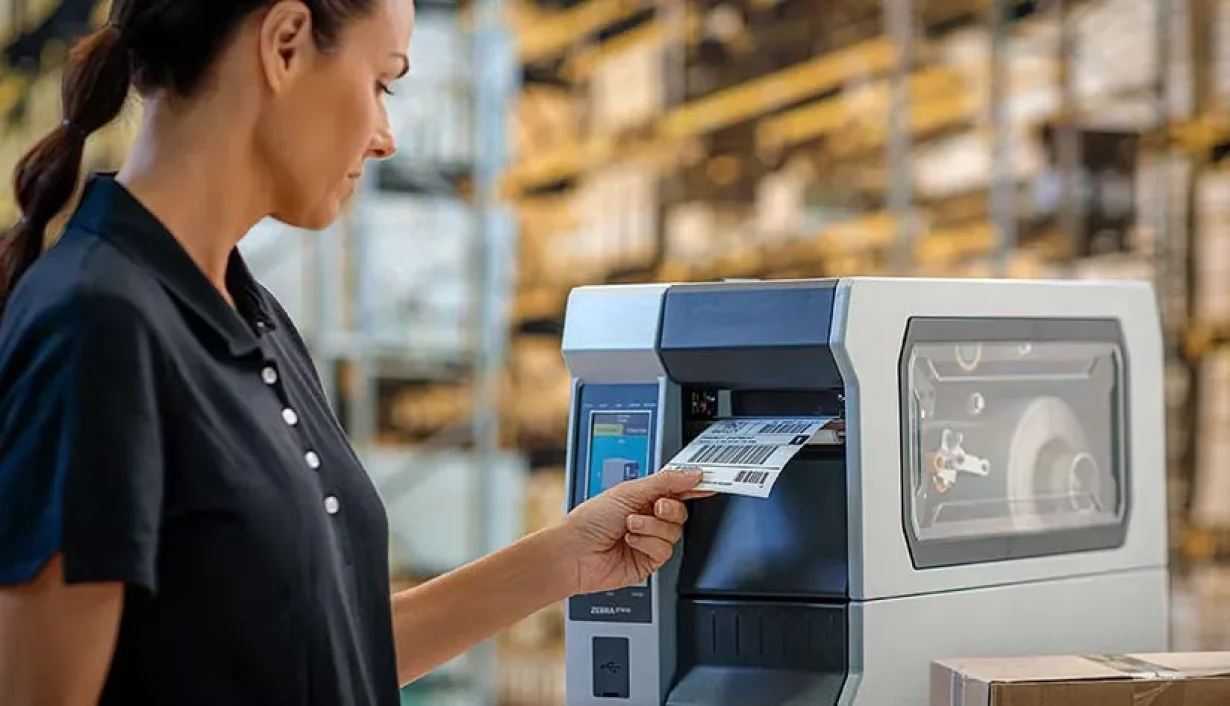
After encoding is complete, the label’s appearance information (e.g., company Logo, text, barcode, etc.) is printed onto the label surface. Usually, thermal transfer or direct thermal printing technology is used.
Step content
- Thermal Transfer Printing: Thermal transfer technology transfers ink to the label surface through a hot head, which is suitable for printing high-quality barcodes, text, images, etc. The images printed by this method have high durability and are not easily removed.
- Direct Thermal Printing: Thermal printers display text and images by heating chemically coated materials, suitable for short-term use or lower-cost labels.
- Printed Content: Includes business name, product logo, barcode, QR code, pattern, etc. Depending on the application, companies can print a variety of visual information on the label to help improve identification and management efficiency.
Printing Devices
- Thermal Transfer Printers: e.g. Zebra, SATO, TSC, etc. for high-quality label printing.
- Direct Thermal Printers: for lower cost label printing that does not require high durability.
4.5 Quality Check and Testing
After the RFID labels have been printed and encoded, it is very important to carry out quality control and functional testing. The purpose of quality check is to ensure that the quality of each label meets the standard and that the RFID chip can work properly.
Step content
- Quality Inspection: Check the physical appearance of the label, including the quality of the print, the durability of the label material, etc., to ensure that the label is not damaged, or deformed, colour inconsistency or other issues.
- RFID Function Test: Test whether the chip of each label works properly through RFID read/write equipment to ensure that the label information can be read correctly. Test content includes:
- Label Reading and Writing Test: to ensure that the coded information of the label can be read properly by RFID read-write equipment within the specified range.
- Distance Test: Test the reading distance of the label to ensure that it can function properly within the expected operating range.
- Batch Sampling: Generally, a certain percentage of labels will be randomly selected from the production batch for testing to ensure overall quality.
Conclusion
RFID Label printing is an important tool to improve the operational efficiency and management accuracy of enterprises. By printing all kinds of data on the label, enterprises can realize automation and intelligent management in a variety of business scenarios. Whether it is to enhance product traceability, strengthen asset management, or optimize customer experience, RFID label printing can bring great help. When choosing an RFID label printing solution, companies should consider factors such as materials, printing technology and label durability according to their needs, environmental requirements and cost budget to ensure that RFID labels can be used to best effect in the long term.
If you are looking for a custom RFID labeling solution or have any questions about RFID label printing, please contact us. RFIDLabel will help you choose the most suitable RFID labeling products and provide first-class technical support to help your enterprise improve operational efficiency and drive business development.
Recommended Product
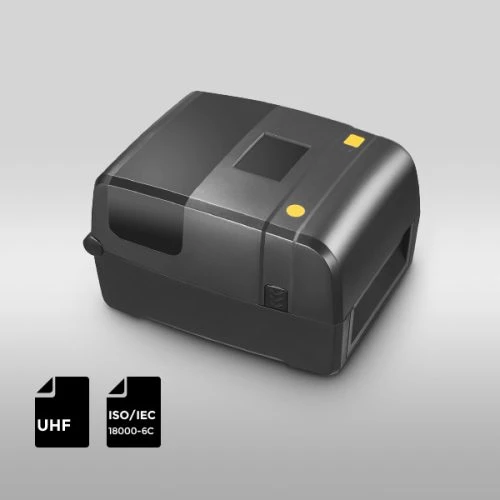
UHF RFID Printer AZ-CP30
Print speed up to 8 ips. With RFID function supporting UHF RFID, 860–960 MHz, and EPC C1G2 (ISO 18000–6C), with the function to automatically identify the printer head with 203 dpi and 300 dpi and automatically configure the printer without PC settings. With super large storage, DDR2 RAM 128 MB, Flash 256MB. Support multiple interfaces, USB HOST, B-type USB, Ethernet port for standard, Wi-Fi, and Bluetooth module for optional.