


As smart technology continues to innovate and the retail industry moves towards digital transformation, RFID labels are becoming an important tool for the retail industry to improve efficiency and optimize customer experience. Walmart, one of the world’s largest retailers, has become the most successful case of digital transformation in the retail industry by introducing RFID labels for technological innovation. In this blog, we will explore the central role of RFID labels in the digital transformation of the retail industry, from the fundamentals to the benefits and applications, to reveal how this technology is changing the face of the retail industry.
What is an RFID Label?
RFID is a technology for identification and data transmission via radio waves. RFID labels consist of a microchip and an antenna capable of storing and sending information. When the label enters the radio frequency range of the reader, the reader communicates with the tag through radio waves and reads the information in it. Compared with the traditional bar code, RFID labels have the advantages of being non-contact, being able to be read over long distances, having multiple tags read at the same time, and having large data capacity.
Types of ARC certified UCODE 9 RFID labels
The following are the different styles of the ARC certified UCODE 9 series of RFID labels. The series is available in two different sizes and dimensions: ARC certified H97 UCODE 9 RFID label and ARC certified G95 UCODE 9 RFID label.
The antenna size of this RFID label is 70*14mm (L×W) and the product size is 73*17mm (L×W). The base material is PET and the antenna material is Etched Aluminum and PET. Also, the reading distance can reach 22 meters in ETSI standard and 21 meters in FCC standard. At the same time, this RFID label is an ARC-approved inlay.
The antenna size of this RFID label is 50*30mm (L×W) and the product size is 54*34mm (L×W). The base material is PET and the antenna material is Etched Aluminum and PET. Also, the reading distance can reach 24 meters in ETSI standard and 21 meters in FCC standard. At the same time, this RFID label is an ARC-approved inlay.
What are the advantages of RFID labels in the retail industry?
- Improving inventory accuracy
This RFID label enables refined inventory management through RFID technology. Searchable inventory tracking and automated stocktaking effectively improve inventory accuracy and reduce errors caused by human intervention. The improved accuracy of inventory also directly improves the availability of goods and sales performance.
- Enhancing supply chain efficiency
RFID technology can make the supply chain more transparent and efficient. Every link from production to sales can be checked and managed. It not only improves the response speed of the supply chain but also reduces the cost of inventory squeeze and logistics. RFID labels with the back-end replenishment system can ensure the continuous supply of goods to avoid the loss of sales.
- Protecting brands and reducing the risk of counterfeiting
The chip in each RFID label has a unique unique identification code, which can provide additional security for the goods and effectively reduce the risk of counterfeit goods. Customers can check the authenticity of goods to enhance their confidence in shopping. In addition, RFID labels can be written with tamper-proof merchandise branding information, thus achieving retail brand protection.
- Better customer experience
This label allows customers to spend less time waiting in a fast checkout system. In addition, Intelligent shopping devices can use RFID technology to help customers quickly find the items they need. Increase customers’ willingness to buy and satisfaction through personalized recommendations. All of these changes can enhance the customer’s shopping experience and also increase the customer’s stickiness to the retail brand.
- Adoption of ARC certification standards
Using ARC-certified RFID labels saves retailers a lot of hassle by allowing merchandise to go directly into Walmart stores or onto Walmart’s supply system.
Conclusion
The use of RFID labels is driving the retail industry from traditional to smart. Through RFID technology, retailers can not only improve the efficiency and accuracy of inventory management and supply chain supervision but also enhance customer experience and satisfaction. As RFID technology continues to grow in popularity, the future of retail will become smarter and more efficient. For retailers, the sooner they introduce and apply RFID technology, the better it will be for them to take the lead in the fierce market competition and achieve sustainable development.
After reading this blog, if you are interested about our ARC certified UCODE 9 RFID labels, you can visit our official website (www.rfidlabel.com) to find out more information. If you want to get solutions for ARC certified UCODE 9 RFID labels, please feel free to contact our sales experts, who will provide you with the suitable solutions and professional purchase suggestions according to your needs.
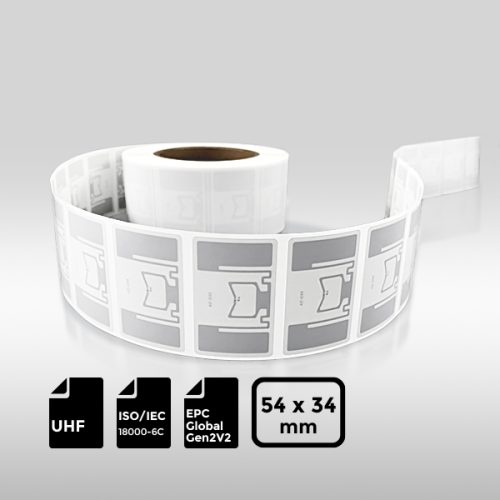
ARC Certified NXP UCODE® 9 Coated Paper RFID Label G95

The ARC-certified RFID label enables item-level tracking of apparel and other retail products. Embedded with an RFID chip, it transmits data to backend systems for inventory management, supply chain visibility, and brand protection. Fully compliant with EPC Class1 Gen2 and ISO/IEC 18000-6C standards, this label is widely used in retail environments like Walmart and Dillard’s, ensuring reliable performance and smooth in-store operations.



