


The integration of RFID material fabric into modern supply chains is no longer a futuristic concept but a present-day necessity for businesses seeking unparalleled accuracy and efficiency. We are witnessing a fundamental shift in how inventory is managed, moving from manual, error-prone processes to automated, data-driven systems powered by this revolutionary technology. For large-scale operations, particularly in retail and logistics, the question is not if to adopt RFID, but how to leverage its full potential.
Why the Shift to RFID Material Fabric is Inevitable
The global market demands speed and precision. Consumers expect instant availability, and businesses must maintain lean, responsive inventory levels to remain competitive. Traditional methods simply cannot keep pace with this demand.
Beyond the Barcode: The Need for Visibility
Barcodes require a direct line of sight and manual scanning, creating bottlenecks and introducing human error. This is especially problematic in environments with high volumes of goods, such as distribution centers or large retail floors. RFID material fabric tags, on the other hand, enable bulk reading without direct line of sight, transforming inventory counts from a multi-day ordeal into a matter of minutes. This real-time visibility is the cornerstone of modern, efficient supply chain management.

Understanding the Core: What is RFID Material Fabric?
At its heart, RFID material fabric refers to the integration of a tiny RFID inlay—comprising an antenna and a microchip—into a durable, flexible substrate that can be sewn into or attached to textile products. This makes the tag an intrinsic part of the item, designed to withstand the rigors of manufacturing, logistics, and even repeated washing.
The Anatomy of a Smart Textile Tag
A typical textile RFID tag consists of three main parts:
- The Chip (Integrated Circuit): Stores the unique Electronic Product Code (EPC) and other relevant data.
- The Antenna: A conductive element, often made of etched metal or silver ink, that captures energy from the reader and transmits data back.
- The Substrate: The flexible, durable material (the “fabric”) that encases and protects the chip and antenna, ensuring it can be integrated seamlessly into garments or other textiles.
Durability and Integration: The Fabric Advantage
The “fabric” component is crucial. Unlike rigid labels, the flexibility of RFID material fabric allows it to be discreetly and securely attached to items like clothing, linens, or industrial textiles without affecting their look or feel. Furthermore, specialized tags are engineered to resist harsh environments, including high temperatures, pressure, and industrial washing cycles, ensuring data integrity throughout the product lifecycle.

Data You Can Trust: Proving the Reliability of RFID
The reliability of RFID is best demonstrated through its impact on inventory accuracy. When a system can consistently deliver a 98% to 99% inventory accuracy rate, the hard data speaks for itself, leading to fewer stock-outs, reduced shrinkage, and optimized replenishment strategies.
Case Study: Galeria Kaufhof’s Inventory Revolution
One compelling example of this reliability comes from the European department store chain, Galeria Kaufhof. Facing challenges with inventory discrepancies and labor-intensive stock-taking, the company implemented an RFID system across its apparel departments. The use of RFID material fabric tags on garments allowed them to conduct full inventory counts in a fraction of the time previously required. This shift resulted in a significant increase in inventory accuracy, which directly translated into improved on-shelf availability and higher sales. The data gathered from the RFID system provided granular insights into product movement, enabling better merchandising and loss prevention.

Key Benefits of Adopting RFID Material Fabric in Supply Chains
| Benefit | Description | Impact on Business |
| Speed | Bulk reading of hundreds of items per second. | Dramatically reduces time spent on inventory counts and receiving. |
| Accuracy | Near-perfect inventory counts (98%+). | Minimizes stock-outs, prevents overstocking, and improves sales. |
| Efficiency | Automation of manual processes. | Frees up staff to focus on customer service and high-value tasks. |
| Security | Unique digital identity for every item. | Aids in loss prevention and authenticating genuine products. |
Choosing the Right RFID Material Fabric Solution for Your Business
Selecting the correct RFID solution is paramount to success. We understand that a one-size-fits-all approach does not work, especially when dealing with diverse materials and complex logistics. Our focus is on providing high-quality, customizable RFID tags and labels that meet the specific needs of your operation, whether you are a large hotel chain needing durable key cards or a retail giant requiring millions of reliable RFID material fabric hangtags.
Customization and Quality: Our Commitment
We pride ourselves on offering products with high quality, customizable logos and shapes, and eco-friendly options. Our B2B, wholesale-only model offers flexible minimum order quantities. This makes it easy for businesses of any size to adopt this technology. We work closely with you to finalize every detail, from the chip to the fabric substrate. The finished product will match your environment and procurement needs. We also help address quality control, certifications, and logistics.

Conclusion: The Future is Woven with RFID
The evidence is clear: the reliability and data integrity offered by RFID material fabric are essential for navigating the complexities of the modern supply chain. By embracing this soft technology, businesses gain the hard data needed to optimize operations, enhance customer experience, and secure a competitive edge. We invite you to explore our comprehensive range of RFID cards, tags, and custom solutions. After reading this article, you can choose to buy related products or get more information from rfidlabel.com to start your own inventory revolution.
FAQs
What is the typical read range for an RFID material fabric tag in a retail environment?
The read range for UHF (Ultra High Frequency) RFID tags, which are commonly used in retail and logistics, typically ranges from a few feet up to 30 feet (9 meters), depending on the reader power, antenna type, and the environment (e.g., presence of liquids or metals). Our solutions are designed to maximize read performance in real-world retail settings.
Can RFID material fabric tags withstand industrial washing and drying processes?
Yes, specialized textile RFID tags are specifically engineered to be highly durable and resistant to harsh conditions. They are designed to withstand repeated exposure to water, high temperatures, and chemical detergents used in industrial laundry processes, making them ideal for applications like uniform and linen tracking.
Recommended Product
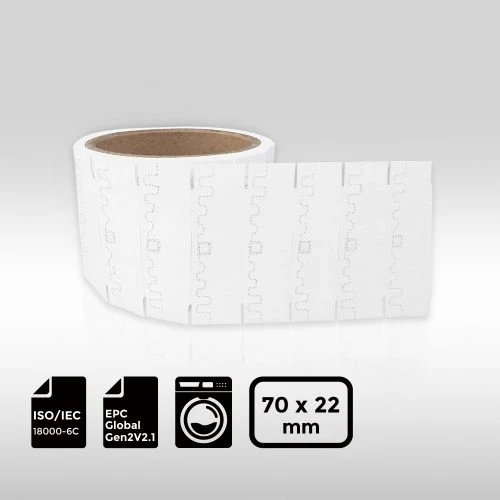
Printable UHF Laundry RFID Label NXP® UCODE® 9xe | 70×22mm

Take your textile management to the next level with the NXP® UCODE® 9xe Printable UHF Laundry Label (70×22 mm). Designed for unmatched durability, it thrives through countless wash cycles while delivering fast and precise RFID tracking. Its printable surface offers the flexibility to integrate logos, branding, or serial information,creating a seamless connection between physical textiles and digital systems.
The world’s first smart laundry label supporting direct printing via RFID printers. Compatible with mainstream RFID printing devices for instant programming and printing. Exceptional durability withstanding over 200 cycles of industrial washing. Withstands harsh environments including industrial washing, dry cleaning, and ironing. Ideal for intelligent laundry management in hotels, healthcare, and rental services.

Washable Smart Textile UHF RFID Tag 70×40mm NXP UCODE® 9 | ISO18000-6C
Enhance inventory efficiency with our washable Smart Textile RFID Tag, robustly designed for the fashion and apparel industries. Measuring 70×40mm and featuring the advanced NXP UCODE® 9 chip compliant with ISO 18000-6C, this tag excels in tracking and durability. The tag comes with a pre-printed generic RFID logo for easy identification and dotted lines for precise sewing, streamlining both inventory management and self-checkout processes.
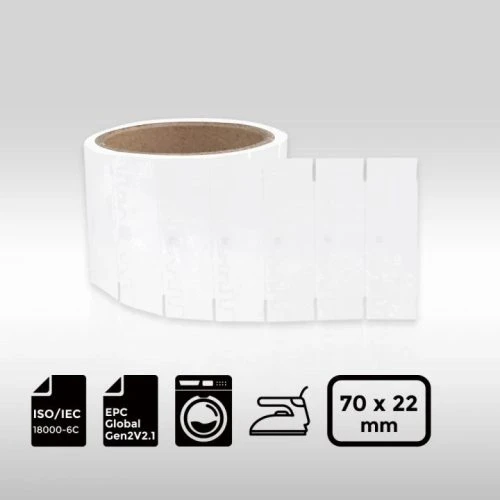
Heat Press Printable UHF Laundry RFID Label NXP® UCODE® 9xe | 70×22mm
The NXP® UCODE® 9xe Printable UHF Laundry RFID Label (70×22mm) is specially engineered for harsh laundry and textile management environments, delivering long read range, superior reliability, and unmatched durability. Designed to endure high temperatures, water, detergents, and mechanical stress, it ensures consistent performance throughout repeated wash and sterilization cycles. Its printable surface allows easy integration of barcodes, logos, or text, combining RFID intelligence with visual identification for streamlined operations.
The world’s first smart laundry label supporting direct printing via RFID printers. Compatible with mainstream RFID printing devices for instant programming and printing. Exceptional durability withstanding over 200 cycles of industrial washing. Withstands harsh environments including industrial washing, dry cleaning, and ironing. Ideal for intelligent laundry management in hotels, healthcare, and rental services.



