


An RFID jewelry tracking system is no longer a luxury but a necessity for any business dealing with high-value, high-turnover inventory. In the world of fine jewelry, where every piece represents a significant investment, the traditional methods of inventory management are simply too slow, too prone to error, and too vulnerable to loss. We understand that managing thousands of unique items—from delicate rings to bespoke necklaces—requires a level of precision and speed that only modern technology can provide.
Why Traditional Inventory Methods Fail the Modern Jeweler
The inherent challenges in jewelry retail demand a smarter approach than clipboards and barcode scanners. The small size, high value, and sheer volume of items make manual processes a constant source of stress and inefficiency.
The Time Sink of Manual Counting
Imagine a store manager spending hours, or even days, manually counting inventory. This process is not only tedious but also highly susceptible to human error. Every minute spent counting is a minute lost on customer engagement or strategic planning. Furthermore, the disruption caused by a full physical inventory count can negatively impact the customer experience and store operations.

The Core Components of an Effective RFID Jewelry Tracking System
A robust RFID jewelry tracking system is an integrated solution built on four essential components that work together to create a seamless inventory ecosystem.
| Component | Function | Key Benefit |
| RFID Tags | Small, discreet tags attached to each jewelry item, containing a unique electronic product code (EPC). | Enables individual item identification without line-of-sight. |
| RFID Readers | Devices (handheld, fixed, or integrated into display cases) that emit radio waves to communicate with the tags. | Reads hundreds of tags simultaneously in seconds. |
| Antennas | Devices that transmit and receive the radio frequency signals between the reader and the tags. | Directs the reading field to specific areas, like display cases or vaults. |
| Inventory Management Software | The central nervous system that stores, processes, and analyzes the data collected from the readers. | Provides inventory visibility, reporting, and security alerts. |

Real-World Advantage: How an RFID jewelry tracking system Transforms Operations
The implementation of RFID technology fundamentally changes the operational landscape for jewelers, moving from reactive management to proactive control.
Lightning-Fast Inventory Audits
With an RFID system, a full inventory count that once took a team of employees an entire weekend can now be completed by a single person in a matter of minutes. This allows for daily, or even hourly, audits, ensuring that stock levels are always accurate and discrepancies are identified immediately.
Case Study Example: Rapid Inventory in Retail
A common application of this technology involves using handheld RFID readers to perform rapid inventory checks. For instance, a major jewelry retailer can use a handheld reader to scan an entire display case in seconds, instantly reconciling the physical stock against the digital record. This capability is crucial for high-traffic environments where items are frequently moved for customer viewing. The speed and accuracy of this process drastically reduce the time spent on inventory, freeing up staff to focus on sales and customer service.

Choosing the Right RFID Tags for Fine Jewelry
The success of your system hinges on the quality and suitability of the RFID tags. Given the delicate nature and high value of jewelry, the tags must be small, secure, and reliable.
Key Considerations for Jewelry Tags
When sourcing tags, we recommend focusing on:
- Size and Form Factor: Tags must be small enough to attach discreetly to a price tag or a piece of jewelry without detracting from its aesthetic appeal.
- Durability and Quality: The tag must withstand handling and environmental factors. High-quality RFID tags ensure consistent read rates and longevity.
- Customization: For brand consistency and security, tags should support custom printing, including logos, serial numbers, and unique shapes.

Conclusion
The transition to an RFID jewelry tracking system is a strategic investment that delivers immediate returns through reduced labor costs, minimized shrinkage, and improved operational efficiency. By embracing this technology, you are not just tracking inventory; you are safeguarding your most valuable assets and enhancing the overall security and professionalism of your business. We invite you to explore the full range of our high-quality, customizable RFID labels at rfidlabel.com. Our five production lines are ready to fulfill your wholesale order, ensuring you receive the best quality products for your next-generation inventory solution.
FAQs
1. What Is the Typical Read Range for a Jewelry RFID Tag, and Can It Interfere with Other Store Electronics?
The read range for UHF RFID jewelry tags is typically short-to-medium (from a few centimeters up to a few meters, depending on the reader power and antenna configuration). The system operates on specific radio frequencies (UHF 860-960 MHz) and is designed to comply with international standards, minimizing the risk of interference with standard store electronics like Wi-Fi or point-of-sale systems.
2.Are RFID Jewelry Tags Reusable, and How Are They Attached to the Items?
Many RFID jewelry tags, particularly those designed as hard tags or security seals, are reusable after an item is sold. However, disposable adhesive labels are also common. They are typically attached using a small loop or string that secures the tag to the price tag or a non-visible part of the jewelry piece, ensuring the tag does not damage the item.
Recommended Product
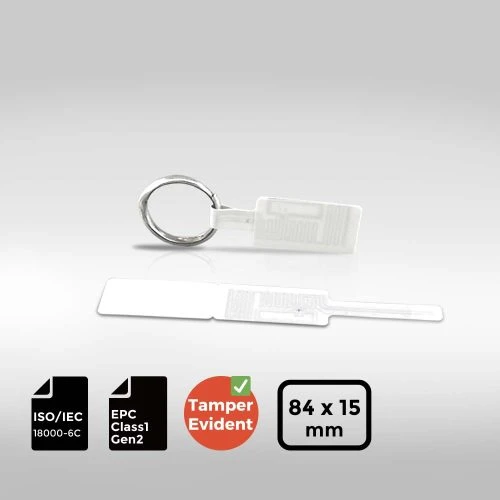
UCODE® G2iL+ Waterproof PET UHF Tamper Detection RFID Jewelry Label | 84×15mm

The 84×15mm RFID UHF Jewelry Label integrates the NXP UCODE® G2iL+ chip with tamper detection functionality, offering reliable performance for high-value item tracking and theft deterrence. With fast read rates, long read range, and support for EPCglobal v1.2.0 standards, it ensures secure and efficient inventory management across jewelry retail and luxury goods sectors.
Designed with a tamper-evident structure, the label disables the RFID function when removed or broken—adding a layer of protection against unauthorized replacement or misuse. Its slim profile fits seamlessly around small items like rings, necklaces, and watches, enabling discreet, secure, and elegant tagging.



