Introduction
Coffee has become an indispensable part of many people’s daily lives, and Starbucks, as a globally recognised coffee chain brand, is attracting attention for its every move. In recent years, with the rapid development of technology, RFID (Radio Frequency Identification) technology has gradually penetrated into various industries, and the retail and restaurant industry is no exception. When you hold a cup of Starbucks coffee in your hand, have you ever thought about what kind of technology may be hidden behind this small cup, and how these technologies may affect your consumption experience and even your personal preference?
In this article, we will explore the application of RFID cup in Starbucks and other food and beverage retail scenarios, analyse their potential to improve operational efficiency and optimise customer experience, and also examine the data collection and privacy issues they may bring. With an objective and professional perspective, we will use simple and easy-to-understand language to reveal the “hidden” role of RFID technology in coffee cups and discuss its potential impact on the collection of consumer taste preference data.
1. RFID technology in Starbucks reusable cups project application
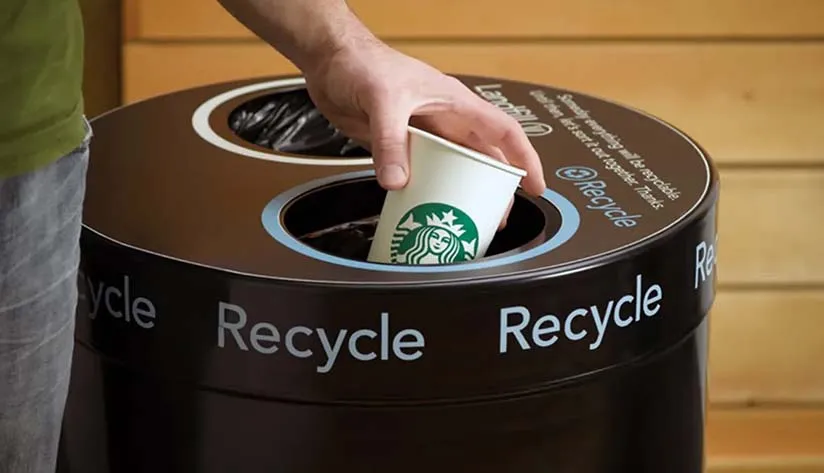
Starbucks, as a company committed to sustainability, has been actively exploring ways to reduce the use of disposable cups. One of the major attempts is to introduce reusable cups and manage them with RFID technology. According to relevant reports, companies such as Starbucks and McDonald’s had collaborated to test eco-friendly cups with RFID chips or QR codes, aiming to respond to the plastic restriction and promote the recycling model.
The main purpose of these RFID-tagged cups is to enable efficient tracking and management. By embedding RFID chips in the cups, coffee shops can:
Track the flow of the cups: RFID technology enables each cup to have a unique identifier so that it can be tracked from the time it is issued, used and returned to the time it is washed and reused. This helps to ensure that cups are effectively recovered and recycled, reducing waste.
Optimise inventory management: With RFID readers, coffee shops can get a real-time view of the inventory of reusable cups, including the number of cups in the store, the number in circulation, and so on, so that replenishment and scheduling can be carried out more accurately.
Improve operational efficiency: RFID technology enables fast, non-contact identification, greatly improving the efficiency of cup management compared to traditional manual counting.
Although these programs are primarily focused on environmental protection and operational efficiency, RFID technology itself has powerful data collection capabilities. Theoretically, by continuously tracking cups with RFID tags, data can be collected on consumer usage habits, purchase frequency, and even length of stay in the store. These data may be used for more in-depth consumer behaviour analysis in the future.
2. RFID in the retail industry in a wide range of applications

The application of RFID technology in the retail industry goes far beyond coffee cups. It has been widely used in inventory management, supply chain optimisation, anti-theft and anti-counterfeiting, as well as enhancing customer experience. The following are some common application scenarios of RFID in the retail industry:
Inventory management: RFID technology can realise real-time and accurate management of merchandise inventory. Retailers can quickly inventory merchandise through RFID readers to understand the specific location and quantity of merchandise, thus reducing inventory errors and improving inventory turnover.
Supply Chain Traceability: RFID tags can record information about the production, transportation, and sales of commodities, realising the whole chain traceability of commodities, which helps to enhance the transparency and efficiency of the supply chain.
Anti-theft and anti-counterfeiting: RFID tags can be used as electronic anti-theft tags for merchandise, triggering an alarm when the merchandise leaves the store without authorisation. At the same time, its unique identification helps to combat counterfeiting.
Enhance customer experience: With RFID technology, retailers can better understand customer behavioural patterns in the store, such as how often merchandise is picked up and put down, and how long customers stay in a particular area. This data can help retailers optimise store layout, merchandise display, and even provide personalised recommendation services.
All of these applications show that RFID technology is capable of collecting a great deal of behavioural data in a retail environment. When this technology is applied to personal use items, such as reusable coffee cups, its data collection potential extends to the level of individual consumption habits.
3. RFID and Consumer Taste Preferences: Potential Data Collection
Although Starbucks currently applies RFID technology mainly to the tracking and management of reusable cups, from a technical point of view, RFID tags have the ability to store and transmit data. If RFID technology is associated with consumer purchasing behaviour, membership information, etc., data collection and analysis of consumer taste preferences can theoretically be achieved. For example:
Purchase record correlation: When consumers use cups with RFID tags to buy coffee, if the cups are tied to the consumer’s membership account or payment information, then the type of drink purchased each time, taste preferences, additions and other data can be recorded.
Frequency and Time of Use: RFID tags can record the frequency and time of use of the cups, such as how often consumers use the reusable cups and what time of day they typically purchase coffee. This can reflect the consumer’s coffee consumption habits.
Geo-location information (limited): In some specific scenarios, such as inside a store, RFID readers can sense the movement of tagged cups in different areas, thus indirectly accessing the consumer’s behavioural path inside the store. However, this usually does not involve precise individual geo-location tracking.
Through the accumulation and analysis of this data, merchants can build a more detailed consumer profile, which enables more accurate marketing and personalised services. For example, based on your purchase history, the system might recommend coffee flavours you might like, or send you a customised coupon for your birthday.
However, the potential for such data collection also raises concerns about consumer privacy. When technology is able to “steal” your taste preferences and even deeper personal information, balancing business interests and individual privacy protection becomes an important issue.
4. RFID Technology and Consumer Privacy: The Art of Balance
While RFID technology brings convenience and efficiency, it also raises concerns about consumer privacy. When personal items are embedded with RFID tags and these tags can be read remotely, consumers may feel that their behaviour is being tracked and personal information is being over-collected. Key privacy concerns include:
Unauthorised data reading: Theoretically, anyone with an RFID reader could read the RFID tag information on a consumer’s item without his or her knowledge, which could lead to the disclosure of personal information.
Behavioural Pattern Analysis: Through the ongoing collection and analysis of RFID data, merchants can construct detailed patterns of consumer behaviour, including purchasing habits, preferences, and even length of time spent in specific locations. This data, if misused, can violate individual privacy.
Data correlation and profiling: When RFID data is correlated with other personal information about a consumer (e.g., membership information, payment history), a very comprehensive picture of the individual can be formed. This enables merchants to gain a deeper understanding of consumers, but also increases the risk of data misuse or leakage.
To address these privacy concerns, the application of RFID technology requires a comprehensive set of privacy protection mechanisms. This includes:
Transparency and Choice: Merchants should inform consumers of the purpose of RFID technology, the types of data collected, and how the data will be used, and provide consumers with the right to choose whether or not to participate.
Data anonymisation and encryption: Anonymise collected data and encrypt sensitive data to prevent individuals from being identified and data from being accessed illegally.
Access control and secure storage: Strictly control access to RFID data and ensure the security of data storage to prevent data leakage and misuse.
Improvement of laws and regulations: Formulate and improve relevant laws and regulations to regulate the collection and use of RFID data and protect the legitimate rights and interests of consumers.
Balancing the commercial value brought by RFID technology and consumer privacy protection is a challenge that must be faced in the development of the industry. Only under the premise of fully respecting and protecting consumer privacy can RFID technology gain wider acceptance and application.
Conclusion
The introduction of RFID technology into the reusable cup program by companies such as Starbucks is undoubtedly an important step forward in terms of environmental protection and operational efficiency. By giving each cup a unique “identity”, this technology enables accurate tracking of the flow of cups, helping to build a more efficient recycling system, thereby reducing the generation of disposable waste. From a business perspective, the widespread use of RFID technology in the retail industry has also proved its great potential in improving inventory management, optimising the supply chain, and enhancing anti-counterfeiting capabilities.
However, when we look at the proposition that “the RFID cup in your hand is stealing your taste preferences,” the underlying consumer privacy issues emerge. Although the main application of Starbucks is focused on environmental protection and operational level, RFID technology itself has a strong data collection ability, which makes it theoretically possible to construct a consumer’s taste preference portrait by associating information such as purchase records and frequency of use. The hidden and automated nature of this data collection makes consumers enjoy the convenience, but also may face the risk of personal information being over-collected and analysed.
Therefore, companies need to uphold a high degree of transparency and responsibility in the application of RFID technology, especially in scenarios that are closely related to individual consumer behaviour. Informing consumers of the purpose and scope of data collection, providing the right to choose, and adopting strict data encryption, anonymisation, and access control measures are the keys to winning consumers’ trust and realising the sustainable development of the technology. At the same time, the continuous improvement of relevant laws and regulations will also provide more solid protection for consumer privacy.
In the future, RFID technology will undoubtedly play a more important role in the retail and catering industries. As a manufacturer of RFID products, we are well aware of the huge commercial value and potential of this technology. We at RFIDLabel are committed to providing high-quality, customizable RFID products to help companies improve operational efficiency and optimise customer experience. At the same time, we call on the industry to focus on and address the privacy challenges that may arise in the development of the technology, to ensure that technological advances can truly benefit society, rather than at the expense of individual privacy.
Recommended Product