While many associate RFID for events with simple wristbands for festivals, the technology’s true power lies in managing mission-critical assets under demanding conditions. A prime example is the U.S. Marine Corps, which won the 2025 RFID Journal Award for Best RFID Implementation. By developing the Marine Corps Platform Integration Center (MCPIC), they transformed a logistical nightmare—inventorying massive amounts of equipment—from a process taking weeks into one taking just a few hours.
At RFIDLabel, we’ve seen how this precision is no longer just for the military. Whether managing a global supply chain for a retail giant like Walmart or coordinating logistics for a massive international summit, the lessons from the Marine Corps’ success are universally applicable. In this article, we’ll explore how they achieved a 90% efficiency improvement and how you can leverage similar RFID solutions.
The Challenge: A “Fog of War” in the Warehouse
Before MCPIC, the U.S. Marine Corps faced a lack of real-time asset visibility. Managing thousands of pieces of equipment—from tactical vehicles to specialized electronics—required manual inventory checks that were labor-intensive and prone to error.
In many cases, it took weeks to verify every item in a single facility. This “fog of war” wasted time, cost millions in labor, and created risks for mission readiness. If you can’t find your equipment, you can’t use it.

The Solution: The Marine Corps Platform Integration Center (MCPIC)
Technical Highlights of the MCPIC System
The core involves tagging every piece of equipment with high-durability RFID tags designed to withstand extreme temperatures and physical impact—much like the ruggedized tags we manufacture at RFIDLabel.
1.Passive RFID Infrastructure: Passive tags are cost-effective and have a virtually unlimited lifespan compared to battery-powered active tags.
2.Fixed and Mobile Readers: The system uses fixed readers at entry/exit points and mobile handheld readers for rapid scans.
3.Centralized Data Integration: All data feeds into a central platform, providing a “single pane of glass” view of the entire inventory.
Quantifiable Results: From Weeks to Hours
The impact of MCPIC was immediate. By automating data collection, the Marine Corps eliminated manual clipboard audits.
| Metric | Before RFID (Manual) | After RFID (MCPIC) | Improvement |
| Inventory Time | 2 – 4 Weeks | 4 – 8 Hours | > 95% Faster |
| Data Accuracy | ~70% – 80% | > 99% | Fewer Errors |
| Labor Costs | Millions per year | Minimal maintenance | Millions Saved |
| Asset Visibility | Periodic / Delayed | Real-Time | Instant Readiness |
Why This Matters for Commercial “RFID for Events” and Logistics
How does a military case study apply to your business? The answer lies in the scale and value of the assets you manage.
When we talk about RFID for events, we aren’t just talking about attendee tracking. Large-scale events—like trade shows or international summits—require moving millions of dollars in AV equipment and high-value inventory.
Just as the Marine Corps cannot afford to lose a tactical vehicle, an event organizer cannot afford to lose a $50,000 LED wall. Using RFID for events to track these assets ensures everything arrives on time and is accounted for during post-event load-out.
Key Benefits for Commercial Sectors:
- Retail (e.g., Walmart, Uniqlo): Item-level RFID reduces out-of-stock scenarios and improves inventory accuracy.
- Hospitality (e.g., Hotel Chains): Tracking linens and uniforms prevents loss and streamlines laundry cycles.
- Event Management: Using RFID for events to manage rental equipment reduces insurance premiums and prevents “shrinkage.”

Choosing the Right Hardware
| Product Type | Key Parameters | Best Use Case |
| Rugged RFID Tags | IP68 Rated, Heat Resistant | Military equipment, outdoor assets |
| RFID Metal Tags | Anti-metal layer | Tactical vehicles, IT servers, AV gear |
| Custom RFID Labels | Printable, various sizes | Retail hangtags, warehouse bins |
| RFID Wristbands | Eco-friendly materials | RFID for events, access control |
Why Partner with RFIDLabel?
We are a China-based manufacturer with a global reach. Our B2B wholesale model offers:
- Flexible MOQs: We accommodate projects of all sizes.
- Customization: We offer custom logos, encoded data, and unique shapes.
- Quality Control: Our factory follows strict ISO standards.
- Eco-Friendly Options: We offer sustainable materials for brands prioritizing green supply chains.
Conclusion: Achieving Mission Success with RFID
The U.S. Marine Corps has proven that with the right technology, even complex logistical challenges can be solved. By reducing inventory time from weeks to hours, they have set a new standard for asset management.
Whether you are looking to implement RFID for events to secure your next production or need a robust solution for a government contract, RFIDLabel is here to help. We provide the expertise and hardware to ensure your assets are always visible and ready for action.
Ready to optimize your inventory? Visit rfidlabel.com to explore our full range of RFID solutions or contact us for a wholesale quote.

FAQs
Is RFID for events cost-effective for smaller organizations?
Absolutely. The cost of tags and readers has dropped significantly. For smaller organizations, the ROI comes from reducing lost equipment and labor hours saved during setup and teardown, similar to the savings seen by the Marine Corps.
Recommended Product
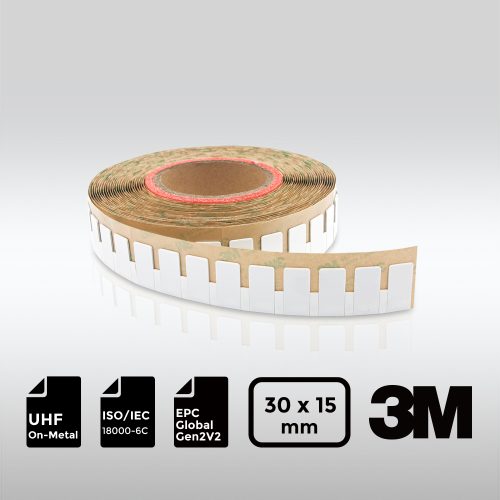
UHF On-Metal RFID Label NXP UCODE® 8 30x15mm | ISO18000-6C

The Flexible & Printable UHF On-Metal Label is a durable, customizable, high-performance RFID label that can be easily printed and encoded. The label is ideal for metallic container tracking, equipment & device tracking, warehouse shelf tracking, automotive components tracking, IT asset tracking, etc. It can be stuck to metallic assets easily, especially on irregular and uneven surfaces.