

As the demand for global supply chains increases day by day, retail giant Walmart promotes the digital transformation of supply chains to improve inventory management efficiency and reduce losses. As part of its future retail strategy, Walmart will announce the full implementation of RFID technology in 2024. Suppliers need to make corresponding adjustments according to Walmart’s requirements. This is both a challenge and an opportunity for suppliers. This blog will provide a detailed analysis of the background information, specific implementation requirements and impact on suppliers of Walmart RFID mandate 2024. On this basis, some suggestions will be given.
Background Information of Walmart RFID Mandate
RFID is a technology that uses radio waves for data interaction and rapid identification of items. It has significant advantages such as fast reading, non-contact and large data storage space. Compared with previous barcodes and QR codes, RFID technology has a more significant improvement in operational efficiency. As early as 2005, Walmart had begun to explore the application of RFID technology in retail. However, at that time, due to related factors such as cost and imperfect technology, the progress of popularizing RFID became very slow. In recent years, RFID technology has been gradually improved and costs have been continuously reduced. Walmart has resumed its large-scale promotion of RFID technology.
What are the specific requirements for Walmart RFID Mandate 2024?
Walmart RFID Mandate 2024 contains the following requirements:
- Commodity grade labels
All goods provided by suppliers to Walmart must be affixed with RFID labels, making it easier for Walmart to accurately track goods.
- Data synchronization
The product information provided by suppliers needs to be synchronized with Walmart’s RFID system. While ensuring that inventory information is updated promptly, avoid stock shortages or redundancy.
- Compliance
The RFID labels attached to suppliers’ goods must be ARC-certified and meet the technical standards set by Walmart. This ensures that the label can be read normally in Walmart’s existing RFID system.
- Training & support
Suppliers need to provide employees with corresponding RFID technology training so that employees can quickly and skillfully master the application of RFID labels and the management of data information.
What impact does Walmart RFID Mandate 2024 have on suppliers?
- Increased costs
Suppliers need to purchase RFID labels and reading equipment for testing that comply with Walmart regulations. These will bring a certain degree of cost pressure to suppliers. However, with the continuous improvement of RFID technology and the reduction of manufacturing costs, the cost pressure on suppliers will gradually decrease. In terms of long-term benefits, once suppliers enter Walmart, they will receive higher returns.
- Process adjustment
For existing production logistics and transportation processes, suppliers need to make corresponding adjustments to adapt to the application of RFID technology. For example, the location of the RFID label attached to the product, the entry method of product data information, etc. These require corresponding optimization by suppliers.
- Technical challenges
Some suppliers lack experience and applications in contact with RFID technology and need to improve their RFID skills through later training and technical support.
- Cooperation opportunities
Suppliers can use this opportunity to promote cooperation with Walmart, thereby improving their technical level and management capabilities. On this basis, suppliers can enhance the market competitiveness and win the market share.
How should suppliers respond to Walmart’s strategy?
- Advance planning
After suppliers understand the RFID strategy implemented by Walmart, they should plan for the application of RFID technology in advance. These include RFID technology selection, process optimization and employee training. This ensures that goods are fully prepared when entering Walmart.
- Selecting the right RFID solution
Suppliers select the most suitable RFID labels and reading equipment based on the characteristics of their products and the needs of supply chain scenarios. For example, some products with metal surfaces or liquid environments require specially designed anti-interference RFID labels.
- Cooperation with professional institutions
Before implementing RFID technology requirements, suppliers should consult a professional RFID solutions organization. From there, they can obtain detailed RFID technical support and customized services. On this basis, it is ensured that the RFID programme can be carried out smoothly.
- Training & education
Suppliers need to provide employees with relevant training in RFID technology. While improving employees ‘skills, familiarize themselves with the application capabilities of RFID. Lay a solid foundation for the efficient operation of RFID systems.
- Continuous improvement
Suppliers should continue to collect feedback after implementing RFID systems. Through continuous optimization and improvement, the stability and operating efficiency of the system are improved.
Conclusion
The implementation of Walmart RFID mandate 2024 means that the retail industry’s supply chain management is moving towards a more digital and intelligent path. For suppliers, they should be prepared in advance and actively respond to this strategy. While improving its competitiveness, it will also occupy its market share. Although it will face certain pressures and challenges in the early stage, the improvement of RFID technology and the expansion of applications will bring longer-term benefits to suppliers. Through reasonable planning and implementation, suppliers can not only meet Walmart’s requirements but also stand out in the fierce market competition.
After reading this blog, if you are interesting about Walmart ARC-certified RFID Labels, please contact our sales experts, who will provide you with the suitable solutions and the professional purchase advice according to your needs. In addition, you can also visit our official website (www.rfidlabel.com) to browse the relevant information about Walmart ARC-certified RFID Labels.
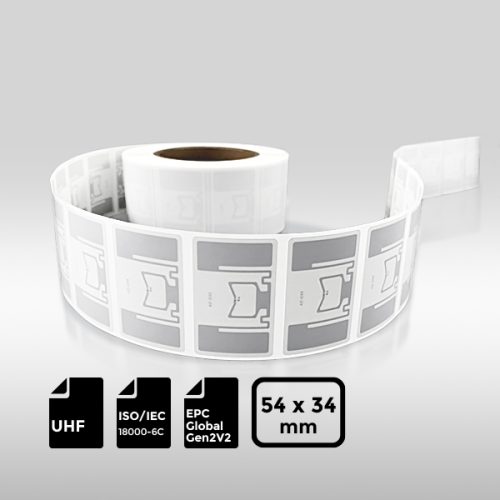
ARC Certified NXP UCODE® 9 Coated Paper RFID Label G95

The ARC-certified RFID label enables item-level tracking of apparel and other retail products. Embedded with an RFID chip, it transmits data to backend systems for inventory management, supply chain visibility, and brand protection. Fully compliant with EPC Class1 Gen2 and ISO/IEC 18000-6C standards, this label is widely used in retail environments like Walmart and Dillard’s, ensuring reliable performance and smooth in-store operations.