When you decide to invest in custom RFID labels, the success of your project hinges on the precision of the technical data you provide. For procurement teams, even one missing key specification can lead to read errors, compliance failures, or costly lead-time delays. At RFIDLabel, we understand that navigating RFID technology can be daunting. This guide will help you streamline your procurement process and ensure your labels perform flawlessly.
The Technical Blueprint: Core Specifications
To manufacture a label that meets your operational needs, we require a detailed technical blueprint. This ensures that the hardware—the chip and antenna—is perfectly tuned to your environment.
Frequency and Chip Selection
The first piece of information we need is the operating frequency. Most retail and logistics applications, such as those required by the Walmart RFID mandate, utilize Ultra-High Frequency (UHF), also known as RAIN RFID. If your project involves close-range interaction, you might require High Frequency (HF) or NFC.
Beyond frequency, the specific chip model is critical. Different chips offer varying memory and security features. For instance, the Impinj Monza series or NXP UCODE chips are industry standards for high-speed retail. Providing the chip model allows us to guarantee compatibility with your existing RFID readers.
Antenna Design and Read Range
The antenna’s size and shape determine the label’s read range and orientation sensitivity. We need to know:
- Target Read Distance: Do you need to scan items from 3 feet or 30 feet?
- Environment: Will the labels be used near liquids or metals? These materials can interfere with RF signals, requiring specialized antenna designs or spacers.
Material Science: Face Stock and Adhesive
The physical durability of custom RFID labels is just as important as their digital performance. We offer a variety of materials:
- Face Stock: Options include standard thermal paper for indoor use or durable PET for harsh industrial environments.
- Adhesive: We need to know the application surface. Corrugated cardboard requires a different adhesive than high-surface-energy plastics or glass.

Data and Visual Customization
Once the hardware is defined, we focus on the data and visual elements that make the label functional for your software systems.
Encoding Requirements and Data Mapping
Encoding is the process of writing data to the RFID chip. To perform this accurately, we require your data mapping instructions, typically including:
- EPC (Electronic Product Code): The unique identifier for each item.
- User Memory: Additional data like batch numbers or expiration dates.
- Locking: Whether the data should be permanently locked or rewritable.
Visual Printing: Branding and Compliance
We can customize the face stock with:
- High-Resolution Logos: To enhance brand visibility.
- Variable Data: Including 1D/2D barcodes and QR codes that match the encoded RFID data.
- Text and Warnings: Such as handling instructions or “Do Not Remove” notices.

Real-World Application: Meeting the Walmart RFID Mandate
A practical example of why detailed information is crucial is the recent expansion of the Walmart RFID mandate. As of 2024, Walmart has expanded its requirements to include categories like home goods and electronics. Suppliers who fail to provide the correct ARC-certified inlay specifications face significant penalties.
By providing us with the specific ARC category required for your product, we can ensure that the custom RFID labels we produce are fully compliant with Walmart’s stringent testing standards. This proactive approach eliminates the risk of non-compliance and ensures a smooth supply chain flow.

Summary Checklist for Your Next Order
| Category | Required Information | Why It Matters |
| RF Specs | Frequency (UHF/HF), Chip Model | Ensures compatibility with readers. |
| Physical | Label Size, Face Material, Adhesive | Determines durability and application success. |
| Environment | Presence of Metal/Liquid | Prevents signal interference and peeling. |
| Data | Encoding Scheme (EPC), Barcode Type | Syncs physical labels with digital databases. |
| Compliance | ARC Specs, Industry Standards | Avoids retailer penalties and ensures interoperability. |
Conclusion
Providing the right information for custom RFID labels is the foundation of a successful B2B partnership. By detailing your frequency needs, material requirements, and encoding data, you enable us to manufacture a product that enhances your operational efficiency. At RFIDLabel, we are committed to delivering high-quality, factory-direct solutions tailored to your unique business needs.
If you are ready to start your next project, visit us at rfidlabel.com. Our team is ready to help you optimize your inventory management with precision-engineered RFID solutions.
FAQs
1. Can I use the same custom RFID labels for both metal and non-metal surfaces?
Standard RFID labels typically fail on metal surfaces. If you have a mixed inventory, we recommend providing details on the metal-surface items so we can suggest “on-metal” RFID tags or specialized spacers.
2. What is the minimum order quantity (MOQ) for custom-printed RFID labels?
As a factory-direct manufacturer, we offer flexible MOQs. However, providing your estimated annual volume helps us optimize the manufacturing process and offer you the most competitive wholesale pricing.
Recommended Product
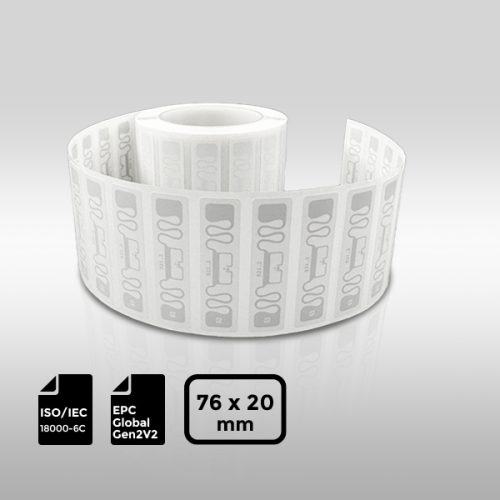
Avery Dennison® ARC Certified Belt NXP UCODE® 9 Coated Paper RFID Label AD-Belt-U9

Retailers can use this ARC-certified RFID label to record apparel merchandise information and prevent brand counterfeiting efficiently. The embedded RFID chip transmits data to back-end systems for analysis and storage. Compliant with EPCglobal Gen2v2 and ISO/IEC 18000-6C, it is designed for apparel, retail, and industrial applications such as supply chain management, home goods tracking, and brand protection, supporting smooth operations in large retail channels like Dillard’s.

ARC Certified Impinj® M730 Coated Paper RFID Label 47x31mm
This ARC-certified RFID label can be used in clothing retail, supply chain management, and brand protection. They not only fully conform to the ISO/IEC 18000-6C and EPCglobal Gen2v2 standards, but their inlays have also completely passed the ARC certification tests, ensuring stable performance and reliable tracking. Ideal for retail chains such as Walmart and Dillard’s, it helps streamline inventory management, enhance supply chain visibility, and maintain brand integrity.
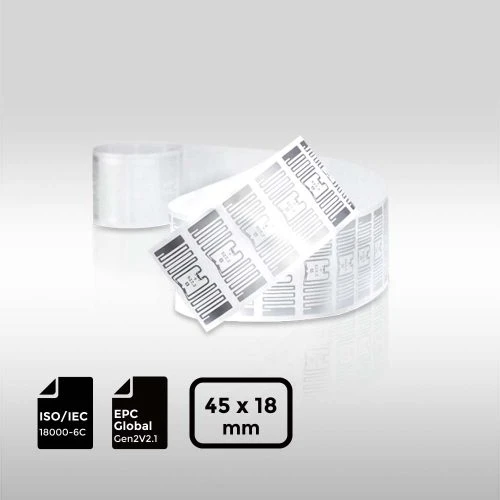
Avery Dennison® ARC Certified NXP® UCODE® 9 RFID Label | 45×18mm
AD Miniweb U9 FCC label is a compact (45×18 mm) ARC-certified RFID solution for retail, industrial, and supply-chain use. It delivers strong read performance on low-detuning materials such as cardboard and plastic, and in close-coupled environments. Powered by NXP® UCODE® 9, it offers 96-bit EPC memory and a self-adjusting feature that optimizes performance in challenging conditions. Widely applied in retail chains like Dillard’s, it ensures accurate inventory tracking, reliable performance, and smooth in-store operations.