


In today’s competitive jewelry market, rfid jewelry tags are revolutionizing how resellers manage their valuable inventory. The resale jewelry business presents unique challenges—high-value items in small packages that require meticulous tracking and protection. Traditional inventory methods involving manual counting and paper-based systems are not only time-consuming but prone to costly errors. Forward-thinking resellers are discovering that implementing RFID technology offers a transformative solution to these persistent challenges, particularly in the fast-paced resale environment where inventory accuracy directly impacts profitability.
This article explores why smart jewelry resellers are increasingly turning to RFID technology as an essential tool for modern inventory management and how this investment delivers measurable returns across multiple aspects of their business operations.
Understanding RFID Jewelry Tags Technology
What Are RFID Jewelry Tags?
RFID jewelry tags are specialized electronic tags that contain a microchip and an antenna, designed specifically for the unique requirements of jewelry items. Unlike traditional barcodes that require line-of-sight scanning, RFID (Radio Frequency Identification) technology uses radio waves to communicate with readers, allowing for contactless identification and tracking of items. These tags can be remarkably small and discreet, making them ideal for valuable, compact items like jewelry. The tags store unique identification codes that link to detailed product information in inventory management systems, enabling precise tracking throughout the supply chain and retail environment.

How RFID Technology Works in Jewelry Inventory
The implementation of rfid jewelry tags in inventory systems represents a significant technological advancement for jewelry resellers. The system operates through three primary components: the RFID tags attached to jewelry items, strategically placed RFID readers throughout the store or warehouse, and inventory management software that processes and analyzes the collected data.
When a reader activates the tags via radio waves, each tag responds by transmitting its unique identifier. This allows for simultaneous reading of multiple items without requiring direct visual contact—a reader can instantly detect dozens or even hundreds of tagged items within its range. For jewelry resellers managing extensive collections, this capability transforms inventory processes that once took hours into tasks that can be completed in minutes.
The RFID jewelry tags for resale market are typically programmed with information specific to each piece, including:
| Information Stored | Benefit to Resellers |
| Unique ID Code | Enables individual item tracking throughout its lifecycle |
| Item Description | Provides instant product identification |
| Purchase Date | Helps track aging inventory |
| Price Information | Facilitates quick price updates and sales processing |
| Authentication Data | Verifies authenticity for high-value pieces |
This technology creates a digital identity for each jewelry piece, allowing resellers to maintain comprehensive records and track movement patterns. When integrated with inventory management software, the system provides real-time visibility into stock levels, locations, and sales patterns—critical intelligence for optimizing operations in the competitive resale jewelry market.
Benefits of RFID Jewelry Tags for Resale Market
Enhanced Inventory Accuracy
One of the most compelling reasons why resellers adopt rfid jewelry tags is the dramatic improvement in inventory accuracy. Traditional manual counting methods typically achieve accuracy rates of 65-75%, with human error introducing significant discrepancies. In contrast, RFID systems consistently deliver accuracy rates exceeding 99%, virtually eliminating inventory discrepancies that plague jewelry businesses.
For resellers in the secondary market, this precision is particularly valuable. When dealing with unique, pre-owned pieces where each item has distinct characteristics and value, maintaining accurate records is essential. The RFID jewelry tags for resale market ensure that every piece is properly accounted for, reducing financial losses from misplaced items and preventing customer disappointment from selling items that aren’t actually in stock.
Time-Saving Advantages
Faster Stock Counts
The time-saving benefits of rfid jewelry tags cannot be overstated for busy resellers. Traditional jewelry inventory counts often require closing the store or dedicating staff to painstaking manual processes that can take days to complete. With RFID technology, comprehensive inventory counts can be performed in a fraction of the time—often reducing multi-day processes to just hours or even minutes.
A jewelry reseller with 1,000 pieces in inventory might typically spend 8-10 hours conducting a full manual count. With an RFID system, the same inventory can be counted in under 30 minutes. This efficiency allows for more frequent counts, which leads to better inventory control and earlier detection of discrepancies or potential theft.
Streamlined Receiving Process
For businesses in the RFID jewelry tags for resale market segment, the receiving process for new inventory is significantly streamlined. When new items arrive, they can be tagged and entered into the system quickly, with all relevant information captured at once. This is particularly valuable for resellers who frequently acquire new pieces from various sources.
The streamlined process works as follows:
- New jewelry items are received
- RFID tags are encoded with item information and attached
- Items are scanned in bulk rather than individually
- System automatically updates inventory records
- Items are immediately available for sale with accurate tracking
This efficiency not only saves labor costs but also reduces the time between acquisition and making items available for sale, improving cash flow for resale businesses.
Loss Prevention Capabilities
Theft prevention is a critical concern for jewelry resellers, and rfid jewelry tags provide sophisticated security features that traditional systems cannot match. When integrated with security systems, RFID-tagged jewelry can trigger alerts if items are moved to unauthorized areas or exit the store without proper checkout procedures.
The RFID jewelry tags for resale market are particularly effective because they can be discreetly incorporated into display fixtures or packaging, making them less obvious to potential thieves than traditional security measures. Additionally, the ability to conduct frequent, rapid inventory counts means that missing items are identified quickly, increasing the chances of recovery.
Many advanced RFID systems for jewelry include:
- Real-time movement tracking within the store
- Integration with surveillance cameras that activate when tagged items move unexpectedly
- Alert systems that notify staff of unusual item movement patterns
- Detailed audit trails showing which items were handled and by whom

Implementation Strategies for Resellers
Getting Started with RFID Jewelry Tags
For resellers considering the adoption of rfid jewelry tags, a strategic implementation approach is essential to maximize return on investment. The process begins with a thorough assessment of current inventory management challenges and specific business needs. This evaluation helps determine the appropriate scale and scope of the RFID system required.
A phased implementation approach often works best for jewelry resellers:
- Pilot Phase: Start with a limited category of items to test the system and train staff
- Evaluation: Measure improvements in efficiency and accuracy against pre-implementation benchmarks
- Refinement: Adjust processes based on pilot results
- Full Deployment: Roll out the system across the entire inventory
- Continuous Improvement: Regularly review and optimize the system
Integration with Existing Systems
Compatible Software Solutions
One of the key considerations when implementing rfid jewelry tags is integration with existing point-of-sale and inventory management systems. Modern RFID solutions offer various integration options, from simple data export/import capabilities to full API-based integrations that provide seamless data flow between systems.
For resellers already using inventory management software, it’s important to verify compatibility with RFID technology. Many popular retail management platforms now offer RFID modules or integration capabilities, including:
- Specialized jewelry inventory systems
- Cloud-based retail management platforms
- Enterprise resource planning (ERP) systems
- E-commerce platforms for omnichannel operations
Hardware Requirements
Implementing RFID jewelry tags for resale market operations requires specific hardware components beyond the tags themselves. A basic RFID system for jewelry resellers typically includes:
| Component | Function | Considerations for Jewelry Resellers |
| RFID Tags | Attach to jewelry items | Must be small, secure, and appropriate for valuable items |
| RFID Readers | Scan and identify tagged items | Fixed readers for checkout/security, handheld for inventory |
| Antennas | Extend read range and coverage | Strategic placement for complete store coverage |
| Middleware | Process tag data | Must integrate with existing inventory systems |
| Encoding Equipment | Program tags with item data | Needed for initial setup and new inventory processing |
The physical layout of the retail space will influence hardware selection and placement. Jewelry stores with multiple display cases and storage areas may require multiple fixed readers strategically positioned to ensure complete coverage. For smaller operations, handheld readers may provide sufficient functionality at a lower implementation cost.

Choosing the Right RFID Jewelry Tags for Your Business
Key Features to Consider
Not all rfid jewelry tags are created equal, and selecting the right tags for jewelry applications requires careful consideration of several key factors. For resellers in particular, the following features are essential:
- Size and Form Factor: Jewelry tags must be small enough to attach to delicate items without detracting from their appearance or customer experience.
- Attachment Method: Options include adhesive backing, string attachments, or integrated packaging solutions. The method should be secure yet non-damaging to valuable pieces.
- Durability: Tags must withstand handling by customers and staff without losing functionality.
- Read Range: Depending on the store layout and security needs, different read ranges may be optimal. Shorter ranges (a few inches) provide precise location data, while longer ranges (several feet) are better for general inventory and security applications.
- Memory Capacity: Basic tags store only a unique identifier, while advanced options can store detailed product information directly on the tag.
Customization Options for Resellers
The RFID jewelry tags for resale market offer various customization options that allow resellers to tailor the technology to their specific business needs and branding requirements. These customizations enhance both functionality and customer experience.
Customization options include:
- Branded Tags: Tags can be printed with company logos or information, turning them into subtle marketing tools when visible to customers.
- Dual-Function Tags: Some tags combine RFID technology with traditional visual elements like barcodes or QR codes, providing backup options for identification.
- Specialized Attachments: Custom attachment methods designed specifically for different types of jewelry (rings, necklaces, watches) ensure secure tagging without damaging items.
- Color Coding: Visual color systems can help staff quickly identify different categories or price points of inventory.
- Variable Memory: Tags can be selected with different memory capacities based on how much information needs to be stored directly on the tag versus in the database.
For resellers with both physical and online presence, customized rfid jewelry tags can bridge the gap between channels. For example, tags can store URLs or unique identifiers that connect physical items to their online listings, facilitating omnichannel inventory management and creating a seamless customer experience across shopping platforms.

Future Trends in RFID Jewelry Tagging
Emerging Technologies
The landscape of rfid jewelry tags continues to evolve with emerging technologies that promise even greater benefits for resellers in the coming years. Several key developments are worth monitoring:
- Miniaturization: Ongoing advancements in microchip technology are producing increasingly smaller tags that can be incorporated into even the most delicate jewelry pieces without affecting aesthetics.
- Enhanced Security: Next-generation RFID systems incorporate advanced encryption and authentication protocols, making counterfeiting or tampering virtually impossible.
- Blockchain Integration: Some RFID solutions now integrate with blockchain technology to create immutable records of provenance and ownership—particularly valuable for high-end jewelry resellers dealing with estate pieces or limited editions.
- Customer Experience Applications: Interactive displays that read RFID tags and present customers with detailed information, history, or complementary suggestions are becoming more common in upscale jewelry retail.
- Battery-Assisted Passive Tags: These hybrid tags offer extended read ranges and additional functionality while maintaining small form factors suitable for jewelry.
Market Growth Predictions
The market for RFID jewelry tags for resale market applications is projected to grow significantly in the coming years. Industry analysts predict several trends:
- Global RFID market in retail is expected to grow at a CAGR of 12.1% through 2027
- Jewelry sector adoption of RFID technology is outpacing general retail adoption due to the high value of inventory and security concerns
- Decreasing tag costs (projected to fall by 20-30% over the next five years) will make implementation more accessible for smaller resellers
- Integration with other emerging technologies like artificial intelligence for predictive inventory management will create new operational efficiencies
As more success stories emerge and technology costs continue to decrease, adoption rates among jewelry resellers are expected to accelerate, potentially making RFID inventory management the industry standard within the next decade.

Conclusion and Next Steps
The adoption of rfid jewelry tags represents a strategic investment for forward-thinking jewelry resellers who understand that precision inventory management directly impacts profitability. The technology addresses the unique challenges of the jewelry resale market—high-value, small items that require meticulous tracking and protection—with solutions that deliver measurable improvements in efficiency, accuracy, and security.
After reading this comprehensive guide to RFID jewelry tags for inventory management, you may be ready to explore how this technology can transform your jewelry business. For more information about high-quality RFID solutions specifically designed for jewelry applications, including tags, readers, and complete inventory management systems, visit rfidlabel.com. Our experts can help you select the right components for your specific needs and guide you through implementation for maximum return on investment.
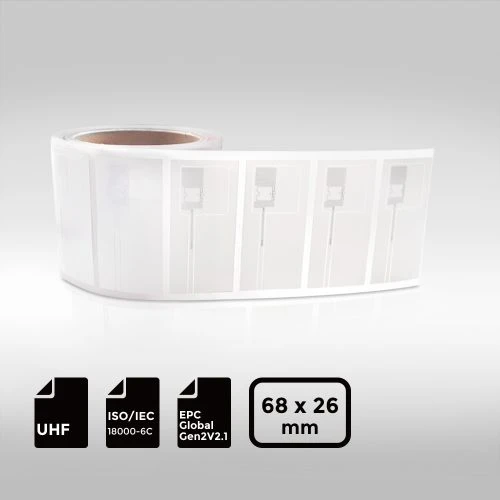
UHF RFID Jewelry Label NXP UCODE® 9 68×26mm | ISO18000-6C

RFID jewelry labels are RFID technology applications designed specifically for jewelry and valuables management. The label contains a special adhesive that is suitable for sticking to jewelry and other crafts without damaging the jewelry. Its chip performance allows for smaller inlay designs, so the labels are very small and easy to attach to various jewelry items such as rings, necklaces,bracelets, etc.



