The benefits of RFID in healthcare are transforming operational efficiency from a theoretical concept into a measurable reality. We, at RFIDLabel, understand that in the high-stakes environment of medical care, every second and every dollar counts. This is why we are exploring the strategic shift from traditional inventory methods to advanced Radio Frequency Identification (RFID) systems, focusing on the clear, quantifiable return on investment (ROI) that modern hospitals are achieving.
The Core Challenge: Inventory Blind Spots
Before the adoption of advanced technology, healthcare organizations often relied on manual or estimation-based systems for managing high-value inventory, particularly Physician Preference Items (PPI). This approach led to significant inefficiencies:
- Inaccurate Par Levels: Inventory levels were based on estimates rather than real-time utilization data, leading to chronic over- or under-stocking.
- Financial Waste: Excess inventory resulted in high holding costs, while under-stocking forced expensive expedited freight charges.
- Product Expiration: Products sat on shelves unused, expiring before they could be utilized for patient care.
These “inventory blind spots” directly impacted a hospital’s bottom line and, critically, diverted clinical staff away from patient care to perform manual inventory counts.

Quantifying the Strategic Benefits of RFID in Healthcare
The implementation of RFID technology provides a comprehensive solution, offering real-time, granular visibility into the supply chain. This visibility is the foundation for achieving substantial, measurable financial and operational improvements.
Visibility and Data-Driven Par Levels
RFID systems provide what one hospital supervisor called “X-ray vision” into inventory. By tracking products from the manufacturer to the point of care, the system establishes statistically sound par levels based on actual usage. This eliminates guesswork and ensures that the right products are available at the right time.

Case Study: BJC HealthCare’s Supply Chain Transformation
BJC HealthCare, a 15-hospital organization, partnered with a clinical supply chain solution provider to address their inventory challenges, which included over $400 million in annual PPI spend. By implementing RFID technology, they realized immediate and long-term financial and operational gains.
Measurable Financial Outcomes
The benefits of RFID in healthcare are best illustrated by BJC HealthCare’s success by the numbers:
- Direct Inventory Reduction: 23%
- Consigned Inventory Reduction: 10%
- Additional Inventory Reduction (due to par optimization): 32%
- Bulk Buy Savings (one-time): $2.1 Million
- Expected Inventory Reduction in next 6 months alone: $1.5 Million
- Annualized Freight Savings: $49,000
- Inventory Holding Cost Reduction (due to eliminating excess inventory): $7,800
Operational Excellence
Beyond the financial savings, the operational benefits of RFID in healthcare directly enhance patient care and staff efficiency:
- Reduced Product Expiration: The system drove product expiration rates down to less than 1%.
- Increased Clinician Time: By automating inventory tracking, clinicians were freed up to spend more time with patients.
- Optimized Vendor Relations: A key supplier, Cook Medical, also saw a 65% reduction in consigned inventory and their sales representatives could spend more time consulting rather than counting products.

The Long-Term Benefits of RFID in Healthcare
The initial ROI from inventory reduction is only the beginning. The data collected by RFID systems creates a culture of continuous improvement. This rich data set allows hospitals to monitor high-value products, optimize workflows, and discover new insights to improve performance across the entire system. This strategic advantage is a core reason why the benefits of RFID in healthcare are considered a long-term investment.
Conclusion
The shift to RFID is not merely an upgrade; it is a fundamental change in how healthcare organizations manage their most critical assets. The quantifiable results from major health systems like BJC HealthCare prove that this technology delivers substantial financial savings, operational efficiency, and, most importantly, enhances the quality of patient care.
If your organization is ready to move beyond manual inventory systems and realize these tangible benefits of RFID in healthcare, we invite you to explore our comprehensive range of RFID cards, tags, and custom label solutions. Visit rfidlabel.com today to learn how our high-quality, customizable products can be the foundation for your next-generation supply chain strategy, or contact us for a consultation.
FAQs
How does RFID technology improve patient safety?
RFID improves patient safety primarily through accurate inventory management of critical supplies and medications. By ensuring that expired products are flagged and removed, and that necessary items are always in stock, RFID minimizes the risk of using compromised supplies or delaying time-sensitive procedures due to missing equipment.
Recommended Product
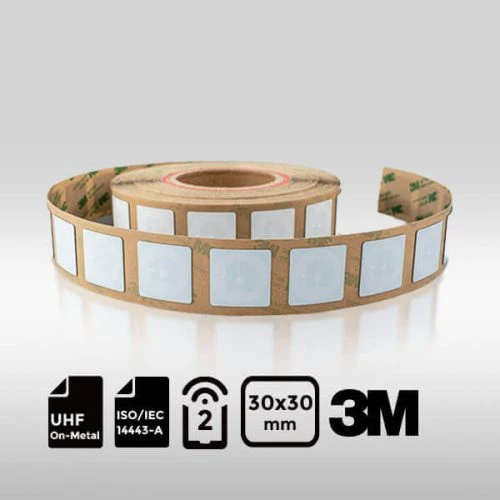
On-Metal NXP NTAG® 213 NFC Label 30x30mm

Elevate your tracking precision with our On-Metal NFC Label, boasting a unique 30x30mm size and empowered by the dependable NXP ICODE® SLIX chip. Made from durable PET material and backed by 3M adhesive, this label complies with ISO/IEC 14443-A, NFC Forum Type 2 standards, offering a standout choice for top-tier tracking solutions.

Flexible & Printable On-Metal UHF RFID Label Impinj® Monza® R6-P | 60×25mm
The 60×25 mm Impinj® Monza® R6-P UHF On-Metal RFID Label is a high-performance RFID solution designed for use on metallic assets and industrial surfaces. Powered by the latest Monza® R6-P chip, the label provides outstanding read accuracy, fast encoding speed, and extended read distances, making it reliable even in RF-challenging environments. Its flexible inlay design allows easy application on flat,curved, or textured metal surfaces, making it ideal for asset tracking,tool management, and warehouse logistics.
This RFID label also features a printable PET top layer, enabling full customization with logos, serial numbers, and barcodes. The strong adhesive ensures a secure bond to metal surfaces, while its durable construction resists heat, abrasion, and harsh outdoor conditions. Compliant with ISO/IEC 18000-6C and EPC Global Gen2v2 standards, the label offers both durability and high RF efficiency, providing a reliable,long-term identification solution to streamline operations.

UHF On-Metal RFID Label Impinj® Monza® R6-P 80x40mm | ISO18000-6C
The Flexible & Printable UHF On-Metal Label is a durable, customizable, high-performance RFID label that can be easily printed and encoded. The label is ideal for metallic container tracking, equipment & device tracking, warehouse shelf tracking, automotive components tracking, IT asset tracking, etc. It can be stuck to metallic assets easily, especially on irregular and uneven surfaces.