


How To Optimize RFID Reader Antenna Performance? Nowadays, RFID technology, as one of the representatives of emerging technologies, has attracted extensive attention from various industries. Whether it is manufacturing, retail logistics or warehousing industries, all hope that the introduction of RFID technology to improve the existing mode of operation and efficiency. Then the antenna is an important part of the RFID system, it will directly affect the performance of the reader and the use of the entire system. When the performance of the reader is optimized, the efficiency, accuracy and stability of data reading will be significantly improved. This blog will be for the user on how to optimize the performance of the RFID reader antenna to put forward detailed suggestions and tips, to help users maximize the effect of the RFID system.
Introduction of RFID Reader Antenna
First, we need to understand how an RFID reader antenna works. The RFID reader antenna serves as a component that transmits and receives radio waves to realize data information interaction with the RFID label. Antenna’s design and installation will affect the radiation pattern, gain, bandwidth and reading range of the RFID reader. Here are the key factors about antenna performance:
- Gain: The gain here refers to the efficiency with which the antenna converts input power into radio waves. Generally speaking, high-gain antennas tend to have a larger reading range.
- Radiation Pattern: The radiation pattern here refers to the radiation direction and intensity distribution of the antenna. For example, the radiation direction of an omnidirectional antenna is 360 degrees, while the radiation direction of a directional antenna is concentrated in a specific direction.
- Frequency Range: According to the division of different operating frequencies, RFID systems are divided into LF, HF and UHF. Different application scenarios require antennas with different operating frequencies.

Selecting the Right Antenna Type
The first step in optimizing performance is to choose an antenna type that is suitable for the user’s application. Different antenna types are suitable for different application scenarios, so selecting the right antenna is very important.
- Omnidirectional Antenna: Omnidirectional antennas are mainly used for applications that cover multiple directions. Examples include asset tracking and inventory in warehousing and retail environments.
- Directional Antenna: Directional antennas are suitable for applications where signals are concentrated in specific directions. Examples include access control systems and cargo testing on logistics and transport belts.
- Circularly Polarized Antenna: To better communicate with labels in any direction, circularly polarized antennas should be used in scenarios where the label direction is not fixed.
Optimize Antenna Installation Position and Angle
The installation position and angle of the RFID antenna have a direct impact on the performance of the RFID reader. The following are important factors to consider when installing an antenna:
- Installation Position
Generally speaking, metal will reflect RFID signals, causing distortion or interference of the signals. Users should try to install the antenna away from the metal medium or use an antenna suitable for the metal medium environment. In a multi-antenna system, sufficient distance needs to be maintained between antennas. When the distance between the antennas is too close, antenna signals will interfere with each other. Generally, the ideal distance between antennas should be greater than the wavelength of the antennas.
- Installation Angle
Adjusting the antenna angle according to the direction of the label can significantly improve the reading effect. For example, if the tag is placed tilted, appropriate adjustment of the angle of the antenna can ensure smoother signal transmission. The polarization directions of the antenna and label should be matched to improve signal reception. For multi-directional labels, consider using circularly polarized antennas.

Calibrate Antenna Power and Frequency
Power and frequency calibration are also crucial to optimizing antenna performance. Different application scenarios have different power and frequency requirements, so power and frequency calibration needs to be carried out based on actual conditions.
- Adjusting Transmit Power
When the power of the antenna is too large, multi-path effects will occur, resulting in signal interference. On the other hand, too small the power of the antenna leads to a reduction in the reading range. Users should adjust the transmit power of the antenna according to their own needs to achieve the best results. It is worth noting that in some areas, the transmission power of RFID will be limited by laws and regulations. Users need to ensure that the adjusted antenna power complies with local laws.
- Frequency Calibration
Users should choose the appropriate operating frequency between HF and UHF. High frequencies are suitable for applications that require high safety over short distances, while ultra-high frequencies are used for long-distance or large-scale reading applications. If there are multiple RFID systems in the environment, the working frequencies of different systems should avoid overlap to minimize signal interference.
Conduct Environmental Testing and Optimization
After installation and calibration are completed, users need to conduct testing and optimization in a real-world environment. This can largely help you identify and solve potential problems and ensure that the system can perform well under real-world conditions.
- Perform Field Tests
Test the reading range and accuracy of the antenna by placing labels in different positions and angles. At the same time, the performance of the antenna under different conditions is recorded, and the installation and configuration of the antenna are adjusted accordingly. If users use a spectrum analyzer to detect interference sources that affect RFID signals. For example, other wireless devices, metal media or electromagnetic noise. After detection, relevant measures are taken to reduce or eliminate signal interference.
- Continuous Monitoring and Maintenance
Users need to check the connection and physical condition of the device to ensure that the antenna and reader are working properly. If the antenna is damaged, it will directly affect the reading performance, so users should replace it in time. In addition, regular software updates and settings adjustments are also necessary. These measures can effectively improve the stability and reading efficiency of RFID systems.
Conclusion
Optimizing the performance of RFID reader antennas is a multifaceted and complex process. Whether it’s choosing the type of antenna, installation and calibration, or environmental testing and ongoing optimization, every aspect is critical. It is hoped that users will be able to effectively improve the overall performance of their RFID systems with the suggestions and tips outlined above. As RFID technology continues to innovate, users should maintain their focus on antenna performance and optimization to stay on top of technology applications.
After reading this blog, we hope that you will have enough knowledge about RFID reader antenna in building management. If you still need more information, you can contact our sales experts, who will provide you with the suitable solutions and the professional purchase suggestions according to your needs. In addition, you can also visit our official website rfidlabel.com to browse related product information about RFID reader antenna.
Recommended Product
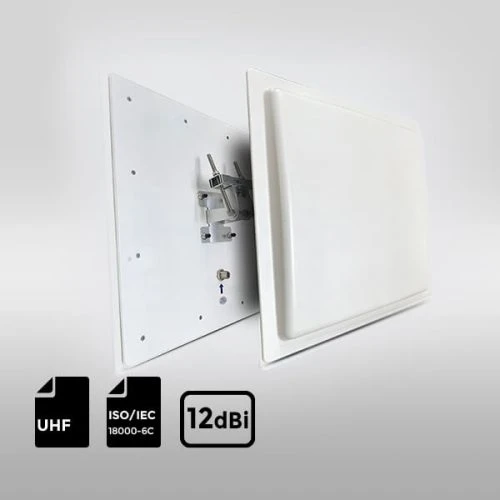
UHF 12-dBi RFID Antenna ISO 18000-6C
The UHF RFID antenna 12dBi features high sensitivity and outstanding reading performance, supporting long-distance, high-volume tag reading and writing with precision speed, and high security. It also has an IP67 high protection rating, excellent waterproof performance, and easy installation, making it suitable for a wide range of applications, including smart transportation, logistics, warehouse management, event management, production line management, smart retail, national defense security, power asset management, financial management, and medical equipment management.



