In today’s era of digitization and intelligence, NFC smart packaging is no longer just the outer shell of a product; it has become an essential medium for interaction between brands and consumers. The introduction of NFC (Near Field Communication) technology has equipped packaging with more intelligent functions, enhancing its value in the supply chain and retail sectors. This article will analyze the application cases of NFC technology in packaging, explore its advantages in modern packaging, and introduce RFIDLabel®’s NFC label products to help retail companies and packaging manufacturers better understand and apply this advanced technology.
Application Cases of NFC Technology in Packaging
Stora Enso is a leading European pulp and packaging manufacturer. The company has developed RFID or NFC smart packaging by integrating RFID and NFC technologies. This innovation improves the traceability and interactivity of packaging in both the supply chain and retail sectors. Smart RFID packaging or NFC smart packaging consists of three main parts. First, the packaging embeds NFC or UHF RFID labels that store and transmit product-related information. Second, reader devices read the information from the labels and transmit it to the cloud. Third, a cloud-based software platform allows participants in various stages of the supply chain to track and manage the flow of products.
Consumers can use their smartphones to interact with NFC labels. This allows them to access additional product information, usage guides, and specific promotional offers. This interaction increases purchasing convenience and enhances user engagement. The solution not only improves supply chain management efficiency but also opens up new ways for brands and consumers to connect. Stora Enso’s smart packaging has already been implemented in several countries. It expands the functionality of traditional packaging and introduces new business models to the industry. As technology continues to advance, smart packaging is likely to become mainstream, offering greater convenience and value across various industries.
Advantages of NFC Technology
As a short-range communication technology, NFC offers numerous advantages in the packaging field:
- Convenience: NFC technology allows consumers to easily access information embedded in the packaging without the need for additional devices. This convenience enhances the shopping experience and strengthens brand loyalty.
- Interactivity: NFC labels offer new ways for brands to interact with consumers. By scanning an NFC label, consumers can instantly retrieve detailed product details, including manufacturing dates, user instructions, and special offers. This interactive method not only improves user experience but also provides brands with opportunities for continuous engagement with consumers.
- Anti-Counterfeiting: NFC labels can effectively prevent tampering with packaging. In the packaging of high-value products, the anti-counterfeiting function of NFC labels is crucial. It can record the opening status of the packaging, ensuring the safety and integrity of the product during the sales process, thereby reducing the risk of counterfeit goods circulation.
- Supply Chain Management: Through NFC labels, companies can track the flow of products in the supply chain. NFC technology makes information transparent at all stages of the supply chain and helps companies optimize management processes. At the same time, reduce operating costs and improve supply chain efficiency.
RFIDLabel®’s NFC Label Products
As a leading provider of NFC technology, RFIDLabel® offers a range of high-quality RFID label products suitable for various packaging needs. Among them, in line with the case discussed, I highly recommend RFIDLabel®’s NTAG® 213 TT NFC label, which has the following features:
- Tamper-Evident Functionality: This label is equipped with a tamper-evident design that can record the opening status of the packaging, ensuring the safety and integrity of the product. This feature is particularly important for the packaging of high-value products, effectively enhancing brand credibility.
- High Compatibility: The NTAG® 213 TT NFC label complies with international standards, including NFC Forum Type 2 and ISO/IEC 14443 Type A. This ensures broad compatibility with NFC devices worldwide and allows it to adapt to various application scenarios.
- Compact and Flexible: The label is small and discreet. It can be easily embedded in various packaging materials without affecting the design of the NFC smart packaging. This also enhances the intelligence of the packaging.
- Rich Application Scenarios: The NTAG® 213 TT NFC label offers more than just an anti-counterfeiting function. It also supports digital signatures, which further enhance the security and traceability of the packaging. Through customized label designs, companies can implement multiple functions within the packaging to meet the needs of different markets.
Conclusion
The application of NFC technology in modern packaging not only brings a convenient shopping experience to consumers but also opens new channels for interaction between brands and consumers. By using NFC labels, companies can achieve intelligent product management, improve supply chain efficiency, and enhance brand competitiveness. RFIDLbael® as a professional supplier of NFC labels, is committed to providing customers with high-quality NFC label products. Whether you are a retail company or a packaging manufacturer, you can create smarter, more interactive, and more secure product packaging with RFIDLabel®’s NFC labels, winning the favor of the market. Choosing RFIDLabel® means choosing the unlimited possibilities of future packaging.
By combining practical application cases with an analysis of technical advantages, retail companies and packaging manufacturers can better understand and apply NFC technology. You are welcome to visit rfidlabel.com to add value to your products and provide a better experience for your customers.
Recommended Product
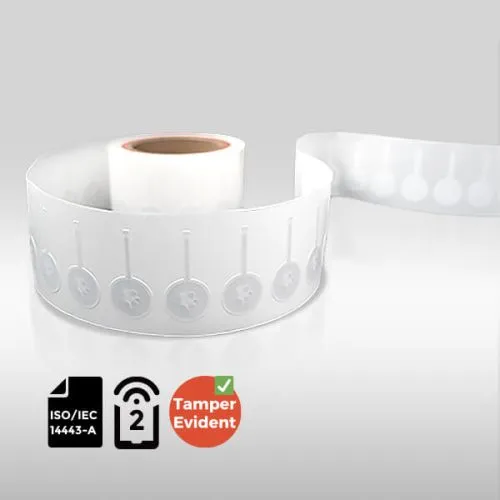
ISO14443A 13.56MHz NFC Label/Inlay NXP NTAG® 213 TagTamper

NTAG® 213 TagTamper offers several features to protect brands and enable advanced anti-counterfeiting as well as tamper-proofing. Furthermore, it lets brand owners have a direct engagement with consumers.