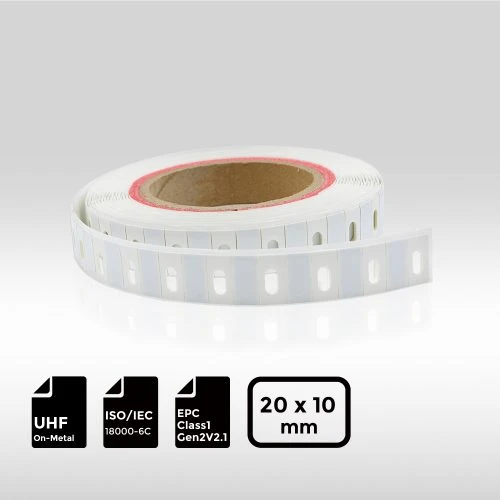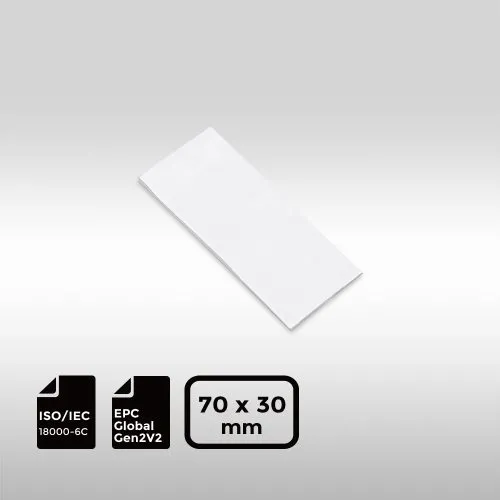

RFID Security Stickers are becoming an increasingly useful solution for improving cargo identification, package security, and shipment visibility in international logistics. By combining UHF RFID technology with adhesive label structures and tamper-evident materials, these labels enable wireless identification while providing additional protection against unauthorized removal.
During cross-border transportation, goods pass through warehouses, distribution centers, customs checkpoints, and other facilities. Traditional printed labels and barcodes support basic identification but require visual scanning and offer limited tamper-evident capabilities.
RFID Security Stickers provide an alternative by integrating RFID chips and antennas into adhesive labels. They allow compatible readers to identify shipments wirelessly and, depending on their construction, provide evidence of unauthorized label removal.
As Asia-Pacific economies continue to promote smart customs and supply chain connectivity, RFID security labels offer a practical hardware solution for modern logistics operations.
What Are RFID Security Stickers?
RFID Security Stickers are adhesive labels embedded with RFID chips and antennas. They provide wireless identification and can incorporate additional tamper-evident features.
A typical RFID Security Sticker consists of:
| Component | Function |
| RFID Chip | Stores identification data |
| RFID Antenna | Enables wireless communication |
| Label Substrate | Supports and protects the RFID inlay |
| Adhesive Layer | Attaches the label to packaging |
| Tamper-Evident Layer | Provides evidence of unauthorized removal |
Depending on the application, available designs include standard UHF RFID stickers, destructible RFID labels, VOID-pattern labels, and customized tamper-evident RFID labels.
Not every RFID sticker provides tamper detection. Businesses should select products specifically designed for security applications when removal evidence is required.
How Do RFID Security Stickers Work?
Most passive UHF RFID Security Stickers operate without an internal battery. They obtain energy from the radio frequency signal transmitted by a compatible RFID reader.
The identification process involves four steps:
- Label Application: An RFID sticker is attached to a carton, package, pallet, or other shipment unit.
- RF Activation: The reader transmits a signal that activates the RFID chip through its antenna.
- Data Transmission: The chip sends its stored identification information, such as its Electronic Product Code (EPC), to the reader.
- Shipment Verification: The identification data is associated with transportation records. For tamper-evident models, physical or electronic indicators can also help identify potential label removal.
This process allows logistics operators to identify multiple labeled items without scanning each barcode individually.
It is important to note that standard passive RFID stickers do not provide continuous GPS tracking. Location information is generally recorded when a label is detected by a reader at a designated checkpoint.

Key Hardware Features of RFID Security Stickers
The performance of RFID Security Stickers depends on their electronic components and physical construction.
1. UHF RFID Chip and Antenna
UHF RFID chips store identification information and communicate with compatible readers. Common functions include EPC storage, tag identification, and additional user memory, depending on the chip model.
The antenna receives the reader’s radio frequency signal and enables communication. Its size, geometry, operating frequency, and installation position all influence reading performance.
Most logistics-oriented passive UHF RFID labels use EPC Gen2-compatible technology and the ISO/IEC 18000-63 communication standard.
2. Label Materials and Adhesives
The substrate protects the RFID inlay and determines the label’s physical durability.
Common materials include:
- Paper: Suitable for general carton labeling.
- PET: Offers durability and moisture resistance.
- PP: Provides flexibility and moisture resistance.
- Synthetic materials: Suitable for more demanding environments.
The adhesive should match the application surface and transportation conditions. For example, labels used on cardboard cartons may require different adhesive properties from those attached to plastic or metal surfaces.
3. Tamper-Evident Construction
RFID Security Stickers can incorporate different anti-removal designs:
- Destructible Material: Breaks into small pieces when removal is attempted.
- VOID Adhesive: Leaves a visible pattern on the application surface.
- Tamper-Detection Circuit: Uses a conductive track that can indicate a change when the label is damaged or removed.
These mechanisms provide different levels of protection. Businesses should select the appropriate construction according to their security requirements.
For more information, see our guide to tamper-evident RFID labels.
Types of RFID Security Stickers for Logistics
Different cargo applications require different RFID label designs.
| Label Type | Main Function | Typical Application |
| Standard UHF RFID Sticker | Wireless identification | Cartons and packages |
| Tamper-Evident RFID Label | Indicates unauthorized removal | Security-sensitive shipments |
| Destructible RFID Sticker | Prevents intact label transfer | High-value packaging |
| VOID RFID Label | Leaves visible removal evidence | Sealed packages |
| Anti-Metal RFID Sticker | Supports reading on metal surfaces | Metal containers and equipment |
For metal packaging, specially designed anti-metal RFID stickers are recommended because conventional UHF RFID antennas may experience reduced performance when attached directly to metal.
Applications in Cross-Border Cargo Tracking
RFID Security Stickers can support shipment identification at different stages of international logistics.
1. Shipping Carton Identification
UHF RFID stickers can be applied to export cartons, allowing multiple packages to be identified during warehouse handling and dispatch.
2. Pallet Tracking
RFID labels attached to pallets help logistics operators identify consolidated shipments during loading, transportation, and receiving.
3. Customs Inspection
At designated checkpoints, compatible RFID readers can retrieve shipment identification information. Tamper-evident labels can provide additional evidence of unauthorized package removal.
RFID identification complements customs declarations and physical inspections rather than replacing them.
4. High-Value Cargo Protection
Electronics, industrial components, and premium consumer goods may require additional package protection. Tamper-evident RFID stickers combine electronic identification with physical evidence of label removal.

How to Choose the Right RFID Security Stickers
Before selecting RFID Security Stickers, businesses should evaluate the following factors:
| Selection Factor | What to Consider |
| RFID Frequency | Regional UHF frequency compatibility |
| Chip Type | EPC memory, TID, and user memory |
| Antenna Design | Label dimensions and reading performance |
| Label Material | Paper, PET, PP, or synthetic materials |
| Adhesive | Surface compatibility and bonding strength |
| Tamper-Evident Design | Destructible, VOID, or electronic detection |
| Application Environment | Temperature, humidity, and handling conditions |
For cross-border logistics, compatibility between RFID stickers and readers in different regions is particularly important. Businesses should test actual reading performance under their intended application conditions.
RFID Security Stickers and APEC Smart Customs
The Asia-Pacific Economic Cooperation (APEC) continues to promote trade facilitation, digital customs processes, and regional supply chain connectivity.
Within this development, RFID Security Stickers can contribute to the physical identification layer of smart logistics infrastructure.
They can help:
- Improve electronic identification of cargo.
- Reduce manual barcode scanning.
- Provide additional package-level tamper evidence.
- Support more structured shipment identification at checkpoints.
When combined with compatible RFID readers and logistics systems, RFID labels can help businesses improve cargo visibility and transportation security.
RFID Security Stickers are not a mandatory APEC customs technology, but they offer a practical hardware option for companies seeking more efficient cargo identification.

Conclusion
RFID Security Stickers combine UHF RFID technology with flexible adhesive label construction to improve cargo identification and package security.
From shipping cartons and pallets to high-value goods, they provide wireless identification and can incorporate tamper-evident features according to application requirements.
By selecting the right RFID chip, antenna, substrate, adhesive, and security design, businesses can develop suitable labeling solutions for cross-border logistics and cargo transportation.
As international supply chains continue to evolve, RFID security labels offer a practical way to support more efficient and transparent cargo operations.
For more RFID label solutions and customized products, welcome to visit rfidlabel.com and explore how our RFID technology can support your business needs.
FAQs
1. What are RFID Security Stickers used for?
They are used for wireless product identification, cargo tracking, package identification, and tamper-evident applications.
2. Can RFID Security Stickers detect tampering?
Some models incorporate destructible materials, VOID adhesives, or electronic tamper-detection circuits. Standard RFID stickers do not automatically provide this function.
3. Can UHF RFID Security Stickers be used on metal?
Standard UHF RFID stickers may experience reduced performance on metal surfaces. Specially designed anti-metal RFID stickers are recommended.
4. Do RFID Security Stickers support GPS tracking?
No. Passive RFID stickers do not have GPS functionality. Location information is generally obtained when the label is detected by an RFID reader.
5. Are RFID Security Stickers suitable for international shipping?
Yes. They can support cargo identification at warehouses, distribution centers, ports, and designated customs checkpoints, subject to regional frequency and equipment compatibility requirements.
Recommended Product