


Compliance with hand hygiene (HH) is recognized as the most effective factor in reducing infection transfer in patients in health care facilities. Thus, hand hygiene compliance surveillance is becoming an effective method for managing the spread of pathogens. In order to manage consumers, most of the commonly used hygiene tracking instruments and programs use badges or wristbands. A user-friendly, passive electronic device based on RFID tech with monitoring capabilities was implemented in several soap dispensers or washing and drying machines. A wearable, passive RFID wristband, wall-mounted dispenser, and hygiene enforcement rate measurement tools are created to generally increase hygiene conditions and their control in many healthcare facilities nowadays.
Generally, the logic of hand-sanitizers enabled by RFID consists of a hand sanitizer station with a detector part with a sensor and an opening for the sensor to identify a hand detection zone and a wired link that triggers a signal generator that communicates the signal to the RFID tag of a consumer. Employers in health care and food facilities are expected to guarantee their workers’ consistent hand hygiene. Since 2007, there have been enforcement programs for hygiene control systems that use RFID technologies. Such systems also transmit a signal to the RFID badges or tag of an individual that registers their location at first.
A similar mechanism is valid for RFID-based doors. Thanks to the connection between the RFID tags and the sensors of the doors, which will be integrated especially to persons such as emergency service employees, all doors will be opened automatically. And there will be no waste of time with card authorization or card swiping problems.
A hospital that uses long-range tracking devices and is designed with a new access control system provides. In this way, hospitals can oversee and monitor who is and who is not allowed to enter a specific area. From emergency professionals to patient beds and limited users… Access is described depending on different standards due to the hospital’s vulnerable setting. When staff uses their RFID badges to enter and exit the facility, protected sections, or quarters, and to gain user access to medical devices which are equipped with an RFID transmitter, all actions and devices location can be tracked. An RFID tagged bracelet that acts as an access credential can also be worn by patients, guests, and suppliers to regulate and monitor the processes as well as entry and exists easily.
Radio Frequency Identification (RFID) is built on radio wave technologies and consists of wireless technology. Long-range RFID is utilized at a distance from several meters to mark, track, and verify tagged objects. The deployment of long-range RFID devices greatly helps hospitals. Present long-range RFID deployments are designed to effectively improve patient, personnel, and asset protection, simplify day-to-day care productivity, and facilitate patient experiences. Examples of long-range RFID systems in hospitals are related to stable and user-friendly authentication, maintaining a high-speed response to vital emergencies, and providing seamless access for people in wheelchairs and individuals with mobility difficulties.
In a favorable environment, seeking a combination of hospital protection and safety and specific disease treatment offers a great opportunity for hospitals utilizing long-range RFID systems.
Visit rfidlabel.com for more information and RFID products!
Recommended Product
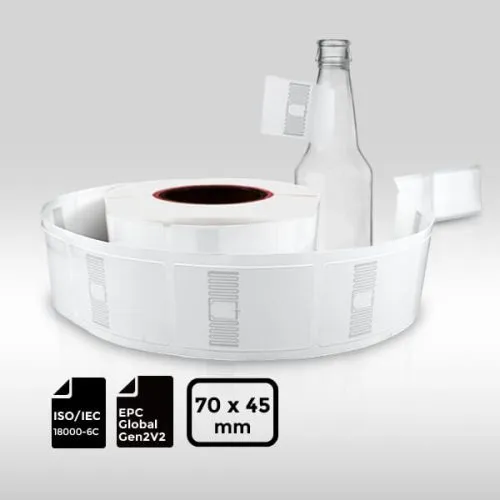
Flag UHF RFID Label ISO18000-6C NXP UCODE® 8 70x45mm

This is a 70x45mm UHF Flag RFID label that can be embedded with NXP UCODE® 8. The “flag” portion of the label extends from the label and helps to ensure that the RFID antenna does not attach directly to the surface of the object to which it is attached. This prevents interference and maximizes the reading distance of the label, making it ideal for use in supply chain, inventory management, asset tracking, security, and access control applications.
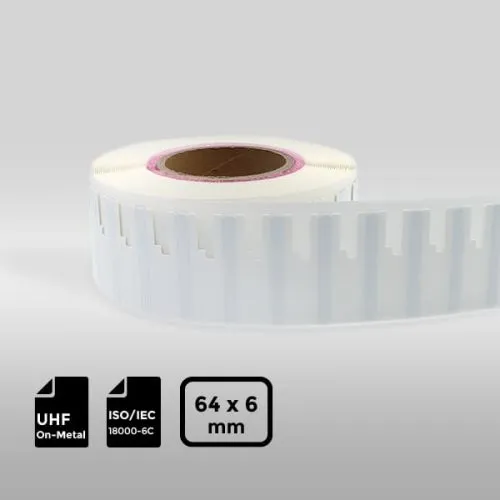
UHF On-Liquid & On-Metal RFID Label NXP UCODE® 8 64x6mm | ISO18000-6C
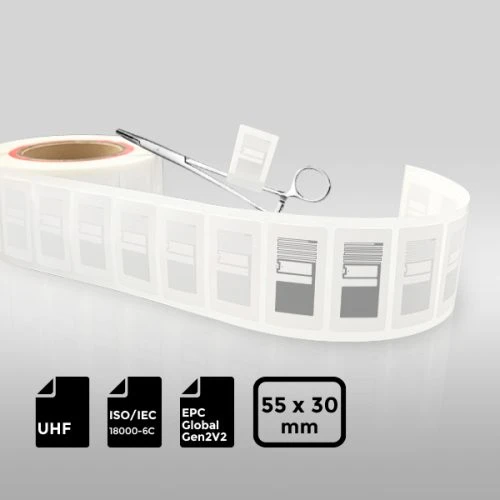
NXP UCODE® 9 Coated Paper UHF RFID Flag Label for Medical Device Management
NXP UCODE® 9 UHF RFID flag label for medical device management is a high-performance label with a high-quality coated paper surface, self-adhesive, NXP UCODE® 9 chip, aluminum antenna, double-sided glue and 80g release paper structure. The label has excellent reading distance and reliability, and is suitable for inventory and asset management, specifically targeted at the medical industry to ensure fast and accurate data acquisition and management.



