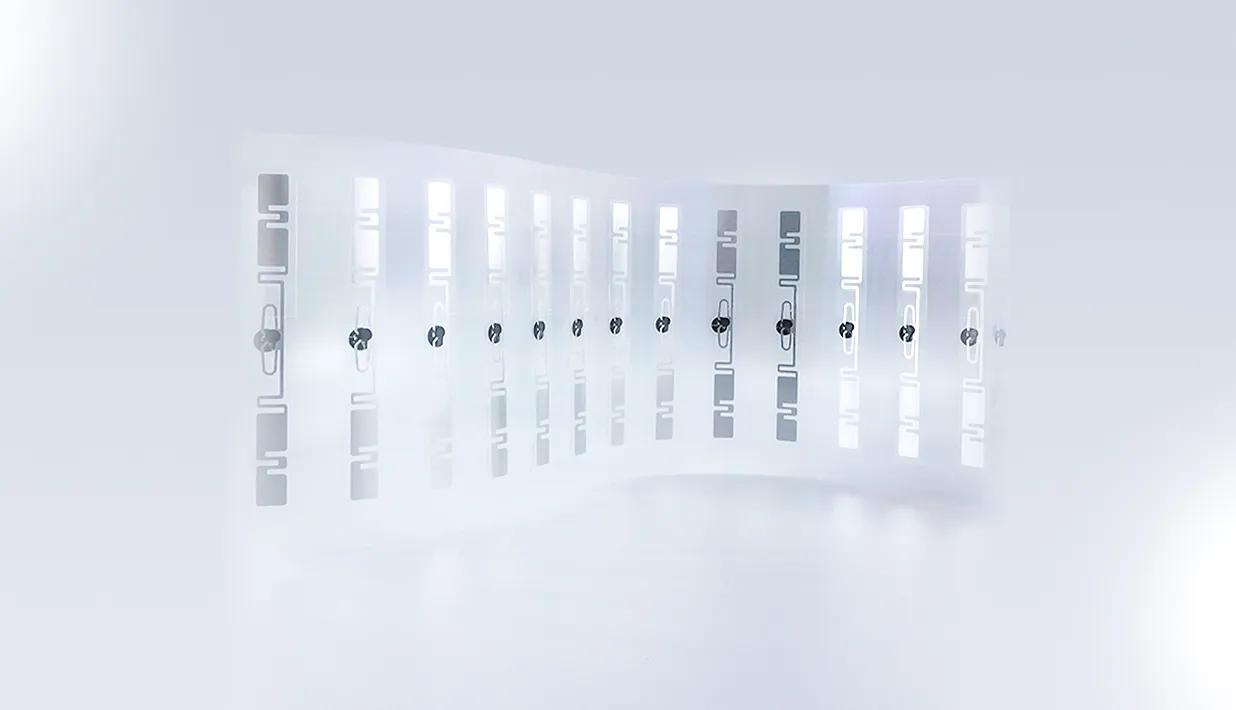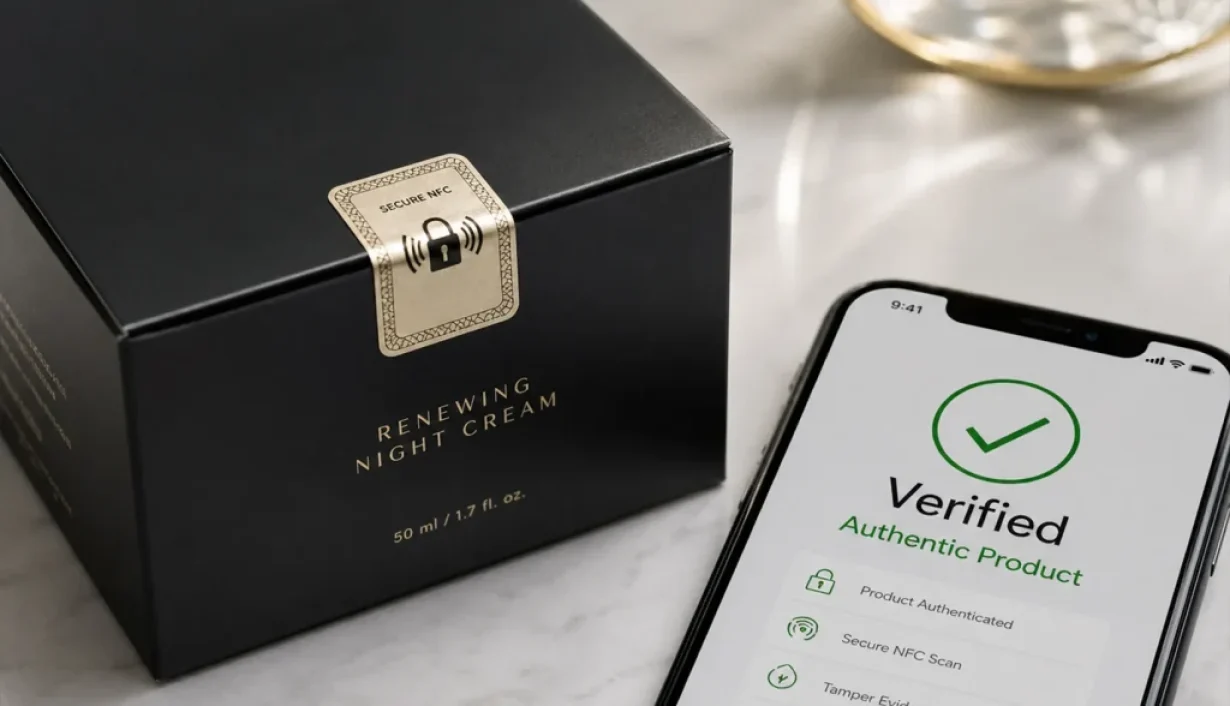

A secure NFC label is an NFC-enabled sticker, tag, or inlay designed to support product authentication, anti-counterfeiting, tamper evidence, and secure digital interaction.
This guide explains how secure NFC label technology works, when to choose NTAG424 DNA, when NTAG424 DNA TT is more suitable, and how buyers can select the right label format before requesting samples or bulk pricing.
Quick Product Navigation
For buyers already comparing secure NFC label formats, the table below provides a practical starting point.
| Buyer Need | Suggested RFIDLabel Direction | Typical Use |
| Small anti-counterfeit seal | 25mm NTAG424 DNA tamper-evident NFC label | Caps, small boxes, cosmetics, accessories |
| Larger packaging seal | 50×25mm NTAG424 DNA TT label | Bottle necks, carton openings, high-value goods |
| Premium brand protection | BrandGuard™ tamper-evident NFC label | Wine, spirits, luxury goods, pharmaceuticals, collectibles |
| Secure access or ticketing | DESFire EV3 NFC labels | Access control, membership, transport, event credentials |
| Custom packaging project | Custom NFC label solution | Logo printing, QR + NFC, special adhesives, custom shapes |
What Is a Secure NFC Label?
A secure NFC label is an NFC label designed for higher-value applications where a product needs more than a simple tap-to-link function. It can support authentication, anti-counterfeit verification, tamper evidence, warranty activation, or controlled access to official product information.
A standard NFC sticker may be enough for menus, basic marketing pages, or simple digital content. A secure NFC label is more suitable when the product needs a trusted connection between the physical item and a brand-controlled digital system.
Depending on the project, a secure NFC label may support:
- Product authentication
- Anti-counterfeit verification
- Tamper-evident packaging
- Encrypted NFC authentication
- Dynamic URL generation
- Warranty activation
- Product traceability
- Customer engagement
- Brand protection NFC programs
- Secure after-sales service
In practical use, a secure NFC label becomes a small but important trust layer between the product, the packaging, and the official digital experience.

Why a Secure NFC Label Matters for Brand Protection
Counterfeit products often begin with copied packaging. Logos, printed QR codes, serial numbers, barcodes, and holographic stickers can all be reproduced. Secure NFC adds another layer because the chip, label structure, and backend verification flow can be designed together.
NTAG424 DNA is designed for secure NFC authentication in trusted product and IoT applications. It supports AES-based cryptographic protection, SUN message authentication, and secure access control, making it suitable for product verification, anti-counterfeiting, and brand protection NFC projects.
For tamper-aware packaging, NTAG424 DNA TagTamper adds seal-status detection. When the tag seal on a label or container is broken, the NFC interaction can reflect that status, allowing brands to build different customer messages for sealed, opened, or suspicious products.
For brand protection projects, a secure NFC label can help reduce the gap between physical packaging and digital verification.

Secure NFC Label vs Standard NFC Sticker
Standard NFC stickers and secure NFC labels may look similar, but they are designed for different levels of trust.
| Feature | Standard NFC Sticker | Secure NFC Label |
| Main use | Simple tap-to-link interaction | Product authentication and brand protection |
| Security level | Basic | Higher when paired with secure chips and backend verification |
| Anti-counterfeit value | Limited | Stronger for premium products and packaging security |
| Tamper evidence | Optional and usually material-based | Can combine material, antenna, chip status, and backend logic |
| Typical chips | NTAG213, NTAG215, NTAG216 | NTAG424 DNA, NTAG424 DNA TT, DESFire EV3 |
| Best fit | Marketing, menus, basic product pages | Anti-counterfeiting, product verification, tamper-evident packaging |
For simple marketing campaigns, a standard NFC sticker can work well. For authentication, warranty protection, packaging security, or anti-counterfeit verification, a secure NFC label is usually the better fit.
How Secure NFC Label Authentication Works
1. The Chip Stores Secure Product Data
The NFC chip carries the product’s digital identity. In authentication projects, chips such as NTAG424 DNA are often used because they support AES-based cryptographic protection, SUN message authentication, and secure access control.
This allows each label to work as more than a simple link. It can become a controlled authentication point for product verification, anti-counterfeiting, warranty activation, or brand protection NFC programs.
2. The Tap Generates a Verifiable Interaction
When a customer or inspector taps the secure NFC label with a compatible smartphone, the chip can direct the phone to an authentication URL. In secure configurations, the URL or message may include dynamic data, such as a unique tag identity, encrypted values, or tap-specific authentication parameters.
This makes the interaction harder to copy than a printed QR code or a basic NFC sticker with a fixed URL.
3. The Backend Checks the Authentication Data
After the tap, the verification system checks whether the NFC data is valid. Depending on the project setup, the backend may review:
- Unique product ID
- Dynamic NFC message
- Authentication code
- Scan timestamp
- Scan count
- Batch or SKU
- Region
- Tamper status
- Repeated or suspicious scan behavior
If the data matches the expected record, the system can return a genuine product result. If the data is missing, duplicated, expired, or suspicious, the system can show a warning or request additional verification.

4. Tamper-Aware Labels Add Seal Status
When the seal loop is broken, the NFC interaction can reflect that status, allowing the brand to show different messages for sealed, opened, or suspicious products.
5. The Customer Sees a Clear Verification Result
The final page should give a clear result rather than a vague landing page. Common results include:
- Genuine product
- Package opened
- Product registered
- Warranty activated
- Suspicious scan
- Verification failed
- Product information
This is the point where a secure NFC label becomes part of a real authentication workflow. The chip provides secure data, the backend checks that data, and the customer receives a clear result.
Real-World Example: Prada Uses NFC for Product Authenticity
A useful real-world example comes from Prada, which uses NFC as part of its product authenticity and digital ownership experience.
Prada connected selected physical products to a digital ownership experience. Instead of relying only on printed authenticity cards or packaging details, the product can carry an NFC-enabled identity layer.
The NFC experience supports digital ownership, authenticity, and post-purchase service. Prada states that after obtaining the Digital Certificate of Ownership, customers are entitled to complimentary repair services for four years from the purchase date, excluding repair for wear and tear, misuse, or abuse. Prada also states that the certificate is non-transferable and tied to the registered email.
For premium products with resale value or counterfeit risk, NFC can help turn a product label, internal tag, or packaging seal into a long-term trust channel.

Practical Applications for Secure NFC Labels
Wine and Spirits
Wine, spirits, and premium beverage packaging are natural applications for secure NFC labels. Premium bottles are often gifted, collected, shipped across markets, and resold. A secure NFC label can help buyers verify authenticity before opening while also creating a digital touchpoint for product stories, origin details, VIP programs, or anti-counterfeit checks.
Suggested Label Direction
For premium beverages, BrandGuard™ is designed for wine, spirits, and premium beverage packaging. Its cold-resistant adhesive supports reliable bonding in low-temperature and high-humidity environments such as refrigerated or frozen storage.

Cosmetics and Skincare
Cosmetics and skincare packaging often needs both security and visual appeal. A secure NFC label can support genuine product verification while guiding customers to ingredient information, usage instructions, refill programs, or loyalty campaigns.
Suggested Label Direction
Luxury Goods and Collectibles
Luxury goods, limited-edition products, designer accessories, art toys, trading cards, and collectibles often carry resale value and counterfeit risk. A secure NFC label can help connect each item to a trusted digital identity.
Pharmaceuticals and Healthcare Packaging
Pharmaceutical and healthcare packaging often needs a clear official information path. A secure NFC label can connect users to verification pages, instructions, batch-level information, safety resources, or product support.
Suggested Label Direction
For cartons, a 50×25mm tamper-evident NFC label can be placed across the opening. For higher-value healthcare packaging, NTAG424 DNA TT can support both authentication and tamper-aware use cases.
Electronics, Parts, and Warranty Protection
Electronics brands and spare parts suppliers can use secure NFC labels for warranty activation, genuine-part verification, installation support, and after-sales service.
Suggested Label Direction
When to Use a Secure NFC Label for Tamper-Evident Packaging
A secure NFC label is useful when the label needs to show visible damage, stop normal function, or report a changed status after opening or removal.
Common applications include:
- Bottle caps
- Bottle neck seals
- Cosmetic carton seals
- Pharmaceutical cartons
- Electronics warranty labels
- Luxury packaging
- Collectible product cases
- Limited-edition packaging
- High-value spare parts
For example, NTAG424 DNA TagTamper function can reflect whether product sealing has been opened. The note also explains that the chip uses two pads for the antenna and two pads for a detection wire, and that tamper status can be recorded and mirrored in the NDEF message.

Physical Tamper Evidence vs Digital Tamper Evidence
| Type | How It Works | Example |
| Physical tamper evidence | Label material, adhesive, or antenna breaks when removed | Frangible PET, destructible film, broken antenna |
| Digital tamper evidence | Chip or backend reflects tamper status | NTAG424 DNA TT tamper loop |
| Layered protection | Physical damage plus digital verification | Premium NFC anti-counterfeit seal |
How to Choose the Right Secure NFC Label
Step 1: Define the Main Purpose
Before choosing a chip, buyers should clarify the application:
- Product authentication
- Tamper evidence
- Anti-counterfeit packaging
- Warranty activation
- Customer engagement
- Access control
- Ticketing
- Membership
- Supply chain verification
If authentication is the main goal, NTAG424 DNA may be enough. If the label must detect seal opening, NTAG424 DNA TT is more relevant. If the project involves secure credentials, access control, or ticketing, DESFire EV3 may be the better direction.
Step 2: Choose the Chip
The best secure NFC label is not always the most advanced chip option. It should be selected based on the product type, packaging surface, verification goal, tamper-evident requirement, and order needs.
| Application Scenario | Recommended Chip Direction | Best For | Main Value | Typical Applications |
| Basic product engagement | NTAG213 / NTAG215 / NTAG216 | Basic NFC interaction | Supports simple tap-to-link use for low-cost digital content connection | Marketing labels, menus, basic product pages |
| Secure product authentication | NTAG424 DNA | Product authenticity verification | Supports AES-based authentication and dynamic NFC interaction to improve anti-counterfeit verification | Cosmetics, luxury goods, collectibles, warranty verification |
| Tamper-evident packaging | NTAG DNA TT | Packaging that needs opening-status detection | Adds tamper status detection on top of authentication, suitable for seal protection and anti-reuse applications | Bottle seals, box seals, anti-reuse labels |
| Premium anti-counterfeit packaging | NTAG424 DNA or NTAG DNA TT | Brand protection for high-value products | Allows buyers to choose secure authentication or tamper-aware authentication depending on whether seal detection is required | Premium beverages, luxury goods, pharmaceuticals, collectibles |
| Access control or ticketing | MIFARE DESFire EV3 | High-security credential applications | Supports secure multi-application contactless use for permission management and closed-loop systems | Access control, ticketing, membership, transport credentials |
| Warranty and genuine-part verification | NTAG424 DNA | Genuine-part and after-sales verification | Helps users confirm part authenticity and can support warranty activation or after-sales service entry | Electronics, spare parts, genuine components, anti-counterfeit warranty labels |
For basic digital interaction, NTAG213, NTAG215, or NTAG216 may be enough. For product authentication and brand protection, NTAG424 DNA is usually more suitable. If the label also needs to detect whether the package has been opened, NTAG424 DNA TT is the better choice. For access control, ticketing, and membership credentials, MIFARE DESFire EV3 is often the right direction.
Step 3: Choose the Label Size
| Size | Best Fit | Buyer Notes |
| 25mm round | Bottle caps, cosmetics, small boxes, accessories | Compact and clean |
| 30mm round | General authentication labels | Larger antenna area than 25mm |
| 50×25mm | Box seals, bottle neck seals, visible branding | Good for tamper-evident layouts |
| Custom shape | Premium packaging and brand design | Useful for special packaging projects |
Step 4: Choose Material and Adhesive
Before ordering, buyers should confirm:
- Face material: paper, PET, PVC, or destructible film
- Adhesive: standard, permanent, 3M, cold-resistant
- Surface: glass, plastic, metal, paperboard, coated box, or curved bottle
- Environment: cold storage, humidity, oil exposure, or outdoor use
- Printing: logo, QR code, serial number, holographic overlay, or white label
- Encoding: static URL, dynamic URL, batch data, or project-specific authentication data
Step 5: Plan the Tap Experience
Common outcomes include:
- Genuine product
- Opened package
- Warranty activated
- Product registered
- Suspicious scan
- Product details
- Care instructions
- Reorder page
Step 6: Consider Using QR Codes as a Supporting Tool
QR codes and NFC labels both connect packaging to digital content. The difference is how they support product trust and security.
| Factor | QR Code | Secure NFC Label |
| Cost | Lower | Higher |
| User action | Scan with camera | Tap with phone |
| Copy risk | Easy to visually copy | Harder to duplicate when chip security is used |
| Packaging feel | Familiar and simple | More premium and interactive |
| Authentication value | Depends on backend and code design | Stronger with secure NFC chips |
| Best use | Broad access and low-cost campaigns | Brand protection, anti-counterfeiting, premium verification |
For many projects, QR code and secure NFC can work together. QR codes offer wide access, while a secure NFC label can protect premium product identity.
Conclusion: Build the Label Around the Product
For brand protection projects, the label should not be selected as a standalone sticker. It should work with the package, support a clear verification result, and make the product easier to trust after every tap.
RFIDLabel supports custom secure NFC label projects for anti-counterfeit packaging, tamper-evident seals, product authentication, warranty registration, and customer engagement.
For sample requests, packaging tests, or bulk production pricing, buyers can contact rfidlabel.com with the application, size, material, adhesive, printing, encoding, and quantity requirements.

FAQ
1. Do customers need an app to scan a secure NFC label?
In many cases, no dedicated app is needed. Most modern smartphones can read NFC tags directly and open the linked verification page. However, the final user experience depends on the project setup, phone model, NFC settings, and authentication platform.
2. Can secure NFC labels be used together with QR codes?
Yes. Many brand protection projects use NFC and QR codes together. QR codes provide a familiar visual scan option, while secure NFC adds a stronger tap-based authentication layer. This combination can improve both accessibility and product protection.
Recommended Product
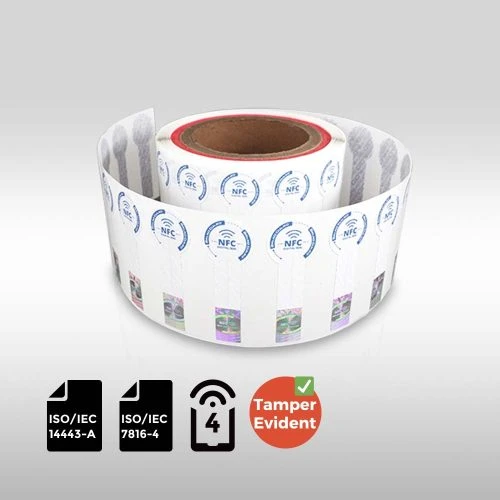
BrandGuard™ Tamper-Evident NFC Labels NXP NTAG® 424 DNA TT

The NXP NTAG® 424 DNA TT NFC Label is a high-security, tamper-evident smart label designed for product authentication, anti-counterfeiting, and secure user engagement. Powered by the advanced NTAG® 424 DNA TT chip, it ensures encrypted, dynamic authentication and tamper detection.
This label is ideal for wine, spirits, and other premium beverages. Its cold-resistant adhesive ensures reliable bonding in low-temperature, high-humidity environments, such as refrigerated or frozen storage. The tamper-evident structure detects unauthorized removal, safeguarding brand integrity and consumer trust. It’s also suited for luxury goods, pharmaceuticals, and collectibles, offering secure NFC and QR-based authentication and enabling smooth digital interactions like product info, promotions, or warranty access.