The fight against product fraud is constant, and the emergence of sophisticated digital forgery means that the threat of nfc counterfeit goods is more prevalent than ever. At RFIDLabel, we understand that protecting your brand and ensuring consumer trust requires more than just a simple sticker; it demands a robust, end-to-end authentication system. We are committed to providing the foundational technology—high-security NFC tags—that allows brands to create an unbreakable digital link between their physical products and the consumer.
Understanding the Threat: The Digital Evolution of Counterfeiting
Counterfeiting is no longer limited to back-alley operations; it is a multi-billion dollar industry that has adapted to the digital age. For consumers, distinguishing a genuine luxury item or high-value product from a fake can be nearly impossible with the naked eye. This is where traditional anti-counterfeiting measures often fall short, costing global industries billions annually and eroding consumer confidence in authentic brands.

Why Traditional Authentication Methods Are Failing
While methods like holograms and serial numbers have served their purpose, they are easily replicated by determined counterfeiters who leverage advanced printing and digital duplication techniques. We see three major weaknesses in these older systems that make them vulnerable to the modern nfc counterfeit threat:
| Method | Primary Weakness | Counterfeiter’s Advantage |
| Holograms/Watermarks | Static visual elements, often poorly executed on fakes. | Can be mass-produced with high-quality printing technology, making visual inspection unreliable. |
| Serial Numbers | Lack of real-time, dynamic verification against a secure database. | Numbers can be copied and applied to thousands of fake products, creating “clones” that appear legitimate. |
| QR Codes | Simple link to a static website, lacking cryptographic security. | Easily duplicated; a fake code can link to a convincing, but fraudulent, website designed to deceive the consumer. |
These vulnerabilities make it clear that a dynamic, cryptographically secure solution is essential to truly defeat the modern nfc counterfeit operation. The solution must be easy for the consumer to use but nearly impossible for the fraudster to crack.
The Core Technology: How NFC Authentication Works
Near Field Communication (NFC) technology provides a secure, convenient, and verifiable method for product authentication. Unlike static identifiers, NFC tags embedded in a product contain a unique digital signature that can be read by any modern smartphone. This process is simple for the consumer but incredibly complex for a counterfeiter to replicate, as it relies on a secure handshake between the tag and a cloud-based verification platform.
The Anatomy of a Secure NFC Tag
The security of our NFC solutions lies in the tag’s design and the data it transmits. We ensure that every tag acts as a product’s digital fingerprint, offering multiple layers of protection:
- Unique Identifier (UID): Every tag has a factory-programmed, unchangeable serial number. This is the tag’s permanent identity, a crucial starting point for verification.
- Cryptographic Security: High-security tags use advanced encryption (like AES-128) to generate a dynamic, one-time-use signature every time it is scanned. This dynamic signature changes with every tap, making it impossible to copy and reuse. This dynamic verification is the key to preventing an nfc counterfeit attack.
- Tamper-Evidence: We provide specialized tamper-evident tags. Once the tag is peeled off or removed, its internal circuit will break—either physically or digitally—and the removed portion will leave visible tamper marks on the item’s surface.
When a consumer taps their phone, the brand’s secure server instantly verifies the tag’s unique UID and its dynamic signature. If both match, the product is authenticated in real-time. If the signature is incorrect, or if the tag reports a tamper event, the server immediately flags the item as a potential nfc counterfeit.

The Market Response: Why NFC is the Future of Anti-Counterfeiting
The industry’s rapid adoption of NFC technology underscores its effectiveness. The market for anti-counterfeit NFC packaging is projected to grow from USD 1.6 billion in 2025 to USD 4.3 billion by 2035, exhibiting a robust Compound Annual Growth Rate (CAGR). This significant growth is driven by brands across luxury goods, pharmaceuticals, and retail seeking a definitive solution to product fraud.
NFC’s Impact on Brand Security and Consumer Trust
The transition to NFC is not just a technological upgrade; it’s a strategic business decision that delivers measurable results:
| Benefit | Description | Impact on Brand |
| Instant Verification | Consumers receive immediate, definitive proof of authenticity with a simple tap. | Builds unshakeable consumer trust and confidence in the product. |
| Supply Chain Visibility | Brands gain real-time data on where and when products are scanned globally. | Enables proactive identification of counterfeit hotspots and supply chain vulnerabilities. |
| Enhanced Engagement | The secure scan can lead to exclusive content, warranty registration, or loyalty programs. | Transforms a security feature into a powerful marketing and customer retention tool. |
Empowering the End User: Verification Beyond the Tap
For the end user, the verification process is simple, yet the security behind it is formidable. We empower consumers to become the final line of defense against product fraud by making authentication accessible and immediate.
Key Steps for Consumer Verification
- Locate the Tag: Find the NFC tag, which is often discreetly embedded in the product’s packaging, label, or hangtag. Brands often provide clear instructions on where to find the tag.
- Tap with a Smartphone: Hold any modern smartphone (iPhone 7 and newer, and most recent Android models ) near the tag. No special app is usually required, as the phone’s native NFC reader will activate automatically.
- Review the Result: The phone will automatically open a secure web page. Look for a clear, instant message confirming the product’s authenticity. If the page indicates a failed verification, a tampered tag, or a suspicious scan history, the product is likely a fake and should be reported.

Conclusion
The battle against counterfeiting is ongoing, but with advanced NFC technology, we provide brands with the tools to secure their products and build an unshakeable foundation of consumer trust. By offering dynamic, tamper-evident, and cryptographically secure tags, we help businesses move beyond outdated security methods and implement a cutting-edge solution to eliminate the threat of nfc counterfeit goods. If your business is ready to secure its supply chain and enhance customer confidence, we invite you to explore our full range of high-quality, customizable RFID and NFC products. Visit rfidlabel.com today to learn more about our wholesale solutions and take the first step toward a fully authenticated future.
FAQs
Do I need a special app to scan NFC anti-counterfeit tags?
For most modern smartphones (iPhone 7 and newer, and most recent Android models), no special app is required. The phone’s native NFC reader will automatically detect the tag and prompt you to open the brand’s secure verification page. This seamless process is designed for maximum consumer convenience.
How does a tamper-evident NFC tag work, and why is it important?
A tamper-evident NFC tag is designed to physically or digitally break its internal circuit if it is peeled off or removed from the product. This ensures that the tag cannot be transferred to a fake product. When a tampered tag is scanned, the system immediately reports a “tampered” status, providing an essential extra layer of security against sophisticated fraud attempts.
Recommended Product
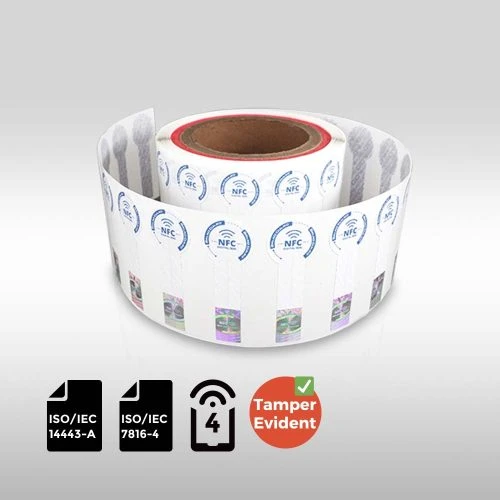
BrandGuard™ Tamper-Evident NFC Labels NXP NTAG® 424 DNA TT

The NXP NTAG® 424 DNA TT NFC Label is a high-security, tamper-evident smart label designed for product authentication, anti-counterfeiting, and secure user engagement. Powered by the advanced NTAG® 424 DNA TT chip, it ensures encrypted, dynamic authentication and tamper detection.
Note: Labels are supplied in factory-default condition, with no data pre-encoded. For pre-encoding to enable immediate verification, please contact us for pricing.