In today’s retail industry, technology is changing our shopping experience at an unprecedented rate. Walk into any Decathlon store and you may notice that the checkout process is different from before. Because of the use of RFID (radio frequency identification) technology, shopping is more convenient and efficient.
When we walk to the checkout counter with a pile of sports equipment carefully selected in Decathlon. The cashier simply places the shopping bag on the RFID reader. Within a few seconds, the system displays all item information on the screen, greatly reducing checkout time. This scene is the real application of RFID technology in Decathlon stores.
RFID technology revealed
So, what exactly is RFID? Simply, RFID is a technology for contactless data communication through radio waves. Each RFID tag contains a tiny chip and an antenna that can store specific information and exchange data with the reader through radio waves. When the tag enters the reader’s electromagnetic field, it is activated and sends the information stored on the chip, thereby realizing automatic identification and tracking of items.
RFID technology has a variety of advantages that have led to its widespread use in a variety of industries. First, RFID tags can be read at a long distance, avoiding the limitation that traditional barcodes must be scanned at close range. RFID tags have a much larger storage capacity than traditional barcodes, and can store not only unique identification codes but also detailed information about products, such as production dates, batches, and supply chain records. This high information capacity provides companies with richer data, supporting more sophisticated management and analysis.
In addition, RFID tags also have the advantages of durability and diversity. They can be embedded in a variety of materials, such as paper, plastic, and metal, and can adapt to different usage environments. Finally, the automated nature of RFID technology can also reduce reliance on manual operations, reduce the risk of human error, and improve efficiency and reduce labor costs.
Decathlon’s RFID journey
Decathlon’s story with RFID began in 2008, when the first trial was conducted in France. A team of about 30 engineers brought this cutting-edge technology from theory to practice. After several years of exploration and optimization, RFID officially became part of all Decathlon’s business processes in 2014. By January 2019, 100% of Decathlon’s products were tagged with RFID.
Today, Decathlon equips all its corporate institutions worldwide, including factories, warehouses, and stores, with tools for reading RFID chips. The company has developed and produced nearly 50,000 readers independently, covering every link from manufacturing to store checkout.
The changes brought by RFID to Decathlon
The benefits of RFID to Decathlon are mainly reflected in the following aspects.
- Improved checkout efficiency
RFID technology makes Decathlon’s checkout process more efficient. Customers no longer need to wait in line for each item to be scanned individually. The RFID reader captures the information of all items in a few seconds, greatly shortening the checkout time. Whether it is a single item or a whole truck of goods, the checkout process has become fast and smooth, which not only improves the customer’s shopping experience, but also reduces congestion in the store.
- After-sales service optimization
Through RFID tags, Decathlon can quickly identify detailed information of products, including production date, batch and sales records. When customers need after-sales service, staff can instantly obtain product information by scanning RFID tags, providing customers with more accurate and fast services. This efficient after-sales service not only improves customer satisfaction, but also enhances brand trust.
- Logistics inventory management
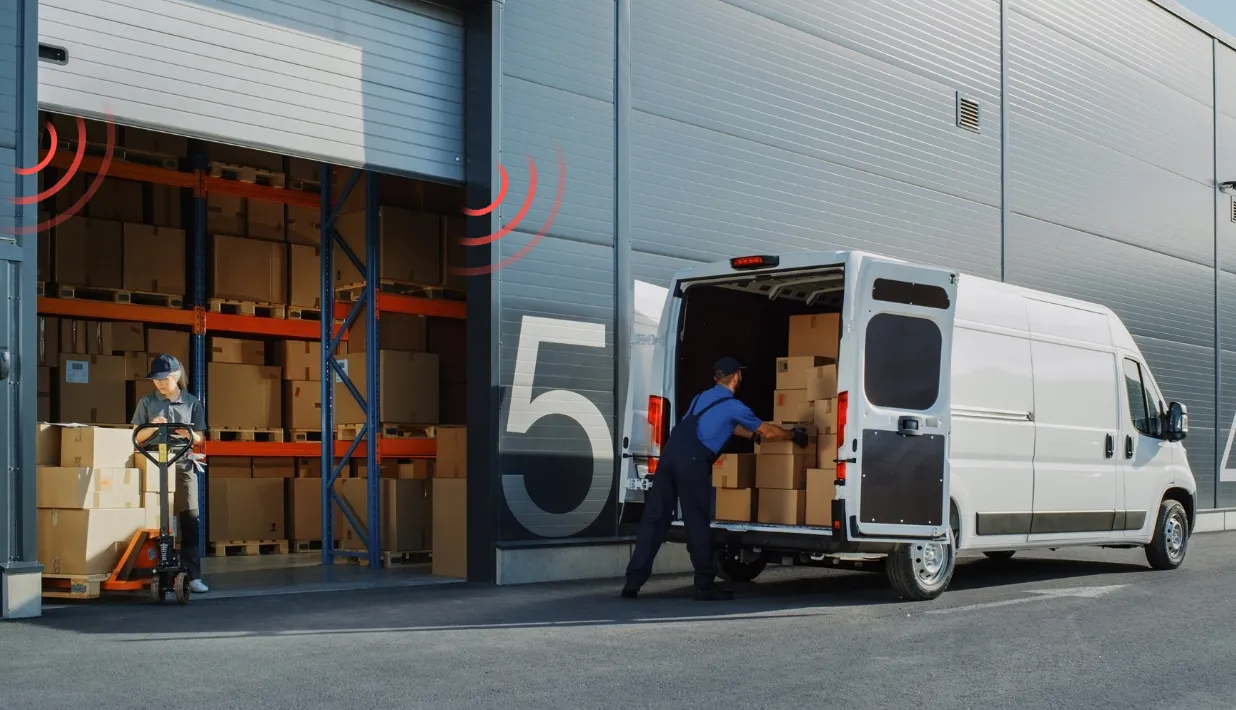
RFID technology enables Decathlon to track the inventory status of each item in real time. Through the RFID system, warehouse managers can always understand the exact quantity and location of inventory, thereby ensuring the accurate allocation of goods. This real-time tracking capability reduces inventory backlogs and out-of-stock phenomena, improves the efficiency of inventory management, and ensures the timeliness of commodity supply.
- Strengthening supply chain management
RFID technology realizes visual management of the entire chain from production to sales. By using RFID tags in every link, Decathlon can monitor the production progress, transportation status and sales of products in real time. This visual management of the entire chain improves the transparency and responsiveness of the supply chain, allowing each link in the supply chain to respond and adjust quickly, ensuring the efficient operation of the supply chain and the rapid response to customer needs.
By introducing RFID technology, Decathlon has significantly improved many aspects of its operations. Nowadays, the use of RFID in the retail industry is already very common. Many companies such as Uniqlo, Zara, Nike, and Walmart have introduced RFID to achieve cost reduction and efficiency improvement and improve customer satisfaction. I believe that in the future, RFID will expand into more fields, making our lives increasingly convenient.
Visit rfidlabel.com for more information!
FAQs
1. Will Decathlon’s RFID tags affect wearing comfort?
No. Decathlon has carefully designed to ensure that the RFID tags are small and imperceptible, and will not cause any discomfort to wearing.
2. How does RFID technology help Decathlon reduce product theft?
By monitoring inventory status in real time, RFID technology can quickly detect anomalies, ensure inventory safety, and prevent theft of goods.
3. What kind of labels are suitable for sewing on clothes?
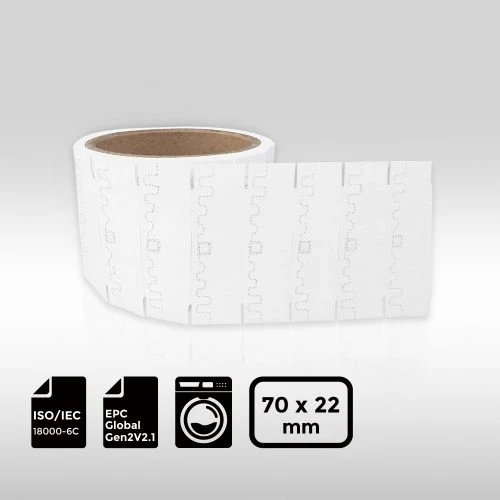
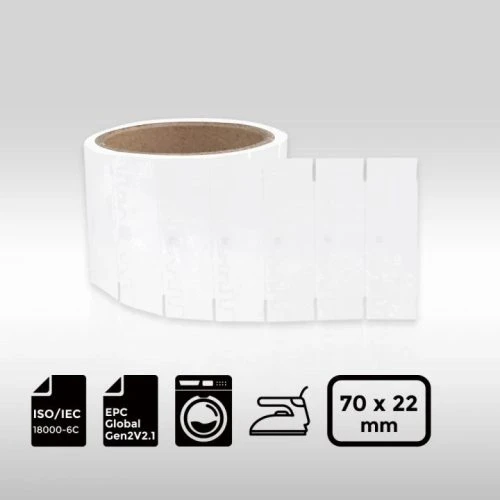
RFID tags suitable for sewing on clothes usually need to be flexible and durable, and able to maintain their functions during repeated washing and high-temperature drying. Manufacturers usually make these tags from fabric or flexible materials and design them to be small enough to avoid affecting the comfort of wearing. Waterproof, moisture-proof and chemical-resistant properties are also necessary to ensure the reliability and durability of the tags in various environments. Washable Smart Textile UHF RFID Tag is an RFID tag suitable for sewing on clothes. It uses strong and durable nylon and features special dotted lines for sewing. The advanced NXP UCODE® 9 chip also excels in tracking and durability. Sewing it on clothes can simplify inventory management and self-service checkout processes.