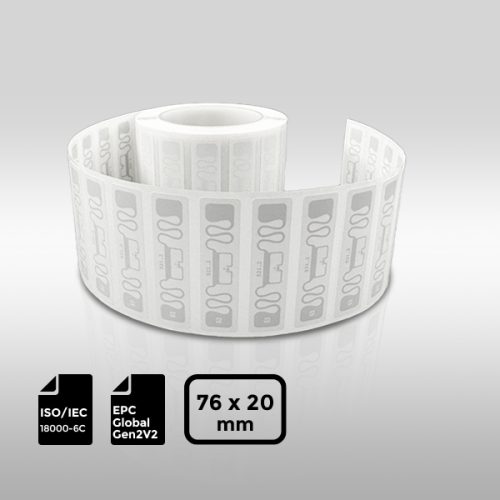
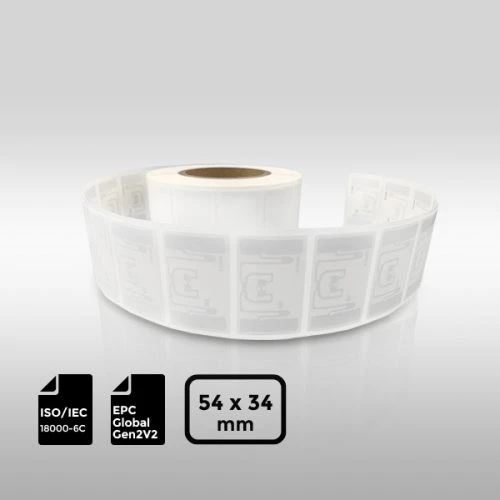
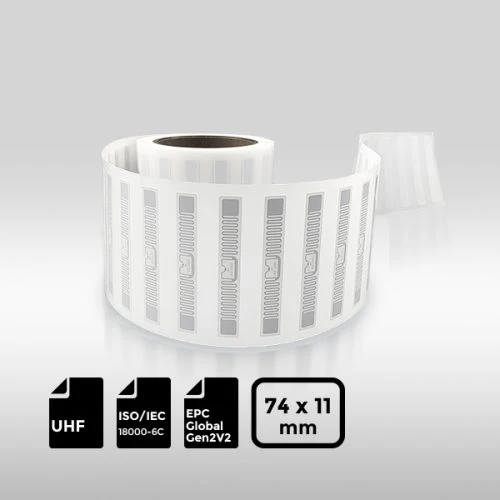
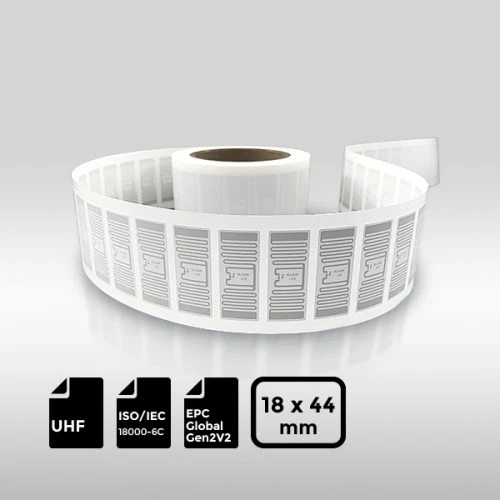
RFID tag placement can determine whether a tag is read instantly or missed entirely. Even the right RFID label may fail if it is placed too close to metal, hidden under dense materials, folded, crushed, or positioned in the wrong direction.
For apparel, footwear, electronics, and packaging, the best RFID tag placement depends on product material, storage method, reader angle, and the daily workflow of inventory scanning. A tag that performs well on a cardboard box may not work on a metal device. A label that reads clearly on a hanging garment may perform differently when the same item is folded, stacked, or packed in a carton.
This guide explains how to place RFID tags across common product categories, including apparel, footwear, electronics, cartons, and pallets. It also includes practical placement examples to help brands, retailers, and suppliers improve RFID readability before large-scale deployment.
Why RFID Tag Placement Matters
RFID systems rely on radio waves traveling between the RFID tag and the reader. When a tag is placed in the wrong position, the signal can be blocked, weakened, reflected, or absorbed. This can lead to missed reads, shorter read ranges, slower inventory counts, and inaccurate stock data.
Proper RFID tag placement helps businesses:
- Improve read rates during inventory counts
- Reduce missed scans in warehouses and stores
- Support faster receiving and shipping
- Improve item-level inventory accuracy
- Reduce manual checking and barcode scanning
- Protect tags from folding, tearing, crushing, or removal
- Maintain a better customer experience by keeping tags discreet

Quick RFID Tag Placement Rules
Before looking at specific product categories, here are several practical rules that apply to most RFID applications:
- Keep the RFID tag as flat as possible.
- Avoid placing tags directly against metal, foil, liquid, glass, or dense materials.
- Do not fold, cut, punch, staple, or crease the RFID inlay.
- Keep tag placement consistent across similar products.
- Avoid placing RFID labels on the bottom of retail packaging.
- Place tags where they are less likely to be crushed, covered, or removed.
- Test several tag locations before mass production.
- Match the RFID tag type to the product material and use environment.
Auburn RFID Lab gives similar practical guidance for products containing metal, foil, liquid, or glass: the tag should not be placed in front of, behind, or in contact with those materials when avoidable.
RFID Tag Placement for Apparel
Apparel is one of the most common categories for RFID adoption. Clothing items are usually made of RF-friendly materials such as fabric, but they still present placement challenges because they are folded, hung, stacked, tried on, returned, and handled repeatedly.
Best RFID Tag Locations for Apparel
For most garments, the best placement options include:
- Hang tag near the collar or sleeve
- Care label on the inner side seam
- Brand label area at the back of the neck
- Waistband label for pants and skirts
- Inner pocket area for jackets and outerwear
The goal is to place the tag where it remains readable during normal store and warehouse operations. A garment may be scanned while hanging on a rack, folded on a shelf, packed in a carton, or processed at checkout. The tag should stay relatively flat and should not be buried under multiple thick layers of fabric.

Shirts, Blouses, and T-Shirts
For shirts and blouses, an RFID-enabled hang tag attached near the collar, sleeve, or price tag area is usually a practical choice. This keeps the tag visible to radio waves and easy to remove after purchase.
Another option is to place the RFID label on the care label inside the side seam. This is useful when the brand wants a more discreet RFID solution. However, the label should not be placed where it will be heavily folded or repeatedly creased.
Pants and Skirts
For pants, jeans, and skirts, the waistband or inner care label is often suitable. The tag should be kept away from metal buttons, rivets, and zippers because metal can interfere with RFID performance.
If the product uses heavy denim, layered fabric, or metal details, it is important to test the read performance before confirming the final placement.
Jackets and Outerwear
For jackets and outerwear, RFID tags can be placed on the inner pocket label, inside seam label, or brand label area near the back of the neck. These locations help protect the tag while keeping it readable during inventory counts.
Avoid placing the tag too close to metal zippers, snaps, buttons, or decorative metal elements.
Placement Insight: Apparel Hang Tags and Care Labels
In apparel retail, RFID tag placement usually works best when the tag remains readable during hanging, folding, storage, and checkout. This is why many retailers use RFID-enabled hang tags, care labels, or side-seam labels instead of hiding the tag deep inside the garment.
For hanging garments, a hang tag near the collar or sleeve can provide strong readability during cycle counts and self-checkout. For folded garments, a side-seam care label can help keep the tag relatively flat and protected.
The key is consistency. Similar products should use similar tag locations so staff, handheld readers, and automated systems can scan inventory more reliably.
Recommended RFID Tag Type for Apparel
For apparel, RFID hang tags and RFID care labels are usually the most suitable options.
- Recommended Product: RFID Hang Tag
- Best For: Shirts, dresses, jackets, pants, and fashion accessories
- Advantages: Easy to attach, printable, brand-friendly, suitable for item-level retail tracking
- Recommended Product: RFID Care Label
- Best For: T-shirts, underwear, uniforms, sportswear, children’s clothing, and folded garments
- Advantages: Sewn-in, discreet, less likely to be removed, keeps the tag protected, suitable for long-term apparel tracking
RFID Tag Placement for Footwear
Footwear requires a different placement strategy because shoes are often stored in boxes, stacked in dense rows, and made from mixed materials such as leather, rubber, foam, plastic, and sometimes metal components.
The main question is whether to tag the shoebox, the shoe itself, or both.
Shoebox RFID Tagging
For most footwear inventory operations, placing the RFID label on the shoebox is the easiest and most practical method. A shoebox provides a flat surface and is easier to scan in bulk when boxes are stacked in a stockroom.
For shoeboxes, the RFID label should be placed:
- On a vertical side of the box
- Away from corners and seams
- Away from metallic stickers or foil printing
- In a consistent location across all boxes
- Where it remains visible during shelf storage and warehouse handling
Avoid placing the RFID label on the bottom of the box, as it may be blocked by shelves, conveyors, carts, or other boxes.
Shoe-Level RFID Tagging
Shoe-level tagging is useful when the shoe may be separated from the box. This is common in retail display areas, resale environments, rental services, authentication workflows, or high-value footwear tracking.
Possible shoe-level placement locations include:
- Shoe tongue
- Under the insole
- Lace eyelet using a secure loop tag
- Inner lining near the ankle area
- Hang tag attached to the shoe
When tagging the shoe itself, the tag should not affect comfort, appearance, or product use. It should also be protected from friction, bending, and moisture.

Placement Insight: Shoebox vs. Shoe-Level Tagging
Shoebox tagging is efficient for stockroom inventory, while shoe-level tagging is better for product-level identification after the shoe leaves the box.
A useful footwear example comes from sneaker authentication and resale workflows. Sneaker Con used a process involving SKU look-up by both box and shoe tongue, with a hard tag connected to product information such as model name, size, condition, and SKU number. This shows why footwear tag placement is not only a warehouse issue. It can also support authentication, resale trust, and product identity.
Recommended RFID Tag Type for Footwear
For footwear, the best tag depends on the use case.
- Recommended Product: RFID Label for Shoeboxes
Best For: Retail footwear inventory, warehouse storage, and carton-level scanning
Advantages: Easy to apply, cost-effective, readable on flat packaging surfaces - Recommended Product: RFID Cable Tie Tag or Loop Tag
Best For: Shoe-level tagging, display items, samples, resale, and authentication workflows
Advantages: Secure attachment, durable, harder to remove accidentally
RFID Tag Placement for Electronics
Electronics are among the most challenging products for RFID tag placement. Many electronic devices contain metal housings, circuit boards, batteries, screens, and other components that can interfere with RFID signals.
A standard RFID label may work well on cardboard or fabric but perform poorly when placed directly on a laptop, tablet, server, router, or metal-rich device. In these cases, an on-metal RFID label is usually required.
Why Electronics Are Difficult to Tag
RFID signals can be affected by:
- Metal surfaces
- Batteries
- Circuit boards
- Screens
- Dense internal components
- Electromagnetic interference
- Small product size
If a tag is placed directly on a metal surface without proper design, the antenna may detune and the read range may become very short. This is why electronics often require specialized RFID tags designed for metal-rich environments.
Best RFID Tag Locations for Electronics
For laptops, tablets, servers, routers, and other IT equipment, possible tag locations include:
- Plastic casing
- Composite surface
- Front bezel
- Rear cover away from the battery
- Plastic handle or side panel
- Retail packaging if the device itself is too small or metallic
The tag should face outward whenever possible so handheld readers can scan it easily. It should also be placed where it will not be scratched, overheated, removed, or blocked during normal use.

Laptops and Tablets
For laptops and tablets, avoid placing the RFID label directly over the battery, main logic board, or metal housing if a standard RFID tag is used. If the device has a plastic or composite area, test that location first.
If there is no suitable non-metal surface, use an on-metal RFID label.
Servers and IT Equipment
For servers and IT assets, the front bezel, plastic handle, or outer side panel may provide a practical tagging area. The tag should be easy for staff to scan without moving the equipment.
This is especially important in data centers, IT rooms, and warehouses where assets may be installed in racks or stored close together.
Small Electronics
For small electronics, direct product tagging may not be practical. In these cases, tagging the retail packaging may deliver better readability and a better consumer experience.
Placement Insight: On-Metal RFID for Electronics
Electronics require a placement-first approach. Before applying tags at scale, businesses should test multiple candidate locations, including plastic casing, front bezel, rear casing, and packaging.
If the product is mostly metal, an on-metal RFID label should be used. These labels are designed with a spacer or antenna structure that helps the RFID tag operate near metal surfaces.
The final placement should balance read performance, durability, product appearance, and user experience.
Recommended RFID Tag Type for Electronics
- Recommended Product: On-Metal RFID Label
- Best For: Laptops, tablets, servers, routers, tools, IT assets, and metal-rich devices
- Advantages: Designed for metal surfaces, reliable read performance, strong adhesive options
RFID Tag Placement for Packaging and Logistics
Packaging and logistics applications often involve cartons, pallets, reusable transport items, and bulk movement through warehouses. In these environments, RFID tags must support fast reading at dock doors, conveyor systems, receiving areas, and shipping zones.
The goal is not only to read one tag successfully. The goal is to read many tags quickly and accurately while items are moving, stacked, or stored.
RFID Tag Placement for Cartons
For corrugated cartons, RFID labels should usually be placed on a vertical side of the box. This helps readers capture the tag as the carton moves through a dock door, conveyor, or warehouse aisle.
Best practices include:
- Place the tag on a vertical side panel.
- Avoid the bottom of the carton.
- Avoid seams, folds, tape, and corners.
- Keep the tag away from metallic strapping or foil materials.
- Use a consistent tag location across cartons.
- Make sure the tag is not crushed during stacking.
If the carton contains metal, liquid, foil, or glass, the tag should be positioned so that these materials do not sit directly in front of or behind the RFID inlay. Auburn RFID Lab’s tagging guidance specifically notes the need to avoid placing tags in contact with or directly aligned with metal, foil, liquid, or glass when possible.

RFID Tag Placement for Pallets
For pallets, the RFID tag should be placed where it can be read but is protected from damage.
Possible locations include:
- Pallet block
- Pallet stringer
- Protected side area
- Reusable pallet label area
Avoid placing tags where forklift tines, straps, or heavy contact may damage them. If the pallet will be reused, a more durable RFID tag may be required.
Placement Insight: Carton and Pallet RFID Placement
Carton and pallet RFID placement should be designed around real warehouse movement. A label that looks good on a package may fail if it is placed on the bottom, covered by another box, hidden behind liquid products, or damaged by handling.
For supplier programs, tag placement may also need to follow retailer or industry requirements. GS1 US guidance for foodservice RFID implementation includes requirements related to case/carton source tagging, including tag placement, encoding, and marking.
The practical lesson is simple: packaging RFID placement should be tested against the actual product, packaging format, stacking method, and reader setup.
Recommended RFID Tag Type for Packaging
- Recommended Product: RFID Label for Cartons
Best For: Corrugated boxes, retail cartons, shipping cases, and warehouse inventory
Advantages: Cost-effective, printable, suitable for bulk reading - Recommended Product: Tamper-Evident RFID Label
Best For: High-value goods, sealed packages, regulated products, and authenticity-sensitive shipments
Advantages: Provides tracking and tamper evidence in one label
Summary of RFID Tag Placement Guidelines
| Product Category | Recommended Placement | Avoid | Recommended Tag Type |
| Apparel | Hang tag, care label, side seam, collar area | Zippers, buttons, metallic threads, heavy folds | RFID Hang Tag or RFID Care Label |
| Footwear | Shoebox side, shoe tongue, lace eyelet, under insole | Bottom of box, dense rubber layers, uncomfortable positions | RFID Shoebox Label or Cable Tie Tag |
| Electronics | Plastic casing, front bezel, handle, packaging | Battery area, metal housing without on-metal tag | On-Metal RFID Label |
| Cartons | Vertical side panel | Bottom, seams, tape, metal straps | RFID Carton Label |
| Pallets | Pallet block, stringer, protected side area | Forklift contact points, crushed areas | Durable RFID Pallet Tag |
| High-Value Packaging | Visible sealed area or side panel | Removable surfaces, weak adhesives | Tamper-Evident RFID Label |
Common RFID Tag Placement Mistakes
Even high-quality RFID tags can fail if they are placed incorrectly. Here are some common mistakes to avoid:
1. Placing Tags Too Close to Metal
Metal can reflect or detune RFID signals. For electronics, tools, metal packaging, or foil-lined products, use on-metal RFID tags or test an offset position.
2. Placing Tags Near Liquids
Liquids can absorb RF energy and reduce read range. If tagging products containing liquids, place the tag where the liquid does not block the signal path.
3. Folding or Creasing the RFID Inlay
The RFID antenna inside the label can be damaged if the tag is folded, stapled, cut, or sharply creased. This is especially important for apparel care labels and flexible packaging.
4. Using Inconsistent Placement
If the same type of product has tags in different locations, scanning becomes less predictable. Consistent placement improves inventory workflows and reader performance.
5. Placing Tags on the Bottom of Packaging
Bottom placement often causes missed reads because the tag may be blocked by shelves, pallets, conveyors, or other boxes.
6. Ignoring the Real Scanning Environment
A tag that reads well on a desk may not perform the same way in a warehouse, retail shelf, fitting room, freezer, conveyor line, or packed carton. Always test in the real use environment.

How to Choose the Right RFID Tag Placement
The best RFID tag placement is not chosen by appearance alone. It should be based on a combination of product material, packaging format, scanning method, and business purpose.
Before confirming a placement, ask these questions:
- Is the tag close to metal, liquid, foil, or glass?
- Will the tag stay flat during handling?
- Can the reader scan the tag from the expected direction?
- Will the tag be hidden when products are stacked?
- Will the tag be damaged by folding, friction, or pressure?
- Is the tag location consistent across similar products?
- Does the tag type match the product material?
- Has the placement been tested in the real operating environment?
A simple placement test can prevent large-scale read failures later.
Conclusion
RFID tag placement is one of the most important factors in building a reliable RFID inventory and tracking system. The right placement can improve read rates, reduce missed scans, protect the tag from damage, and support smoother retail and logistics operations.
For apparel, RFID hang tags and care labels usually work best when they stay flat and away from metal accessories. For footwear, shoebox tagging is practical for inventory, while shoe-level tagging may be better for display, resale, or authentication. For electronics, on-metal RFID labels are often necessary because standard labels may fail near metal and internal components. For packaging and logistics, RFID labels should be placed on readable vertical surfaces, away from seams, tape, metal, liquid, and crushing points.
The most effective RFID strategy combines the right tag, the right placement, and real-world testing. When these elements work together, businesses can achieve better inventory accuracy, faster operations, and more reliable supply chain visibility.
Visit rfidlabel.com to explore our RFID labels and discover the ideal solution for your projects.

FAQs
1. What is the best RFID tag placement for apparel?
For most apparel items, the best RFID tag placement is on a hang tag, care label, side seam, collar area, or waistband label. The tag should stay flat and should be kept away from zippers, buttons, metallic threads, and areas that are heavily folded.
2. Should RFID tags be placed on shoes or shoeboxes?
For general footwear inventory, shoebox tagging is usually easier and more cost-effective. For display shoes, resale products, samples, or authentication workflows, shoe-level tagging may be more reliable. In some cases, both the shoe and the box can be tagged.
3. Can RFID tags be placed on electronics?
Yes, but electronics often require special care. Standard RFID labels may not work well near metal, batteries, or circuit boards. For metal-rich electronics and IT assets, on-metal RFID labels are recommended.
4. Where should RFID labels be placed on cartons?
RFID labels should usually be placed on a vertical side of the carton. Avoid the bottom, seams, heavy tape, metal straps, and areas that may be crushed during transportation or stacking.
5. Can RFID tags be placed inside packaging?
Yes, RFID tags can be placed inside packaging, but the packaging material and product contents must be considered. Foil, metal, liquid, and dense materials can block or weaken RFID signals. The tag should stay flat and readable.
6. Why does RFID tag placement affect read rates?
RFID tags communicate with readers through radio waves. If the tag is blocked, folded, placed near metal, hidden behind liquid, or facing the wrong direction, the signal may be weakened or lost. Proper placement helps the reader detect the tag more reliably.
7. Do all RFID tags work on metal products?
No. Standard RFID labels usually do not perform well on metal surfaces. For metal products, electronics, tools, and IT assets, on-metal RFID labels should be used.
8. Should RFID tag placement be tested before mass production?
Yes. RFID tag placement should always be tested before large-scale tagging. Testing helps confirm read range, orientation, durability, and performance in the actual retail, warehouse, or logistics environment.
Recommended Product