In the era of rapid development of digitization, contactless technology has become an indispensable part of various industries. As a key near-field communication standard, the ISO 14443 protocol is widely used in fields such as payment, identity verification and the Internet of Things. Understanding the basic concepts, technical principles and application scenarios of ISO 14443. It will help companies stand out in the fierce market competition. This guide will provide an in-depth analysis of the ISO 14443 protocol. It helps companies choose the right RFID solution to improve operational efficiency and security.
Basic concepts of ISO 14443
ISO 14443 is a near-field communication protocol established by the International Organization for Standardization (ISO). It is specifically used for data transmission from contactless smart cards and tags. The design goal of this protocol is to improve security and transmission rate. So, the RFID technology can be effectively utilized in various application scenarios. The ISO 14443 protocol mainly covers the communication methods between the card and the card reader. It is ensuring effective identification and data exchange at close range (usually within 10 centimeters). In addition, ISO 14443 protocols are divided into two categories, Type A and Type B. Both have different signal transmission methods, but both operate at a frequency of 13.56 MHz. ISO 14443 is widely used in financial transactions, authentication access control, and various consumption scenarios.
Technical principles of ISO 14443
The core technical principles of the ISO 14443 protocol include electromagnetic coupling, modulation and demodulation, and data transmission. The specific steps are as follows:
- Electromagnetic coupling: The protocol uses the frequency of 13.56MHz for wireless communication, which realizes the energy transmission and data exchange between the card and the reader with the help of the electromagnetic field.
- Initialization and communication: After receiving the signal from the card reader, the card enters the activation state, followed by data transmission. This phase includes card ID identification, authentication and data encryption.
- Modulation and encoding: The card sends the returned data back to the reader by modulation and encoding. Different modulation methods are used for data transmission depending on Type A and Type B. Type A uses asynchronous modulation (ASK) while Type B uses synchronous modulation (PSK) to improve transmission reliability and efficiency.
- End communication: Once the data transmission is complete, the reader and the card will end the communication. The card will return to standby mode, ready for the next communication.
History and development of ISO 14443

The origin of the ISO 14443 protocol can be traced back to the early 1990s. With the rise of contactless card technology, the demand for convenient and secure short-range wireless communication is increasing. Traditional contact smart cards require physical contact, which is inconvenient and prone to wear and tear in many application scenarios. Therefore, contactless technology is gradually gaining attention.
Against this backdrop, the International Organization for Standardization (ISO) set out to develop a standardized contactless communication protocol. It ensures interoperability between cards and readers from different vendors. This standardization effort led to the creation of the ISO0-14443 protocol.
Phase I: Initial version of ISO 14443 (1995)
In 1995, the initial version of the ISO 14443 standard was released. The initial version included the basic framework of the protocol, covering the physical characteristics and communication requirements of contactless cards.
The goal of the standard was to provide technical specifications for short-range communication (typically within 10 centimeters) between contactless smart cards and readers.
In the initial version, the protocol focuses primarily on RF communications at 13.56 MHz. A frequency band commonly used for short-range RFID applications.
Phase II: Expansion and division of the standard (1998)
In 1998, the ISO 14443 standard was divided into four parts, each defining a different technical level and functionality.
- ISO 14443-1: Physical characteristics of contactless cards (e.g. size, thickness)
- ISO 14443-2: Signaling and electrical interfaces, including modulation and encoding methods
- ISO 14443-3: Initialization and anti-collision mechanisms to ensure that a single card is uniquely selected for communication in a multi-card environment
- ISO 14443-4: High-level transport protocols that specify the format and transmission control of data frames
Phase III: Introduction of Type A and Type B (1999)
In 1999, the ISO 14443 standard was further developed with the introduction of two different communication types, Type A and Type B. These two types differ mainly in the modulation method and anti-collision algorithms.
- Type A uses ASK modulation and Manchester encoding.
- Type B uses PSK modulation and NRZ coding.
The introduction of Type A and Type B provides users with a wider range of options to meet different application requirements. This diversity of support makes ISO 14443 a flexible standard.
Phase IV: Revision and updating of the standard (2001 to present)
In 2001, ISO 14443 was revised to further improve various parts of the protocol. Especially the anti-conflict mechanism and high-level transmission protocol.
Over the next few years, ISO 14443 underwent several revisions, primarily to enhance security, increase data transfer rates. It supports more complex application scenarios.
The latest revision continues to be backwards compatible. It supports higher transmission rates (848 kbps) for applications that require higher data exchange speeds.
Categories of ISO 14443 protocol

The ISO 14443 protocol is divided into two types, Type A and Type B. The specific differences are as follows.
- Type A: It uses amplitude modulation (ASK) for data modulation with faster response time, which is suitable for applications with higher latency requirements. Such as payment and access control systems. Type A can communicate at a rate of up to 106 kbps with faster response time.
- Type B: Using phase modulation (PSK) for data modulation, which is suits for applications that require stronger anti-jamming ability. Such as some complex identification systems. Type B cards can communicate at a rate of up to 848 kbps, which is suitable for applications with larger amounts of data.
| Type | Modulation method | Speed | Applicable scenarios |
| Type A | ASK | 106 kbps | Payments, Access control |
| Type B | PSK | 848 kbps | Identification, Public transportation |
RFID product categories for ISO 14443 protocol

The ISO 14443 protocol applies to a wide range of products, mainly including the following.
- RFID cards: Widely used in financial payment, access control and identity verification, usually with high security and convenience.
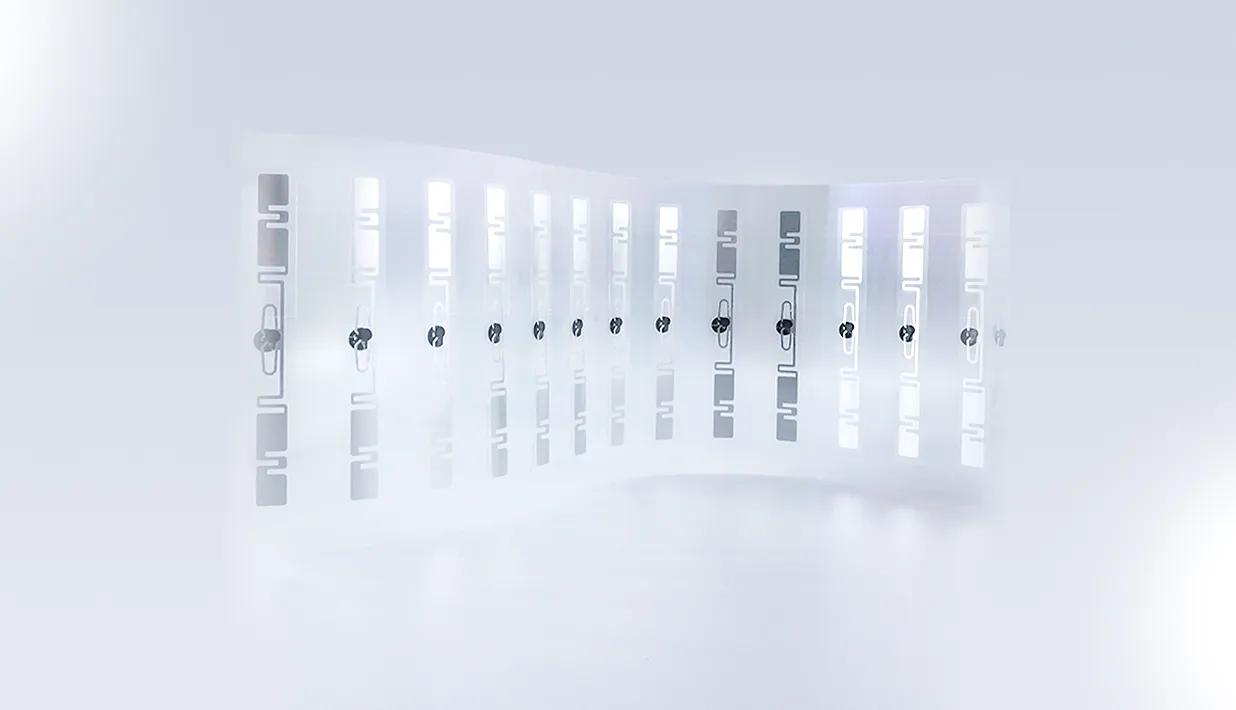
- RFID labels: Used for commodity tracking and inventory management, usually embedded in commodities or packages to help enterprises monitor inventory status in real-time.
- RFID Key fobs: Used for access control and access management, easy for users to carry, usually designed in small and lightweight form.
- RFID Wristbands: Commonly used at events, music festivals and theme parks, RFID wristbands can facilitate authentication and payment functions to enhance customer experience.
All of these products support customization to meet the needs of customers in different industries. For example, different shapes, colors, sizes, and eco-friendly material options are available.
Main application scenarios of the ISO 14443 protocol
The ISO 14443 protocol is widely used in a number of areas, especially in contactless identification and communication situations. The following is a detailed description of the main application scenarios of this protocol.
1. Financial Payment
- Smart Card Payment: Many banks and financial institutions issue smart cards that support the ISO 14443 protocol, enabling users to make payments through contactless means. Users only need to bring the card close to the reader to complete the transaction, which greatly improves the convenience and speed of payment.
- Mobile Payments: By embedding ISO 14443 technology into cell phones, users can make fast payments using their phones. For example, mobile payment apps such as Apple Pay and Google Pay utilize this protocol to allow users to quickly check out in stores.
2. Transportation
- Public transportation cards: The public transportation systems of many cities use ISO 14443 protocol cards. Passengers can use these cards to easily swipe their cards in and out of subways, buses and other vehicles. This contactless method greatly shortens queuing time and improves passenger travel efficiency.
- Parking management: Some smart parking systems also use ISO 14443 cards, which allow users to quickly identify and charge themselves when entering and leaving the parking lot, improving the user experience.
3. Hotel Management
- Room Key Card: Hotels widely use ISO 14443 protocol key card, guests can easily open the door by simply swiping the card in front of the door lock. This approach enhances security and convenience for guests.
- Value-added services: Hotels can also combine ISO 14443 cards with other services, such as in-hotel consumption, gym access, etc., to realize one-card management and enhance customer experience.

4. Retail
- RFID Tags: In retail stores, RFID tags use the ISO 14443 protocol for merchandise tracking and inventory management. This technology helps merchants monitor inventory in real-time, reduce theft rates, and enhance the customer shopping experience.
- Membership Management: Some retailers use the ISO 14443 protocol for membership cards, which allows customers to swipe their cards to earn points or enjoy discounts, enhancing customer loyalty.
5. Medical industry
- Medical record management: Hospitals use ISO 14443 protocol cards to record patient information to ensure the accuracy and efficiency of medical services. Medical staff can quickly read medical records to avoid medical errors.
- Drug tracking: RFID tags help track drugs at every link in the supply chain, ensure the true source and effectiveness of drugs, and prevent counterfeit drugs from entering the market.
6. Access Control
- Access Control Systems: The ISO 14443 protocol is commonly used for access control systems in companies and organizations. Employees use cards or key fobs with RFID chips for authentication, ensuring that only authorized personnel have access to specific areas.
- Time and Attendance: Many companies use RFID time and attendance systems, where employees swipe their cards to punch in, and the system records attendance in real-time to improve management efficiency.
7. Event Management
- Event Entry Tickets: At large events, music festivals and exhibitions, organizers use ISO 14443 protocol wristbands or tickets, and participants can enter and exit by swiping their cards, improving the speed and security of entry.
- Consumer Payment: Participants can also use the same RFID wristband for on-site consumption, simplifying the payment process.
8. Asset Management
- Logistics and Warehousing: RFID tags with the ISO 14443 protocol can be used to track and manage inventory items, helping organizations achieve real-time inventory monitoring and reduce management costs.
- Equipment Tracking: In healthcare, manufacturing and other industries, ISO 14443 technology can be used to track and manage equipment, ensuring traceability throughout its life cycle.
Global usage and compliance of ISO 14443 protocol
1. Global Usage
Financial Services
- Europe: Banks in many countries have adopted the ISO 14443 protocol to issue contactless payment cards, such as Carte Bleue in France and Contactless Cards in the U.K. These cards are widely used in stores, transportation and other services, driving the popularity of contactless payments.
- North America: Major banks in the U.S. and Canada have also introduced ISO 14443 contactless credit and debit cards that allow users to quickly complete transactions at specific merchants. According to statistics, the usage of contactless payments is increasing year by year.
Public Transportation
- Asia: Many Asian cities (e.g., Octopus in Hong Kong, and Suica in Tokyo) have adopted ISO 14443 cards as a public transportation payment tool. Passengers can use the cards to easily enter and exit subways and buses, enhancing the convenience of travelling.
- Europe: Some cities are also beginning to integrate ISO 14443 cards into their public transportation systems to support contactless payments and reduce the need for queuing and cash transactions.
Healthcare and Education
- Healthcare Organizations: Hospitals worldwide use ISO 14443 technology to manage medical records and drug tracking to ensure accurate and efficient information. For example, many healthcare organizations in North America have begun implementing RFID technology to improve operational efficiency.
- Campus Management: Some schools and universities use ISO 14443 cards for authentication and attendance, facilitating the management of students and staff.

2. Compliance
The use of the ISO 14443 protocol requires compliance with the laws and regulations of different countries and regions to ensure data security and user privacy.
- European Union
GDPR (General Data Protection Regulation): In Europe, businesses must follow the requirements of the GDPR when processing personal data related to ISO 14443 to ensure user privacy and data protection. This regulation requires companies to adopt strict security measures when collecting, storing and processing data.
- United States
PCI DSS (Payment Card Industry Data Security Standard): In the U.S., financial institutions and merchants are required to follow the PCI DSS to ensure the security of payment information. ISO 14443 cards require encryption and safeguards during the payment process to protect users’ financial information.
- China
Cybersecurity Law: In China, the application of ISO 14443 technology needs to follow the Cybersecurity Law to ensure the security and legal processing of user data. Enterprises need to establish appropriate security mechanisms to protect user privacy.
- International Standards
ISO/IEC 14443: As an international standard, ISO 14443 provides a technical framework and best practices to help organizations follow consistent standards when implementing contactless technology. The implementation of this standard can enhance market acceptance and compliance of products.
3. Security and Privacy Protection
- Security protocol: ISO 14443 protects user information through multiple security measures (e.g., data encryption and two-way authentication) to reduce the risk of data leakage.
- Security Audit: When implementing the ISO 14443 protocol, organizations should conduct regular security audits to ensure compliance with all regulatory requirements and maintain user trust.
Comparison between ISO 14443 and other protocols
ISO 14443 protocol is a widely used standard for contactless smart card communication. Compared with other wireless communication protocols, it exhibits unique advantages and disadvantages in different application scenarios. Below is a comparison of the ISO 14443 protocol with other major protocols, including ISO 15693, NFC and RFID protocols.
- ISO 14443: Mainly used for communication between contactless cards and readers over short distances (usually within 10 centimeters), and is suitable for applications such as payment and authentication.
- ISO 15693: Used for longer reading ranges (typically up to 1 meter), suitable for scenarios such as asset management and library management.
- NFC (Near Field Communication): Based on ISO 14443 technology, it is usually used for two-way communication between devices and is applied to mobile payment and data exchange.
- RFID: Widely used for item tracking and management, it is categorized into several frequency bands such as Low Frequency (LF), High Frequency (HF, including ISO 14443 and ISO 15693) and Ultra High Frequency (UHF).
| Characteristics | ISO 14443 | ISO 15693 | NFC | RFID |
| Communication distance | Within 10 cm | Within 1 m | Within 10 cm | Determined by the frequency band, UHF can reach more than 10 m |
| Data transmission rate | 106 kbps, 212 kbps, 424 kbps, 848 kbps | 26.48 kbps | 106 kbps, 212 kbps, 424 kbps, 848 kbps | LF: 10-100 kbpsHF: 424 kbps maximum |
| Application scenario | Payments, Access control, Authentication | Asset management, Library management | Mobile payments, Data exchange | Logistics, Inventory management, Asset tracking |
| Security | Support for encryption and authentication | Support for encryption | High security, Support for encryption and authentication | Depends on reality, Security varies |
| Tag type | Passive tag | Passive / Active tag | Passive tag | Passive / Active / Semi-active tag |
Future trends of the ISO 14443 protocol
With the progress of science and technology and the change in market demand, the development of the ISO 14443 protocol in the future will show the following trends.
1. Higher Security
- Enhanced encryption: future ISO 14443 cards will integrate more advanced encryption algorithms to protect users’ payment and identity information. With the increase in cyber-attacks, improved security will become a key requirement.
- Multi-factor authentication: Combining bio-metrics (e.g. fingerprint or facial recognition) with the application of ISO 14443 protocols will further enhance security against unauthorized access.
2. Convergence with the Internet of Things (IoT)
- Smart device connectivity: ISO 14443 protocol will be integrated with IoT technology to enable RFID tags and cards to communicate more seamlessly with smart devices, enhancing the realization of smart cities and smart homes.
- Data collection and analysis: ISO 14443 tags with integrated sensors will be able to collect data in real-time and analyze it through the IoT platform to help businesses optimize their operations.
3. Extended Application Scenarios
- Popularization of mobile payment: With the popularity of contactless payment, the ISO 14443 protocol will be more frequently used in mobile payment solutions, driving the realization of a seamless payment experience for various terminal devices (e.g., cell phones and smartwatches).
- New industry applications: More applications based on ISO 14443 may emerge in the future, such as in the fields of smart logistics, health monitoring and agricultural management.
4. Enhanced User Experience
- Convenient user interface: Future ISO 14443 solutions will focus more on user experience, such as providing one-click payment, account management and real-time transaction reminders through mobile applications.
- Wearable Devices: With the development of wearable technology, the ISO 14443 protocol will be embedded into more wearable devices, such as bracelets and smartwatches, enabling users to make payments and authentication more conveniently.
5. Norms and standardization drive
- Harmonization of global standards: As ISO 14443 technology becomes more widely used, the International Organization for Standardization is likely to push for more harmonized standards to simplify cross-border transactions and interoperability issues.
- Increased compliance: As concerns about data privacy and security increase, compliance with ISO 14443 solutions will be further enhanced, and organizations will need to follow stricter regulations and standards.
Conclusion
As one of the core standards for contactless communication technology, ISO 14443 provides secure and efficient data transmission solutions for various industries. Through an in-depth analysis of its technical principles, product categories and application scenarios, companies can better understand the value of this agreement and maximize its potential for implementation. In future development, as technology continues to advance, the ISO 14443 protocol will continue to evolve to meet growing market needs and security challenges.
By contacting rfidlabel.com, you will be able to explore how to leverage RFID products to improve business efficiency and security.
FAQs
1. What is the ISO 14443 protocol mainly used for?
ISO 14443 is mainly used for short range contactless smart card communication. It is common in access control cards, hotel key cards, payment cards, transit cards, identity cards, and NFC based products that need fast and secure tap to read performance.
2. How do I choose the right ISO 14443 RFID card or label?
The best choice depends on your application, required chip type, security level, memory size, reading environment, and product format. For access control or hotel key cards, ISO 14443A cards are often a practical choice. For NFC authentication, smart packaging, or brand protection, NFC compatible chips such as NTAG or MIFARE options may be more suitable. rfidlabel.com can help customize ISO 14443 labels based on your project requirements.