As global healthcare demands continue to grow, ensuring the safety of medical environments and reducing hospital-acquired infections (HAIs) through RFID infection control measures have become critical issues for healthcare institutions worldwide. According to data from the World Health Organization, 7% of hospitalized patients in developed countries are affected by HAIs, while this figure rises to 10% or even higher in developing countries.
In this context, the French startup MediHandTrace has developed a solution that embeds RFID tags in healthcare workers’ shoes to track and improve hand hygiene compliance within hospitals. This case highlights the potential of RFID technology in the medical field and provides a valuable reference for other healthcare institutions considering the use of RFID products.
Case Description: MediHandTrace’s Smart Shoe Solution
MediHandTrace utilizes RFID technology to monitor the hand hygiene habits of healthcare workers, thereby reducing hospital-acquired infections caused by poor hand hygiene. The system operates by placing RFID tags within the shoes of healthcare personnel. RFID reader antennas installed in the hospital floors then track the workers’ movements in real time to ensure they follow the correct hand hygiene steps.
- Seven-Step Tracking System
In hospital wards, the system tracks healthcare workers’ activities at seven key points by embedding RFID reader antennas in the floors. These points include the hallway dispensers, ward entrances, dispensers within the wards, and beside patient beds. As healthcare workers move from the ward entrance to the patient’s bedside and back, the system accurately records each step and ensures they use hand sanitizer at the required four steps.
- Technical Advantages and Practical Applications
The RFID system not only records hand hygiene practices but also provides real-time feedback through software. For example, if a healthcare worker approaches a patient without sanitizing their hands, the system immediately triggers an alert. This real-time feedback mechanism has significantly improved hand hygiene compliance in hospitals. Over three years of testing, the hand hygiene compliance rate at a hospital in northern Marseille, France, increased from 20% to 50%, with plans to further increase it to 80%.
Introduction to RFID Tag Products and Application Scenarios
The application of RFID tags in healthcare is not limited to monitoring hand hygiene. In fact, RFID technology has a wide range of applications in healthcare supply chain management, patient identification, medical equipment tracking, and more.
- NXP ICODE® SLIX NFC Label
For example, the NXP ICODE® SLIX NFC Label is one of the most popular RFID tag products on the market. This label features the NXP ICODE® SLIX chip, complies with ISO/IEC 15693 and ISO/IEC 18000-3 standards, and operates at a frequency of 13.56 MHz. It has a reading range of up to 1.5 meters and offers excellent data retention and write durability. Additionally, the label has anti-collision features and 32-bit password protection to ensure data transmission security.
- Application Scenarios and Advantages
The NXP ICODE® SLIX NFC Label, measuring just 18x18mm, uses PET material with 3M adhesive, allowing it to adapt well to complex medical environments. Hospitals can utilize this RFID tag not only for tracking healthcare workers’ shoes but also for various other management purposes. In hospitals, the application of RFID tags can effectively reduce medical errors, improve work efficiency, and enhance the overall patient care experience.
Reflections and Outlook Based on the Case Study
By adopting these solutions, which leverage RFID Infection Control technology, hospitals can significantly improve patient safety and infection control outcomes. As technology continues to advance, the application scenarios for RFID tags will become more extensive. For healthcare institutions, investing in high-quality RFID tag products, such as the NXP ICODE® SLIX NFC Label, can not only improve internal management efficiency but also significantly enhance patient safety and satisfaction.
Looking ahead, as RFID technology continues to evolve, more innovative applications will be promoted in the medical field. For example, by combining RFID tags with other smart medical devices, hospitals can achieve more comprehensive and precise patient monitoring and care management. This will not only help improve healthcare quality but also reduce hospital-acquired infections and other medical risks.
Conclusion
MediHandTrace’s solution exemplifies how RFID infection control can be integrated into everyday hospital practices, such as hand hygiene monitoring, to reduce infection rates effectively. This case not only highlights the broad potential of RFID technology in the medical field but also provides a valuable reference for other healthcare institutions. By choosing high-performance RFID tag products like the NXP ICODE® SLIX NFC Label, hospitals can further enhance internal management efficiency, reduce medical risks, and ultimately achieve higher healthcare quality and patient satisfaction. In the future, as more healthcare institutions recognize and adopt RFID technology, intelligent management in the medical field will experience greater development opportunities.
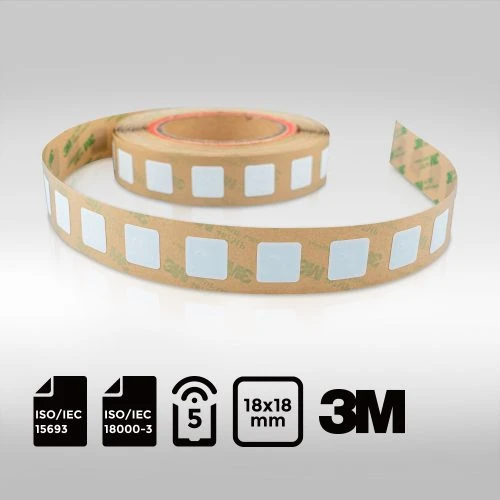
NFC Label 18x18mm NXP ICODE® SLIX | ISO15693 NFC Type-5

Elevate your tracking precision with our exceptionally compact NFC Label, sized at just 18x18mm and featuring the superior NXP ICODE® SLIX chip. Compliant with ISO15693 NFC Type-5 standards, this tiny yet mighty label is crafted with PET material and backed by reliable 3M adhesive. Experience the pinnacle of quality and efficiency in tracking solutions with this standout product.