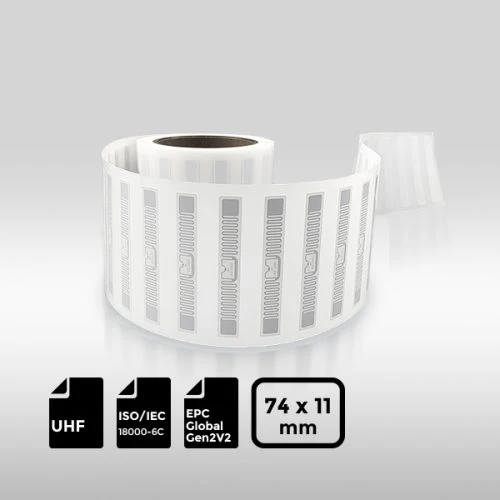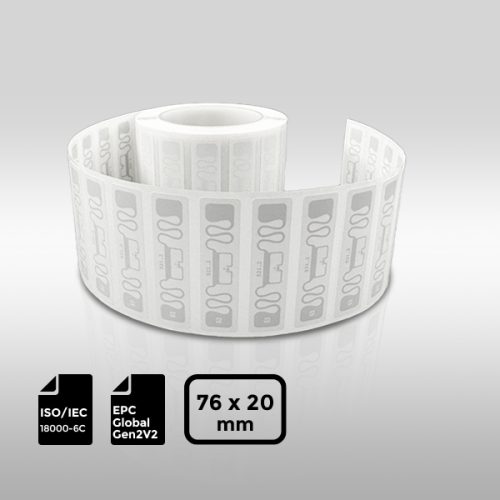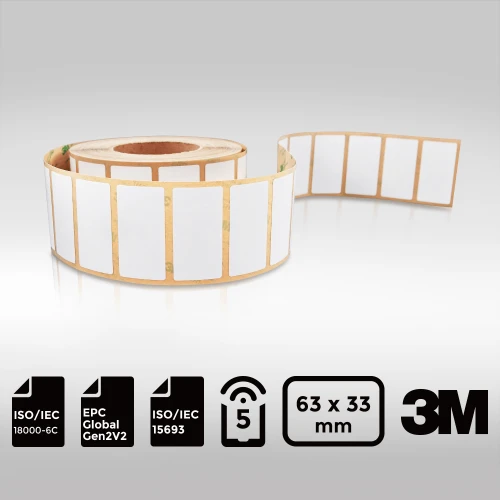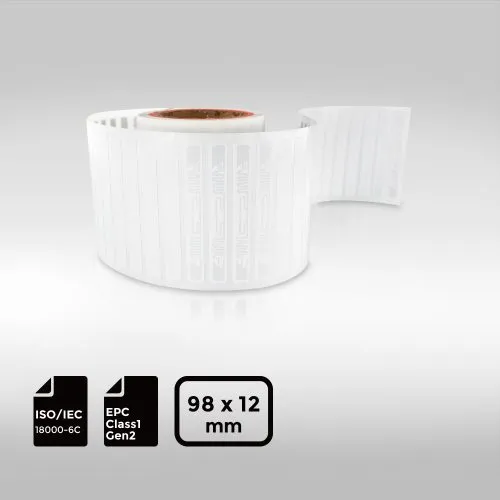

Choosing an RFID label involves more than selecting the right chip, antenna, or label material. The adhesive is equally important, especially when the label needs to remain securely attached throughout storage, transportation, and daily use.
An RFID sticker that performs well on a cardboard box may not adhere properly to a plastic container or a curved product surface. In some cases, labels may begin peeling at the edges, lose adhesion in cold environments, or leave unwanted residue when removed.
These problems can affect not only label durability but also the reliability of product identification and tracking.
Proper RFID Label Adhesive selection starts with understanding the application surface, operating environment, and required bonding performance. This guide explores the key factors businesses should consider when choosing RFID label adhesives for different applications.
Why Does Adhesive Selection Matter for RFID Labels?
Adhesive is the layer that connects an RFID label to the product or packaging surface. Even when the RFID chip and antenna are correctly selected, unsuitable adhesive can cause the entire label to fail in its intended application.
For example, a label attached to a clean cardboard box may remain in place without difficulty. However, the same adhesive may perform poorly on a polypropylene container or a rough industrial surface.
Several factors influence adhesive performance:
- Surface Material: Different materials have different surface characteristics and bonding requirements.
- Surface Condition: Dust, oil, moisture, and surface coatings can reduce adhesion.
- Application Temperature: The temperature when the label is initially applied affects how well the adhesive bonds.
- Operating Environment: Heat, cold, humidity, and chemical exposure may affect long-term adhesion.
- Removal Requirements: Some applications require permanent attachment, while others need clean removal.
According to 3M’s technical explanation of adhesion and substrate surfaces, surface energy and cleanliness influence how effectively an adhesive makes contact with a substrate.
Therefore, selecting the right adhesive should be an essential part of RFID label customization rather than an afterthought.
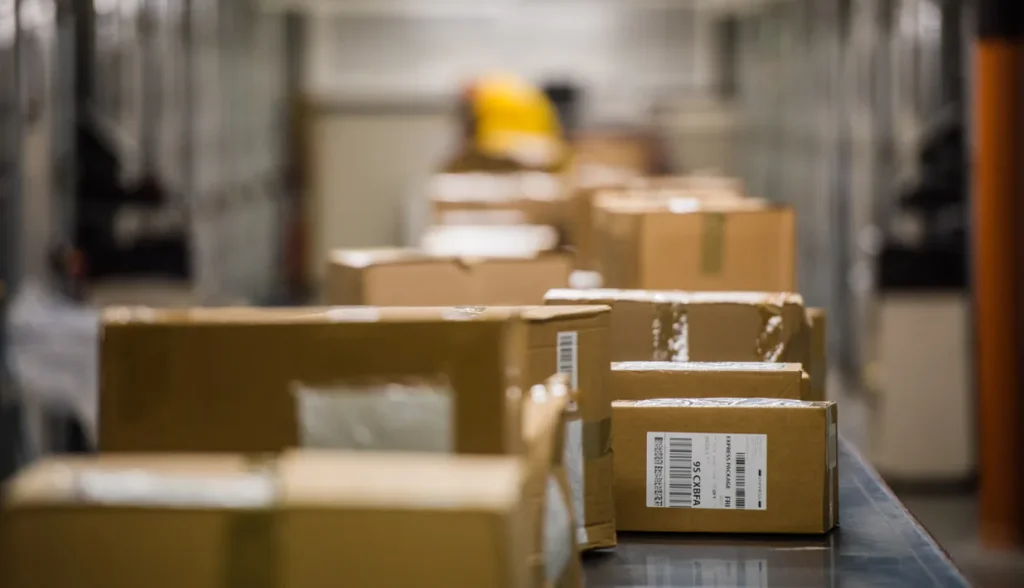
How to Choose RFID Label Adhesive for Different Surfaces
Different product surfaces require different adhesive considerations. Understanding these differences can help buyers avoid common labeling problems.
1. Cardboard and Paper Packaging
Cardboard and paper are common surfaces for RFID labels used in logistics, retail, and product packaging.
Standard permanent adhesives are often suitable for clean, dry, conventional packaging surfaces. They provide reliable attachment for labels that need to remain in place during normal storage and transportation.
However, recycled cardboard, dusty packaging, and rough corrugated surfaces may require stronger initial adhesion or a different adhesive construction.
For these applications, buyers should consider:
- Surface roughness and porosity.
- Dust and loose fibers.
- Packaging storage conditions.
- Required label attachment period.
2. Plastic Surfaces
Plastic packaging presents more complicated adhesive requirements because different plastics have different surface properties.
For example, polyethylene (PE) and polypropylene (PP) are commonly considered low-surface-energy plastics. Standard adhesives may have difficulty forming a reliable bond on these surfaces.
This is particularly important for RFID stickers applied to plastic containers, bottles, storage bins, and industrial components.
When selecting an adhesive for plastic surfaces, consider:
- The specific plastic material, such as PE, PP, PET, or PVC.
- Whether the surface contains coatings or release agents.
- Whether the product has a smooth or textured finish.
- Whether the label needs to remain attached for a long period.
For challenging plastic surfaces, a specially formulated adhesive designed for low-surface-energy materials may be more suitable.
3. Glass Surfaces
Glass generally provides a smooth bonding surface, making it suitable for many pressure-sensitive adhesives.
RFID labels applied to glass bottles, containers, and packaging should nevertheless be evaluated for moisture, condensation, and temperature changes.
For example, beverage containers may move between room-temperature storage and refrigerated display environments. The adhesive must maintain suitable bonding performance throughout these conditions.
4. Metal Surfaces
Metal applications require special attention because two different issues need to be considered: adhesion and RFID performance.
From an adhesive perspective, clean metal surfaces can generally provide good bonding conditions. However, painted, powder-coated, oily, or textured metal surfaces may require different adhesive considerations.
More importantly, standard UHF RFID labels can experience significant reading performance loss when attached directly to metal.
In these applications, an on-metal RFID label with an appropriate antenna structure may be necessary.
Choosing a stronger adhesive alone will not solve an RFID signal interference problem. Both the adhesive construction and antenna design must be evaluated.
Permanent vs Removable Adhesives: Which One Should You Choose?
Another important decision is whether the RFID label should remain permanently attached or be removed after a specific period.
| Adhesive Type | Main Characteristics | Typical Applications |
| Permanent Adhesive | Designed for lasting attachment | Product packaging, logistics, asset identification |
| Removable Adhesive | Designed for easier removal under specified conditions | Temporary identification, reusable containers |
| High-Tack Adhesive | Provides stronger initial bonding on challenging surfaces | Rough packaging, textured materials |
| Low-Temperature Adhesive | Designed for specified cold application or storage conditions | Refrigerated products, cold chain packaging |
The choice depends on the product lifecycle and the intended use of the label.
For example, RFID labels used for permanent product identification should generally prioritize long-term adhesion.
In contrast, labels used on reusable plastic containers may need to be removed after each transportation cycle. A suitable removable adhesive can help reduce cleaning work and prevent unwanted residue.
However, removable does not automatically mean residue-free under every condition. Surface material, exposure time, temperature, and adhesive formulation can all affect removal performance.
Before ordering, buyers should clearly specify whether the label needs permanent attachment, clean removal, or repeated repositioning.
How Temperature and Environmental Conditions Affect Adhesion
Temperature is one of the most important factors in RFID Label Adhesive selection.
A common mistake is evaluating adhesive performance only at room temperature, even when labels will be applied or stored under very different conditions.
Consider these applications:
1. Cold Chain and Refrigerated Products
Labels used on refrigerated or frozen packaging may require specialized low-temperature adhesives.
It is important to distinguish between application temperature and service temperature. A label applied at room temperature and subsequently stored in a freezer may have different requirements from one applied directly to a cold or frozen surface.
2. Outdoor Applications
RFID labels used outdoors may be exposed to rain, moisture, sunlight, and repeated temperature changes.
In these cases, both the face material and adhesive should be selected according to the expected environmental exposure.
3. Industrial Applications
Industrial labels may encounter oil, dust, cleaning chemicals, vibration, or elevated temperatures.
The complete label construction should be evaluated rather than selecting an adhesive based on its bonding strength alone.
When requesting a customized RFID label, provide both the application temperature and the expected operating temperature range. This information helps suppliers identify more suitable adhesive options.

What Should Buyers Test Before Placing a Bulk Order?
Adhesive performance should always be validated on the actual product surface before large-scale production.
A label that performs well on a standard test panel may behave differently on a real package because of surface coatings, texture, contamination, and environmental conditions.
A practical testing process should include:
1. Initial Tack Test
Check whether the label attaches properly when first applied. This is particularly important for automated labeling and high-speed production lines.
2. Peel Adhesion Test
Evaluate how much force is required to remove the label from the selected surface.
The ASTM D3330/D3330M standard describes test methods for measuring peel adhesion of pressure-sensitive tapes, including testing against different surfaces.
3. Environmental Testing
Expose label samples to the actual temperature, humidity, moisture, and other conditions expected during use.
4. Long-Term Adhesion Test
Check whether the label remains attached after an appropriate period of storage or operation.
5. Removal Test
For removable applications, evaluate whether the label can be removed as required and whether adhesive residue remains.
The FINAT Technical Handbook also provides standardized test methods covering peel adhesion, shear resistance, and low-temperature adhesion.
These tests help buyers evaluate adhesive performance more systematically before confirming bulk specifications.
What Information Should You Provide When Customizing RFID Label Adhesive?
To recommend a suitable RFID label construction, suppliers need more than the required label dimensions and chip model.
Buyers should prepare the following information before requesting a quotation:
| Required Information | Why It Matters |
| Product Surface | Determines adhesive compatibility |
| Surface Material | Identifies potential bonding challenges |
| Application Temperature | Helps determine suitable adhesive properties |
| Operating Temperature | Defines environmental performance requirements |
| Indoor or Outdoor Use | Determines exposure considerations |
| Permanent or Removable | Establishes the required bonding behavior |
| Label Dimensions | Affects adhesive contact area and label construction |
| RFID Frequency and Chip | Ensures the complete label meets RFID requirements |
Providing these details allows the supplier to evaluate the complete RFID label construction instead of selecting adhesive independently from the rest of the product.
For additional guidance on label materials, mounting environments, and application requirements, visit the RFIDLabel Buying Guide.
Get the Right RFID Label Adhesive for Your Application
Choosing the right adhesive is essential for ensuring that RFID labels remain securely attached and perform reliably throughout their intended use.
Whether your application involves cardboard packaging, plastic containers, glass bottles, metal equipment, or cold storage environments, the adhesive should match the actual surface and operating conditions.
At RFIDLabel, we provide customized RFID label solutions with different chip options, antenna designs, label dimensions, materials, and adhesive requirements.
If you are developing a new RFID label project or experiencing adhesion problems with your existing labels, our team can help review your application requirements and evaluate suitable label configurations.
Contact us rfidlabel.com today to discuss your project and request a customized quotation. Let us help you find the right RFID label solution for your products and applications.
Recommended Product