In today’s ever-changing digital age, smart labels, as a bridge connecting the physical world and the digital world, are changing the way we live and work at an unprecedented speed. According to the “Global Smart Label Market Size, Share and Trend Analysis, 2023-2030” report released by ResearchAndMarkets.com, the smart field is expected to achieve substantial growth, and the market size is expected to jump to US$55.55 billion by 2030, with a compound annual growth rate of 5.1%. Particularly noteworthy is that RFID (radio frequency identification) smart labels, with their unique advantages, have dominated the revenue in the smart label market and led the future development of the industry.
What is RFID smart label?
RFID smart label is a smart identification label that integrates RFID technology. It uses wireless radio frequency signals for contactless data communication to achieve automatic identification and data exchange of target objects. Compared with traditional barcodes or QR codes, RFID smart labels do not require line of sight alignment, have higher recognition efficiency, larger storage capacity and stronger environmental adaptability.
RFID systems usually consist of tags, readers and writers, and background systems. The tag is attached to the object to be identified and stores the relevant information of the object; the reader sends a radio frequency signal through the antenna to activate the tag and read or write the data in the tag; then the data is transmitted to the background system for processing. The whole process does not require human intervention, achieving fast and accurate automatic identification.
RFID smart labels offer the following main features:
- Non-contact identification: no line of sight alignment is required, strong penetration, and can work in harsh environments.
- Large storage capacity: Compared with barcodes, RFID tags can store more information.
- Fast reading: multiple tags can be identified at the same time to improve efficiency.
- Durability: waterproof, dustproof, wear-resistant, suitable for various environments.
- Security: data encryption transmission to protect information security.
So, what are the uses of RFID smart labels?
Application scenarios of RFID smart labels
- Retail and inventory management
In the retail industry, RFID smart labels have greatly improved the accuracy and efficiency of inventory management. By real-time monitoring of product location, inventory and sales, merchants can respond quickly to market demand, reduce out-of-stock and backlogs, and optimize supply chain management. At the same time, RFID technology also supports fast checkout and self-service shopping experience to improve customer satisfaction.
- Logistics and supply chain management
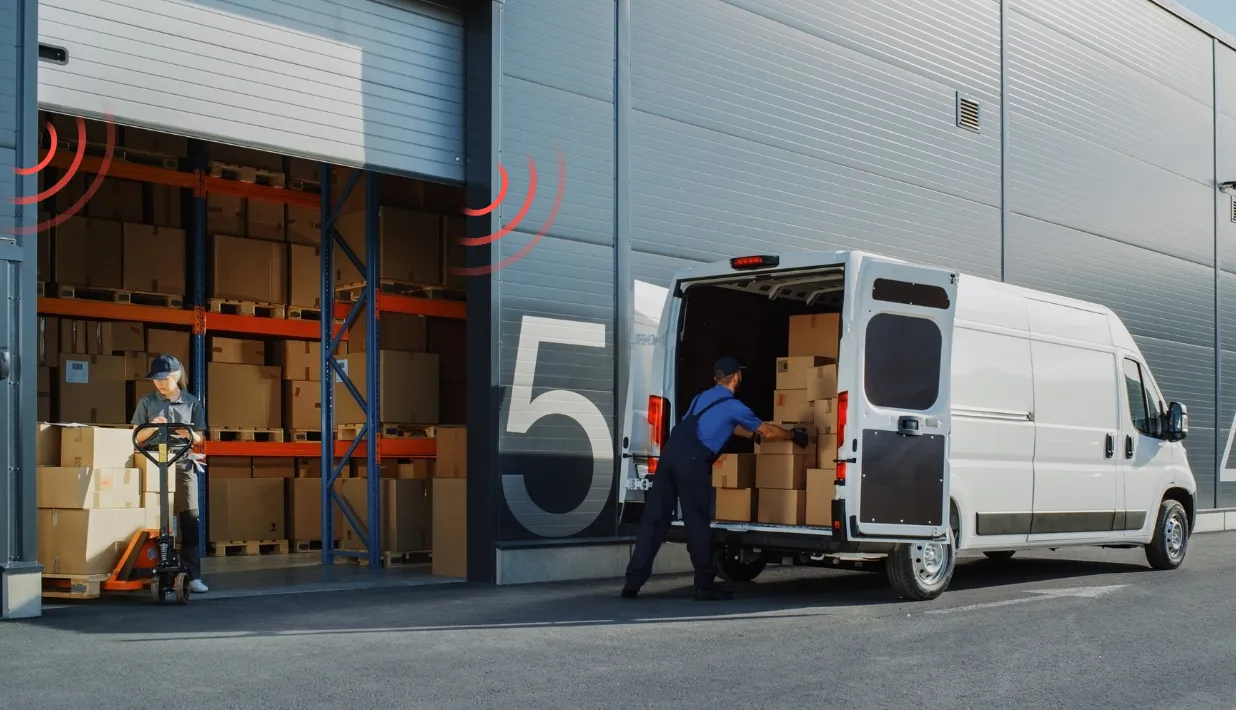
In the field of logistics and supply chain management, RFID smart labels can realize the visual tracking of goods from production to consumption. Whether it is the warehousing, outbound, transportation or distribution of goods, each step can be accurately recorded and managed, effectively preventing the loss, misdelivery and delay of goods. This not only improves logistics efficiency, but also reduces operating costs and enhances the transparency and traceability of the supply chain.
- Manufacturing and asset management
In the manufacturing industry, companies widely use RFID smart labels for production line automation, equipment management, and asset tracking. By real-time monitoring of production progress, equipment status and asset location, enterprises can promptly discover and solve problems, improve production efficiency and reduce maintenance costs. At the same time, RFID technology also supports remote monitoring and fault diagnosis, providing strong support for intelligent manufacturing.
- Healthcare
In the field of healthcare, RFID smart labels play an important role in drug traceability, medical device management and patient identification. By attaching RFID tags to drugs and medical devices, hospitals can easily achieve inventory management and use traceability to ensure drug safety and effective use of medical devices. In addition, RFID technology can also help medical staff quickly identify patients, reduce medical errors and improve the quality of medical services.
With the continuous development and popularization of Internet of Things technology, RFID smart labels, as an important tool to connect the physical world and the digital world, will further release their market potential. As an RFID product manufacturer, we will continue to innovate and optimize our products, offering customers advanced, reliable, and user-friendly RFID smart label solutions. We firmly believe that in the future, RFID smart labels will continue to lead the development trend of the smart label market and contribute to building a more intelligent, efficient and sustainable society.
Visit rfidlabel.com for more information!
FAQs
1. What is the difference between RFID smart labels and barcodes?
There are significant differences between RFID smart labels and barcodes in terms of identification methods, storage capacity, reading speed and scope of application. RFID uses wireless radio frequency signals for non-contact identification, with large storage capacity, fast reading speed and simultaneous identification of multiple labels; while barcodes require line of sight alignment, limited storage capacity and relatively slow reading speed. In addition, RFID tags still maintain stable recognition performance in harsh environments, whereas pollution and wear easily affect barcodes.
2. Is the cost of RFID smart labels high?
Although the initial investment cost of RFID smart labels may be higher than that of traditional barcodes or QR codes, its long-term benefits are significant. RFID smart labels can bring significant economic benefits to enterprises by improving inventory management efficiency, reducing operating costs, and enhancing supply chain transparency. In addition, with the continuous maturity of technology and the expansion of market scale, the cost is gradually decreasing, allowing more enterprises and industries to afford and enjoy the convenience brought by RFID technology.
3. What are the safeguards for privacy and data security of RFID smart labels?
RFID smart tags have taken multiple safeguards for privacy and data security. First, the data transmission of RFID tags can use encryption technology to ensure the security of data during transmission. Secondly, we usually set readers and writers with access control, allowing only authorized users to read or write tag data. In addition, enterprises can also use technical means such as physical isolation and data desensitization to further protect user privacy and data security. At the same time, the continuous improvement of industry standards and laws and regulations also provides strong protection for the privacy and data security of RFID smart labels.