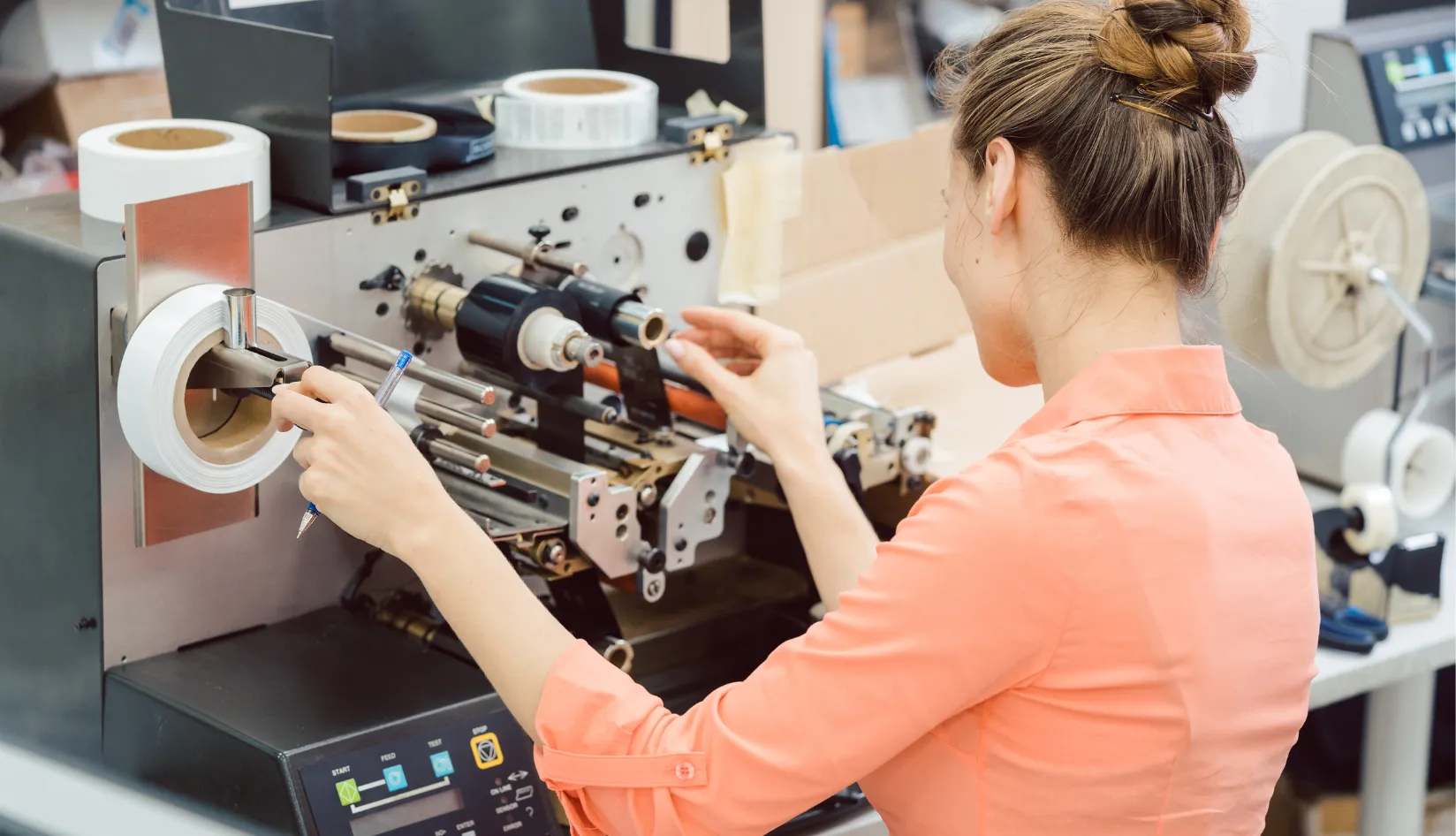
Biological sample tracking is paramount in various scientific and medical fields, ensuring the integrity and reliability of research, diagnostics, and therapeutic development. In an era where precision and accountability are non-negotiable, establishing an unbreakable chain of custody for these invaluable specimens is more critical than ever. We delve into how advanced identification technologies provide this essential security, transforming how laboratories and healthcare providers manage their most sensitive assets.
The Indispensable Role of Robust Sample Identification
Accurate identification is the cornerstone of effective biological sample management. Without it, the risk of misidentification, contamination, or loss escalates, potentially invalidating years of research or compromising patient care. We understand that each sample represents a unique data point, a patient’s hope, or a scientific breakthrough waiting to happen. Therefore, the systems we implement for biological sample tracking must be foolproof.
Why Traditional Methods Fall Short
Historically, manual labeling and rudimentary tracking systems have been prone to human error. Illegible handwriting, misplaced labels, or data entry mistakes can lead to significant issues. In high-throughput environments, these inefficiencies are amplified, creating bottlenecks and increasing operational costs. The need for a more resilient, automated solution became evident as the volume and complexity of biological samples grew.

RFID Technology: Revolutionizing Biological Sample Tracking
Radio-Frequency Identification (RFID) technology offers a robust and highly efficient solution for biological sample tracking. Unlike barcodes, RFID tags do not require a direct line of sight for scanning, allowing for rapid and accurate identification of multiple samples simultaneously. This capability significantly reduces manual effort and minimizes the potential for errors, enhancing both speed and accuracy in laboratory workflows.
Key Advantages of RFID in Sample Management
RFID technology brings several distinct advantages to the meticulous world of biological sample management:
- Automated Data Capture: RFID readers can automatically identify and record sample data, eliminating manual transcription errors.
- Enhanced Accuracy: Reduced human intervention leads to a higher degree of data accuracy and sample integrity.
- Real-time Visibility: Samples can be tracked in real-time as they move through various stages, from collection to storage and analysis.
- Improved Efficiency: Faster scanning and data processing streamline workflows, saving valuable time and resources.
- Durability and Reliability: RFID tags are durable and can withstand harsh laboratory environments, including extreme temperatures and chemical exposure.

Implementing an Unbreakable Chain of Custody with RFID
Establishing an unbreakable chain of custody involves more than just labeling; it requires a comprehensive system that logs every interaction with a sample. RFID solutions provide this granular level of tracking, creating a digital audit trail that is both transparent and immutable. This ensures that the integrity of each biological sample is maintained from the moment it is collected until its final disposition.
The Role of Customization in RFID Solutions
Every laboratory has unique needs. We specialize in providing custom RFID label solutions, including various form factors, adhesive types, and encoding options, to perfectly match specific application requirements. Whether it’s cryogenic storage, high-temperature sterilization, or specialized container shapes, our customizable RFID tags ensure optimal performance and longevity.

Conclusion: Secure Your Samples, Advance Your Science
In the intricate world of biological research and healthcare, the integrity of every sample is paramount. By embracing advanced biological sample tracking solutions, particularly those powered by RFID technology, organizations can establish an unbreakable chain of custody, enhance operational efficiency, and safeguard invaluable biological assets. We invite you to explore our comprehensive range of RFID cards, tags, and custom solutions at rfidlabel.com to discover how we can help secure your samples and advance your scientific endeavors.
FAQs
How does RFID technology compare to barcode scanning for biological samples?
RFID offers significant advantages over barcodes, including no line-of-sight requirement for scanning, simultaneous reading of multiple tags, and greater durability in harsh environments. This leads to faster, more accurate, and more efficient sample tracking.
Where is the best place to apply labels?
Prefer flat or low-curvature areas; avoid hand-grip zones and heavy frost areas. Degrease/dry before application and press to set. For curved containers, use wrap-around or flag-style labels.
Recommended Product
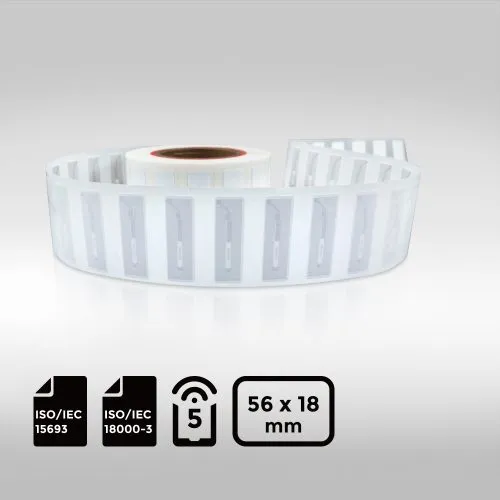
RFID Label for Lab Specimen Tracking | 56x18mm NXP ICODE® SLIX

Enhance specimen tracking in your lab with our 56x18mm ISO15693 NFC Label, engineered with NXP ICODE® SLIX ICs. Utilizing Polyester facing material for superior chemical and thermal resistance, and fortified with acrylic adhesive for optimal adhesion, this label meets the rigorous demands of laboratory environments.
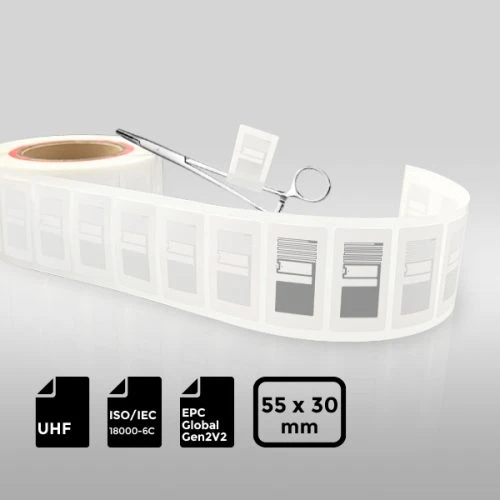
NXP UCODE® 9 Coated Paper UHF RFID Flag Label for Medical Device Management
NXP UCODE® 9 UHF RFID flag label for medical device management is a high-performance label with a high-quality coated paper surface, self-adhesive, NXP UCODE® 9 chip, aluminum antenna, double-sided glue and 80g release paper structure. The label has excellent reading distance and reliability, and is suitable for inventory and asset management, specifically targeted at the medical industry to ensure fast and accurate data acquisition and management.
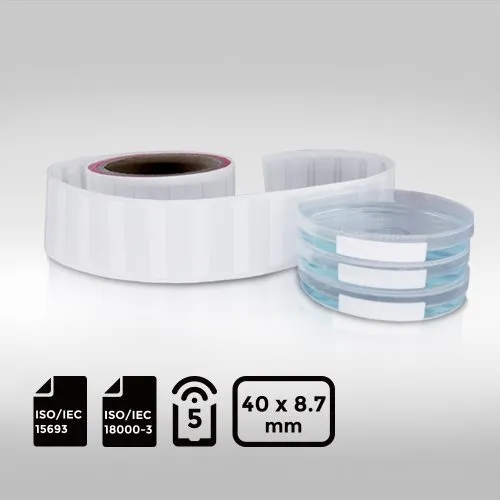
NXP ICODE® SLIX Lab Specimen Tracking RFID Label | 40×8.7mm
Track your laboratory samples using the NXP ICODE® SLIX RFID label, with an exceptionally compact height of just 8.7 mm, making it especially suitable for small laboratory containers. This label is made from medical-grade materials that provide excellent chemical corrosion resistance, and it uses acrylic adhesive for optimal adhesion, to meet the sample management needs of high-standard laboratory environments like embryo cultivation.