With the continuous advancement of technology, NFC (Near Field Communication) is transforming many aspects of campus life. The application of NFC campus digitalization not only enhances the level of campus intelligence but also significantly improves safety and convenience. A prime example of this is the NFC-based touchless mobile access system introduced by Long Island University. This system allows students and staff to easily carry out various campus activities using their smartphones, eliminating the need for traditional physical cards.
Case sharing: Long Island University’s NFC application
Long Island University’s MyLIU Mobile Card system has realized a card-free campus life. Students and staff can complete a series of operations—from entering dormitories and purchasing meals to printing documents and borrowing books—simply by using their smartphones, greatly reducing reliance on physical cards and contact. The core of this system lies in NFC readers, such as the Desktop RFID Reader AZ-RL173 and ISO/IEC15693 Fixed RFID Readers. These readers can read and transmit the unique ID information on users’ phones, while the NFC campus digitalization application manages and processes this data, supporting payment methods like Google Pay and Apple Pay.
The use of NFC technology not only improves operational efficiency on campus but also enhances security. Particularly during the pandemic, reducing physical touchpoints has become crucial for ensuring the safety of students and staff. This system not only simplifies daily activities for students and staff but also ensures the privacy and security of user information through dual authentication and data encryption.
This NFC-based solution has already been widely adopted by many universities across the United States, and demand continues to grow. As more students expect to handle daily tasks through their smartphones, NFC technology will undoubtedly become an essential component of future campus development. For other schools or student organizations that have yet to adopt such technology, implementing an NFC system early on can not only elevate campus technology but also effectively address increasing security challenges.
Advantages of NFC Technology
The core advantages of NFC campus digitalization are its convenience and security. With the NFC functionality on their phones, students and staff can quickly and contactlessly access dormitories, classrooms, libraries, and other areas on campus. Especially during the pandemic, reducing physical contact became a key aspect of campus health measures, and the introduction of an NFC system perfectly meets this need.
In addition, NFC technology offers a dual authentication mechanism, further enhancing the security of user information. Long Island University’s system supports mainstream payment methods like Google Pay and Apple Pay, ensuring a seamless user experience. Students and staff can complete a series of daily operations—from purchasing meals and printing documents to borrowing books—using only their smartphones, making campus life more efficient and intelligent.
Diverse Application Scenarios for NFC Technology
NFC technology has broad application potential, especially in campus environments, where it can significantly enhance the convenience and security of various services. Beyond common access control systems, NFC technology can also play an important role in the following areas:
- Classroom Management
With NFC devices, teachers can quickly record student attendance. Students simply need to tap their phones or student cards when entering the classroom, and the system automatically logs their attendance. This not only saves class time but also reduces the error rate of manual recording.
- Library Management
In the library, NFC tags can be used for book borrowing and returning. When borrowing a book, students only need to bring the book close to an NFC reader with their phone, and the system will automatically recognize and record the borrowing information. Similarly, returning books requires no manual operation, greatly simplifying library management processes.
- Campus Payments
NFC technology can also be used in on-campus payment systems, such as cafeterias and supermarkets. Students can make quick payments through their phones without needing to carry cash or bank cards. This seamless payment experience not only improves transaction efficiency but also reduces potential security risks during payments.
- Campus Activity Management
During various on-campus activities, such as lectures and competitions, NFC technology can be used to quickly complete check-ins and information recording. Event organizers can track participant information in real-time and use the data for subsequent analysis and feedback.
- Campus Navigation
When new students or visitors enter the campus, they can use NFC technology to obtain navigation information. Simply bringing their phones close to NFC tags placed around campus can automatically provide building information, route guidance, and related historical backgrounds. This smart navigation method greatly enhances user experience and showcases the technological level of the campus.
- Laboratory Management
In laboratory environments requiring strict management, NFC can be used for equipment borrowing and management. When borrowing lab equipment, students and staff can use NFC technology to link equipment to specific users, ensuring the proper use and management of resources.
Why Choose RFIDLabel®’s NFC Products?
To successfully deploy NFC technology on campus, choosing high-quality NFC tags is crucial. rfidlabel, a leading supplier of RFID tags and devices, offers a diverse product line and can customize solutions to meet specific campus needs, accommodating various applications across campuses.
For schools and student organizations, selecting rfidlabel’s RFID products can not only ensure efficient operations but also reduce maintenance costs and enhance the overall campus experience.
Conclusion
NFC technology has brought significant changes to campus life, and its convenience and security make it an ideal choice for digital campus transformation. By collaborating with leading suppliers like rfidlabel, schools can create a smarter, safer, and more efficient learning and working environment for students and staff. The future of NFC technology is full of possibilities, and RFIDLabel® will help more schools step into this future.
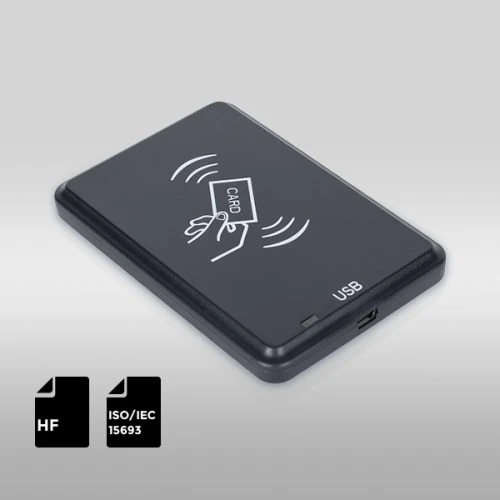
Desktop HF ISO15693 RFID Reader / Writer AZ-RL173
Desktop HF RFID Reader complies with the ISO 15693 protocol, and has high sensitivity reading and writing performance and a fast anti-collision processing algorithm. The products are widely used in data writing , access control, electronic bills, libraries, finance.