In today’s fast-paced, tech-driven world, RFID technology has become a powerful tool that helps organizations streamline operations and boost efficiency. As industries keep evolving and demand more automated, secure, and scalable solutions, RFID offers an effective way to wirelessly track and manage assets, goods, and information. This guide dives into the key concepts of RFID, its components, and its various applications across different sectors, giving you a solid understanding of why RFID is crucial in modern industries.
What is RFID Technology?
RFID, or Radio-Frequency Identification, is a technology that uses electromagnetic fields to automatically identify and track objects through attached tags. These tags hold electronically stored information that can be read by an RFID reader. Unlike traditional barcodes, RFID doesn’t need a direct line of sight to read tags, making it a super-efficient solution for various industries.
Components of an RFID System
An RFID system consists of several key components that work together to enable wireless identification and tracking. Understanding the structure of an RFID system is crucial for successful implementation.
RFID Reader
The RFID reader is the cornerstone of any RFID system. It generates radio frequency (RF) signals that activate the tags within range. Once activated, the tags respond by sending back their stored data, which the reader captures and processes.
RFID readers can vary in size and capability, from handheld models used in retail and inventory management to larger fixed readers designed for industrial environments.
Antenna
The antenna is responsible for transmitting RF signals between the reader and the tags. It emits electromagnetic waves that activate nearby RFID tags, enabling them to communicate their information. Antennas come in various shapes and sizes, and their design is often tailored to the specific application.
RFID Tags
RFID tags contain two main components: a microchip that stores the data and an antenna that transmits the information. As previously mentioned, RFID tags can be either passive or active, depending on their power source and range requirements. These tags are attached to items or objects that need to be tracked.
Host System
The host system is the backend infrastructure that processes the data received from the RFID readers. Typically, it consists of a computer or cloud-based platform running software that manages the collected data, such as inventory management systems, asset tracking applications, or warehouse control systems. The host system plays a crucial role in integrating RFID data with other business operations, allowing for real-time decision-making and process optimization.

How RFID Works?
RFID technology operates through a seamless process that involves communication between the RFID reader and the tag. This exchange happens quickly and efficiently, enabling real-time tracking and identification.

- Signal Emission: When the RFID reader is activated, it sends out a radio frequency signal through its antenna. This signal travels through the air, reaching any RFID tags within its range.
- Tag Activation: Upon receiving the RF signal, the RFID tag’s antenna absorbs the energy. In passive tags, this absorbed energy is what powers the microchip to transmit its stored data.
- Data Transmission: The microchip in the tag processes the signal and sends back a response to the reader, transmitting its unique identifier and other data stored in the tag.
- Data Processing: The RFID reader receives the tag’s information and sends it to the host system for processing and analysis.
This process takes only a few milliseconds, allowing RFID to identify and track large quantities of items in a short period. This speed and efficiency make RFID ideal for high-demand environments such as warehouses, hospitals, and retail stores.
History of RFID
The roots of RFID technology go back to the early 20th century when scientists started looking into the potential of radio waves for communication and identification. However, the evolution of RFID really picked up steam in the 1970s with the issuance of the first patent related to RFID.
Timeline of Technological Development
- 1940s: Early development of RFID principles during World War II, primarily for military applications.
- 1973: The first RFID patent was awarded to Mario W. Cardullo, marking the formal birth of RFID technology.
- 1980s-1990s: RFID gained traction in industrial settings, especially for supply chain and inventory management.
- 2000s: RFID became more affordable and accessible, leading to its adoption in retail, healthcare, and logistics sectors.
Today, RFID continues to evolve with the integration of Internet of Things (IoT) technology, enhancing real-time data collection and decision-making capabilities.
Key Milestones from the 20th Century to the Present
- 1940s: Radar technology laid the groundwork for RFID principles.
- 1970s: The invention of the RFID system for asset identification and tracking.
- 1980s: Expansion of RFID into industrial and commercial applications.
- 2000s: Growth in RFID’s adoption across a wide range of industries.
- 2020s: Integration of RFID with IoT and AI for real-time analytics and smart systems.
Main Benefits of RFID
RFID technology provides numerous benefits to businesses and industries that need efficient and accurate asset tracking. These advantages are crucial for boosting productivity, cutting operational costs, and enhancing security.
Efficiency Improvements
RFID greatly cuts down the time required for manual scanning and identification processes. With RFID, businesses can automate inventory counts, minimize human error, and gain real-time visibility into their operations. This results in improved productivity and streamlined workflows.
Cost Reduction
By automating processes like inventory management and asset tracking, RFID helps cut labor costs and minimize losses from mismanaged or misplaced items. Plus, the ability to accurately track assets prevents overstocking and understocking, enhancing overall cost efficiency.
Security and Consumer Engagement
RFID adds an extra layer of security by enabling better control over access to sensitive areas or information. For example, in healthcare, RFID can be used to secure patient records and prevent unauthorized access. Additionally, RFID allows businesses to create personalized customer experiences, offering targeted recommendations and promotions based on real-time data.
Key Markets and Applications
RFID technology has found extensive application across various industries due to its versatility and efficiency. From supply chain management to healthcare, RFID enhances operations by providing real-time data tracking, reducing errors, and improving overall productivity. Below are some key markets where RFID plays a significant role.
Supply Chain Management
In supply chain management, RFID tags are attached to products, containers, and pallets, providing a seamless way to track goods throughout their journey from production to final delivery. RFID increases visibility across the supply chain, allowing companies to monitor inventory levels, manage stock, and detect issues such as lost or delayed shipments in real-time.
This capability is invaluable for industries dealing with large volumes of goods, as it minimizes human error, reduces inventory discrepancies, and helps avoid costly supply chain interruptions.
Healthcare and Retail
In the healthcare sector, RFID is used to track medical equipment, manage patient records, and ensure the correct administration of medications. For example, hospitals use RFID-enabled wristbands for patients, allowing staff to quickly access critical health information and ensure that treatments are provided accurately and efficiently. This reduces the risk of human error and enhances patient safety.
Retailers benefit significantly from RFID as well. By tagging merchandise, stores can track inventory in real-time, reduce theft, and improve stock accuracy. RFID also enhances the customer experience by enabling stores to offer faster checkouts and personalized services, such as targeted promotions and product recommendations.
Automotive and Logistics
The automotive industry utilizes RFID to track parts during the manufacturing process, ensuring that components are correctly assembled. This technology can also assist in quality control, reducing errors during the production of complex vehicles. Additionally, RFID systems enable vehicle tracking throughout the supply chain, from the factory floor to the dealership.
In logistics, RFID simplifies the tracking of shipments and improves inventory accuracy. By integrating RFID with warehouse management systems, companies can automatically record the movement of goods, reduce manual scanning, and maintain up-to-date information on stock levels. This leads to faster order fulfillment and better customer satisfaction.
Different RFID Product Types
RFID technology has evolved to support a wide range of applications across industries, and different RFID product types have been developed to meet specific needs. Depending on the environment, material, and use case, RFID systems can vary greatly. In general, RFID products are divided into several categories, including inlays, hard tags, dual-frequency tags, and sensor tags.
Inlays and Tags
Inlays are the most common type of RFID product. They are designed for applications in ultra-high frequency (UHF), high frequency (HF), and near field communication (NFC) bands. Inlays consist of a microchip and an antenna that work together to transmit and receive data. These are typically used in industries such as retail, logistics, and healthcare, where there is a need to track and manage items quickly and efficiently.
- Dry Inlays: These are inlays without an adhesive backing, often integrated into other products like labels or packaging.
- Wet Inlays: Inlays with adhesive backing, typically used for direct application onto surfaces.
Hard Tags
Hard tags are designed for more rugged environments where conditions such as dust, water, and extreme temperatures may compromise the durability of standard inlays. These tags are usually encased in hard plastic, metal, or other durable materials. Hard tags are commonly used in industries like manufacturing, logistics, and automotive, where equipment or containers are exposed to harsh environments.
Key features of hard tags include:
- On-metal capabilities: These tags can be attached to metal surfaces, overcoming challenges that typically interfere with RF signal transmission.
- High-temperature resistance: Ideal for manufacturing processes that involve heat.
- Waterproof design: Suitable for outdoor use or wet conditions.
Dual-Frequency Tags
Dual-frequency tags are designed to operate in two different frequency bands, typically HF and UHF or LF and HF. This flexibility allows them to be used in a wide range of environments and with multiple RFID readers. Dual-frequency tags are particularly useful in industries where various systems might need to interact with the same tag, such as when goods move between different regions or facilities.
Sensor Tags
Sensor tags are advanced RFID tags with embedded environmental sensors, such as temperature, humidity, or pressure sensors. These tags are often used in industries that require real-time monitoring of environmental conditions, such as pharmaceuticals, food logistics, and cold chain supply management. For example, sensor tags can be attached to perishable goods to ensure they remain within a safe temperature range throughout transportation.
Passive vs Active RFID Tags
RRFID tags are broadly categorized into two types: passive and active. Each type has its unique characteristics, and the choice between them depends on the specific application and operational requirements.
Characteristics of Passive RFID Tags
Passive RFID tags do not contain an internal power source and rely on energy from the RFID reader to transmit their data. Due to their simple design, passive tags are generally smaller, less expensive, and more durable than active tags. They have a limited read range, typically up to 20 meters, making them ideal for applications where close-range scanning is sufficient.
Common use cases for passive tags include retail inventory management, library book tracking, and access control systems. Their lower cost makes them suitable for large-scale implementations where many tags are required.
Use Cases and Cost Benefits of Passive RFID
- Retail and Inventory Management: Passive RFID tags are used for tracking individual items, making it easier to monitor stock levels and avoid over- or under-stocking.
- Access Control: Passive RFID tags embedded in ID cards allow for easy entry into secure buildings or restricted areas.
Characteristics of Active RFID Tags
Active RFID tags have an internal power source, typically a battery, that enables them to transmit signals over longer distances. These tags can communicate with readers up to 100 meters away and are often used in environments where long-range tracking is necessary, such as in large warehouses or for vehicle tracking.
Active RFID tags tend to be more expensive than passive tags due to the added components and complexity. However, their ability to transmit data over greater distances and even in challenging environments (such as metal-rich areas) makes them indispensable for certain industries.
Use Cases and Cost Implications of Active RFID
- Asset Tracking in Large Facilities: Active RFID tags are commonly used to track valuable equipment or vehicles across wide areas, such as airports or large industrial sites.
- Supply Chain Monitoring: For companies requiring real-time data over long distances, active RFID provides a comprehensive solution, though at a higher cost.
Passive RFID: Comparison by Frequency Band
RFID systems operate at different frequency bands, each with its own set of advantages and limitations. The choice of frequency band depends on the specific requirements of the application, such as read range, interference levels, and material interaction. The three primary frequency bands for passive RFID systems are low-frequency (LF), high-frequency (HF), and ultra-high-frequency (UHF).
Low-Frequency (LF) RFID
- Frequency Range: 125 to 134 kHz
- Read Range: Typically less than 10 cm
- Applications: LF RFID is often used for animal tracking and access control due to its ability to penetrate metal and liquids. It has a short read range but is highly effective in environments with metal and liquid interference.
- Advantages: Reliable performance near metal and liquids.
- Disadvantages: Short read range and slower data transfer compared to other frequencies.
High-Frequency (HF) RFID
- Frequency Range: 13.56 MHz
- Read Range: Typically up to 1 meter
- Applications: HF RFID is commonly used for smart cards, library book tracking, and inventory management. HF systems are well-suited for environments where medium-range reading and moderate data transmission speeds are required.
- Advantages: Longer read range than LF and higher data rates.
- Disadvantages: More susceptible to interference from metal surfaces.
Ultra-High-Frequency (UHF) RFID
- Frequency Range: 868 to 960 MHz (varies by region)
- Read Range: Up to 20 meters
- Applications: UHF RFID is widely used in supply chain management, asset tracking, and logistics due to its long read range and fast data transfer speeds. It is the most commonly used frequency band for passive RFID systems.
- Advantages: Long read range, fast data transmission, and the ability to read multiple tags simultaneously.
- Disadvantages: Susceptible to interference from liquids and metals.
NFC vs RFID
Although NFC (Near Field Communication) is technically a subset of RFID technology, there are key differences between the two, particularly in their use cases, frequency ranges, and read distances. Understanding the distinctions between NFC and RFID is important when selecting the right technology for your business needs.
Differences in Frequency and Range
- NFC Frequency: NFC operates at 13.56 MHz, similar to HF RFID. However, NFC has a much shorter range—typically less than 10 centimeters—making it ideal for close-range interactions.
- RFID Frequency: RFID operates across a wide range of frequencies, including LF, HF, and UHF. The range for RFID can vary from a few centimeters to 20 meters or more, depending on the frequency and type of tag used.
Applications of NFC
NFC is widely used for contactless payment systems, such as those used in smartphones and smart cards. Because of its short range, NFC is also employed in product authentication, mobile access control, and consumer engagement. For example, a customer can tap their smartphone on an NFC-enabled product tag to receive additional product information or verify its authenticity.
Applications of RFID
RFID’s broader frequency range and longer read distances make it suitable for large-scale operations such as inventory management, supply chain tracking, and asset management. In industries where the need for long-range data collection and bulk item scanning is critical, RFID is the preferred choice.
Reader Devices
- NFC Readers: NFC technology is often integrated into smartphones and other mobile devices, making it convenient for consumer-facing applications.
- RFID Readers: RFID readers vary in size and power, from handheld scanners to large fixed-position readers. These devices are generally more specialized and capable of reading multiple tags simultaneously over longer distances.
In conclusion, while both NFC and RFID serve similar functions in terms of data transmission and wireless communication, NFC’s short-range capability is better suited for consumer applications, whereas RFID’s long-range and bulk reading capabilities are ideal for industrial and enterprise-level use.
RFID Inlay vs RFID Tag
In the world of RFID, it is important to distinguish between the terms RFID inlay and RFID tag. Though these terms are often used interchangeably, they refer to different components within the RFID ecosystem.
Structure of RFID Inlays
An RFID inlay is the essential building block of an RFID tag. It consists of a microchip, an antenna, and a substrate that holds the two together. The inlay is typically manufactured as a flexible sheet or strip, which can then be inserted into various forms of packaging, such as labels, stickers, or cards. The inlay is not designed for direct use; rather, it must be integrated into a finished product.
- Microchip (IC) : Stores and processes data.
- Antenna: Transmits and receives signals.
- Substrate: The base layer that holds the microchip and antenna.
An RFID inlay is typically used during manufacturing and embedded into products such as labels, cards, or packaging.
Structure of RFID Tags
An RFID tag is a complete, finished product that is ready for application and use. An RFID tag includes an RFID inlay, but it also features a protective layer or encapsulation around the inlay to safeguard it from environmental factors. RFID tags may come in different formats, such as labels, hard tags, or adhesive tags, depending on their intended application.

- Inlay: The core functional element that allows data transmission.
- Encapsulation: A protective outer layer that shields the inlay from environmental damage, such as moisture, heat, or physical impact.
- Adhesive (optional) : Many RFID tags include an adhesive layer for easy attachment to items.
An RFID tag is a complete, ready-to-use product designed for tracking and identification.
Different Delivery Formats
RFID tags and inlays come in various delivery formats, each designed for specific applications and use cases. The format you choose depends on factors such as ease of application, durability, and the type of surface to which the tag will be applied.
Dry Inlay
A dry inlay is an RFID inlay without any adhesive backing or protective covering. These are typically used when the inlay needs to be embedded into other products or integrated into labels during the manufacturing process. Dry inlays are often chosen for applications where the RFID element will be part of a larger product assembly.
- Advantages: Lower cost, easy integration into products.
- Disadvantages: Requires additional steps for application, not suitable for direct application to objects.
Wet Inlay
A wet inlay includes an adhesive backing that allows it to be directly applied to products or surfaces. These are often used in inventory management or retail applications where RFID tags need to be applied quickly and easily to items. Wet inlays are popular due to their convenience and versatility.
- Advantages: Quick and easy to apply, suitable for many surfaces.
- Disadvantages: Limited environmental durability without additional protection.
RFID Tags
RFID tags are fully encapsulated, ready-to-use products. These tags can come in various forms, such as hard tags for rugged environments or labels for general-purpose use. RFID tags are commonly used in logistics, asset tracking, and supply chain management.
- Advantages: Durable, easy to apply, versatile in harsh environments.
- Disadvantages: Higher cost, limited flexibility in some formats.
RFID Product Categories at RFIDLabel.com
At RFIDLabel.com, we offer a diverse selection of RFID products, catering to various industries and specific operational needs. Our products are categorized based on their frequency, shape, functionality, and intended use. By providing a range of options, we ensure that businesses can select the most suitable RFID solutions to meet their unique requirements. Below is a detailed breakdown of the product categories available on our website:
RFID labels and tags operate across different frequencies, each suited for specific applications. The frequency range determines factors like the read range, data transmission speed, and the operational environment.
1. By Frequencies
High-frequency RFID tags are widely used in applications that require medium-range reading, such as access control, ticketing, and data transfer.
NFC Forum Tag Type 2, 4, and 5
These tags operate in the high-frequency range and are used for close-range communication, ideal for mobile payments, product authentication, and consumer engagement.
Ultra-high-frequency RFID tags are suitable for long-range applications like inventory management, supply chain logistics, and asset tracking. UHF offers faster data transfer rates and is commonly used in large-scale industrial applications.
2. By Label Shape or Function
The shape and functionality of RFID labels are important considerations depending on the environment and application. RFIDLabel.com provides labels in different forms, each optimized for various use cases.
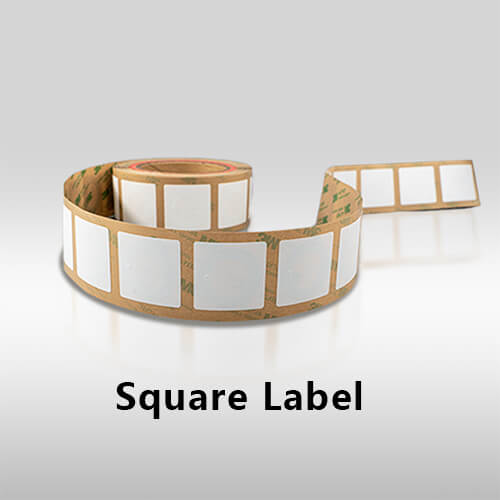
A versatile option, suitable for general-purpose applications such as retail and logistics, where space constraints are minimal.
Often used in applications where a circular design is required, such as product labeling or tracking smaller items.

These labels offer a larger surface area for better readability and are ideal for applications requiring more robust tracking, such as asset management.

A longer format is useful in situations where labels need to be affixed to narrow or elongated surfaces.

This label type folds over an item, leaving the antenna exposed for better readability in challenging environments like logistics or warehouse management.

Designed to meet the ARC quality standards, these labels ensure optimal performance in a variety of applications, including retail and inventory tracking.

3. Specialty RFID Labels
In addition to standard label shapes, RFIDLabel.com offers specialized labels for challenging environments or niche applications.
These are designed to withstand high temperatures, making them ideal for food packaging that requires microwaving or heat exposure.

These security-enhanced labels show visible signs if tampering occurs, making them perfect for applications that require product authentication and anti-counterfeiting measures, such as pharmaceuticals or luxury goods.

Standard RFID tags often face performance issues when applied to liquid-containing objects. On-liquid RFID labels are optimized to operate without interference when in contact with liquids, making them ideal for industries like cosmetics and beverages.

Metal surfaces can reflect and distort RFID signals, reducing read performance. These labels are specifically designed to be attached to metal objects, ensuring reliable performance even in challenging industrial environments.

Used for tracking vehicles in fleet management, toll collection, or access control, these labels are durable and designed for outdoor use, maintaining performance even under harsh weather conditions.

Equipped with LED indicators, these labels allow for visual identification of items in real-time, improving accuracy and visibility in high-demand environments such as warehouses or large retail spaces.

Ideal for use in the textile industry, these tags are embedded into fabrics for tracking items like uniforms, linens, and garments. This is especially useful in industries such as healthcare or hospitality where textiles need to be tracked throughout their lifecycle.

4. By Protocol
The RFID system’s communication protocol is essential for ensuring interoperability and compatibility with different systems. At RFIDLabel.com, we provide labels that adhere to international RFID standards, ensuring that your solution is compliant and future-proof.
This protocol governs high-frequency RFID communication, commonly used in access control, contactless payments, and identification systems.
This protocol supports both RFID and NFC technologies, providing greater read ranges and higher data transmission capabilities. It’s often used in library systems, asset tracking, and industrial automation.
This standard regulates the air interface for high-frequency RFID systems, ensuring compatibility with a wide range of readers and tags.
A widely used standard for ultra-high-frequency RFID systems, EPCglobal Gen2 tags are designed for supply chain management, logistics, and large-scale asset tracking.
This protocol is used for ultra-high-frequency RFID tags, ensuring seamless performance in inventory management and logistics.
5. By IC Type (Integrated Circuit)
The IC type used in an RFID label or tag determines the memory capacity, encryption capability, and overall performance. At RFIDLabel.com, we offer a variety of IC types to meet your specific application needs.
Known for its high memory capacity and superior read performance, this IC is ideal for applications that require storing large amounts of data, such as library tracking or asset management.
This widely used IC is found in access control systems, public transport ticketing, and cashless payment solutions.
These tamper-evident tags provide an added layer of security by indicating if a tag has been interfered with, making them ideal for anti-counterfeit solutions.
This UHF IC offers long read ranges and is commonly used in supply chain management and logistics.
Designed for high-performance UHF applications, this IC is used for inventory management, retail, and asset tracking, ensuring fast, accurate reads across a wide range of environments.
6. RFID Readers
RFID readers are the backbone of any RFID system, responsible for reading the data from RFID tags and transmitting it to the host system. At RFIDLabel.com, we offer a selection of RFID readers designed for different frequencies and applications.
High-frequency RFID readers designed for applications such as contactless payments, access control, and item tracking.
Ultra-high-frequency RFID readers used for long-range applications, particularly in logistics and supply chain management.
A versatile reader that supports both high-frequency and ultra-high-frequency tags, ensuring compatibility across different types of RFID systems.
RFID printers are used to create custom RFID labels that include both printed information and an embedded RFID inlay, allowing businesses to print and program RFID tags in-house for improved flexibility and control.
Selecting the Right RFID Inlay & Tag
Choosing the correct RFID inlay or tag for your application is crucial for ensuring optimal performance. Several factors must be considered, including the environment, surface material, and application method. Here are the key aspects to evaluate when selecting an RFID inlay or tag.
Material of the Object
Different materials interact with RFID signals in different ways. For instance, metal and liquids can interfere with radio frequency signals, limiting the tag’s read range and performance. For such materials, you may need to choose a tag specifically designed for on-metal use or with enhanced signal strength.
- Plastic: Standard tags and inlays generally perform well on plastic surfaces.
- Metal: Special on-metal tags are required to mitigate interference.
- Glass: Inlays with adhesives that perform well on smooth surfaces are recommended.
Environmental Conditions
Consider the environmental conditions in which the tag will be used. If the tag will be exposed to extreme temperatures, moisture, or chemicals, choose a tag that is designed to withstand such conditions. For example, hard tags with encapsulation may be required for outdoor or industrial applications.
Application Process
The way the RFID tag will be applied also affects your choice. For products that move through manufacturing processes involving heat, sterilization, or exposure to chemicals, the tag must be able to survive those processes. Understanding the operational workflow and potential stressors on the tag will guide you in choosing the right solution.
Read Range
The read range of an RFID tag depends on factors such as frequency band and antenna design. For applications that require long-range identification, UHF tags are ideal as they can be read from distances up to 20 meters. Conversely, HF or NFC tags are better suited for close-range applications, such as access control or mobile payments.
Tag Form Factor
The size and shape of the RFID tag or inlay play an essential role in its performance. Larger tags with bigger antennas generally offer better read performance, while smaller tags may be preferable for discreet applications where aesthetics or space are concerns.
Cost Considerations
The cost of RFID tags and inlays can vary significantly depending on the technology, materials, and production volume. Generally, passive tags are more cost-effective than active tags, and inlays are less expensive than fully encapsulated tags. However, balancing performance with cost is essential—cutting costs at the expense of durability or range could lead to higher long-term operational expenses.
RFID vs Barcode
When it comes to identification and tracking technologies, RFID and barcodes are often compared. Both have been widely used in industries such as retail, logistics, and healthcare, but they differ significantly in their functionality and capabilities.
Data Storage and Management
- Barcodes: A barcode is a machine-readable optical label that contains information about the object to which it is attached. Barcodes typically store minimal data, such as a product identifier. Once scanned, additional information must be retrieved from a database.
- RFID: RFID tags, in contrast, can store significantly more data, including product details, tracking information, and even environmental data if sensors are integrated. This makes RFID a more versatile option for applications that require detailed information to be accessed without scanning each item individually.
Reading Technology
- Barcodes: Barcodes require a line-of-sight scan, meaning the barcode must be visible to the scanner. This can be time-consuming in high-volume operations where items need to be manually aligned for scanning.
- RFID: RFID tags do not require a direct line-of-sight to be read. They can be scanned remotely, through containers or packaging, and even in bulk. This ability makes RFID a more efficient solution for environments where large quantities of items need to be tracked simultaneously.
Line of Sight
- Barcodes: As mentioned, barcodes need to be visible to be read, which can slow down operations and increase the likelihood of errors in high-speed environments.
- RFID: RFID’s ability to scan items without requiring a direct view streamlines processes such as inventory management and shipment tracking, leading to higher operational efficiency.
Accuracy and Speed
- Barcodes: Barcodes are scanned manually, one at a time, which can slow down operations in high-demand environments. Misalignment or damage to the barcode can also cause scan errors.
- RFID: RFID systems can read multiple tags at once, improving the speed and accuracy of data collection. In a typical inventory environment, an RFID system can scan hundreds of items in seconds, reducing manual labor and minimizing errors.
Security
- Barcodes: Barcodes are easily replicated and can be more vulnerable to counterfeiting or tampering. Once a barcode is duplicated, it can be used fraudulently without immediate detection.
- RFID: RFID systems are generally more secure than barcodes, as each tag can be encrypted or password-protected. This makes RFID the preferred choice for applications where security is a concern, such as healthcare or high-value asset tracking.

RFID Standards
RFID technology is governed by a set of international standards that ensure compatibility, interoperability, and compliance across different RFID systems and industries. These standards facilitate the widespread adoption of RFID by ensuring that tags, readers, and software from different manufacturers can work together seamlessly.
ISO/IEC 18000
The ISO/IEC 18000 standard is a global set of guidelines that governs RFID systems, specifying the air interface and communication protocols for various RFID frequency bands, including low frequency (LF), high frequency (HF), and ultra-high frequency (UHF). This standard ensures that RFID products can communicate effectively regardless of the specific frequency range they operate in.
- ISO/IEC 18000-6: Covers UHF RFID systems and is widely used in supply chain and logistics applications.
- ISO/IEC 18000-3: Covers HF RFID systems, which are commonly used in contactless payment systems and library tracking.
EPCglobal
EPCglobal is a subsidiary of GS1 that focuses on developing standards for RFID technology, specifically for use in supply chain management. EPCglobal standards ensure that RFID tags can store and communicate Electronic Product Codes (EPCs), which uniquely identify items in global supply chains.
The EPCglobal Class 1 Gen 2 standard is widely used in industries such as retail and manufacturing, enabling scalable, efficient tracking of goods from production to point of sale.
RAIN RFID
RAIN RFID is a global alliance that promotes the use of UHF RFID technology for item-level tracking. It operates under the EPCglobal Class 1 Gen 2 standard and supports applications that require long-range identification and high-speed data capture. RAIN RFID is commonly used in industries such as retail, healthcare, and logistics.
NFC Forum
The NFC Forum is responsible for developing standards and guidelines for Near Field Communication (NFC) technology. It ensures that NFC-enabled devices can communicate effectively and securely, supporting applications such as mobile payments, product authentication, and customer engagement.
Importance of Compliance
Adhering to RFID standards is essential for ensuring that RFID systems can operate across different regions and industries. Compliance with these standards ensures that businesses can deploy RFID solutions that are compatible with global supply chain networks and adhere to industry best practices. This interoperability not only enhances the efficiency of RFID systems but also facilitates their broader adoption.
RFID and Sustainability
Sustainability has become a critical focus for businesses across industries as they seek to minimize their environmental impact and adopt more eco-friendly practices. RFID technology plays a significant role in promoting sustainability by optimizing resource usage, reducing waste, and enabling more efficient processes.
Environmental Impact of RFID Materials
RFID tags are typically made of a combination of materials such as plastic, paper, and metal. While the production of RFID tags requires raw materials, innovations in design have led to more environmentally friendly options. For example, RFID tags can now be made from recyclable materials or incorporate biodegradable substrates, significantly reducing their environmental footprint.
Additionally, companies can now use RFID tags made from certified sustainable materials, which helps reduce reliance on non-renewable resources. Efforts to develop eco-friendly RFID technology are ongoing, and as demand for sustainable solutions grows, these innovations will continue to evolve.
Reducing Waste and Optimizing Supply Chains
RFID contributes to sustainability by improving the efficiency of supply chains. Real-time visibility into stock levels, production stages, and transportation logistics allows companies to minimize excess inventory, reduce overproduction, and prevent product waste. For industries that deal with perishable goods, such as food and pharmaceuticals, RFID enables better tracking of expiration dates and storage conditions, which reduces the likelihood of spoilage and product waste.
By optimizing asset management, RFID also ensures that equipment and materials are used more efficiently, reducing the need for replacement or disposal. Furthermore, RFID systems can be integrated with reverse logistics, allowing for better recycling and reusability of products at the end of their life cycle.
RFID and the Circular Economy
RFID technology is integral to the development of a circular economy, where resources are reused, repurposed, and recycled to minimize environmental impact. By tracking products throughout their lifecycle, RFID helps manufacturers and retailers better understand how goods are consumed, used, and returned. This data can be used to improve product designs, making them more durable and easier to recycle or refurbish.
RFID-enabled systems can track recyclable materials, such as packaging and electronic waste, ensuring that they are processed correctly at the end of their lifecycle. This promotes sustainable resource management and reduces the volume of waste sent to landfills.
RFID and IoT Solutions
The integration of RFID with the Internet of Things (IoT) has opened up a world of possibilities for real-time data collection, monitoring, and automation. RFID provides a critical link in IoT ecosystems, enabling objects to be identified, tracked, and connected to digital systems. Together, RFID and IoT are transforming industries by creating smart, connected environments that support real-time decision-making and process optimization.
Real-Time Data and Tracking
One of the primary benefits of integrating RFID with IoT is the ability to gather real-time data from RFID-enabled assets. RFID tags can be attached to products, equipment, and vehicles, allowing businesses to track their location, condition, and movement throughout the supply chain or facility. This real-time visibility improves decision-making, reduces inefficiencies, and enables proactive responses to potential issues, such as delays or inventory shortages.
For example, in a smart warehouse, RFID tags on inventory items can communicate with IoT-enabled devices to provide accurate stock levels, track the movement of goods, and automate replenishment processes. This level of automation reduces manual labor, minimizes errors, and ensures a smoother workflow.
Enhanced Monitoring and Automation
By connecting RFID systems to IoT networks, businesses can gain deeper insights into the operational performance of their assets and infrastructure. This integration enables the monitoring of critical parameters, such as temperature, humidity, and pressure, through sensor-enabled RFID tags. These sensors provide real-time feedback to IoT platforms, allowing businesses to optimize their environments based on live data.
For example, in the food industry, sensor-enabled RFID tags can monitor the temperature of perishable goods throughout the cold chain, ensuring that products are stored and transported under the correct conditions. Any deviations from the desired temperature range can trigger alerts, allowing companies to take immediate corrective action, thus preventing spoilage.
IoT and Predictive Maintenance
RFID combined with IoT enables predictive maintenance by tracking the usage and condition of equipment in real-time. By monitoring wear and tear, RFID tags can alert maintenance teams when equipment is due for service, minimizing downtime and extending the lifespan of assets.
For instance, in a manufacturing plant, RFID tags attached to machinery can provide real-time data on usage cycles, stress levels, and performance. IoT systems analyze this data and predict when maintenance will be required, ensuring that the machinery continues to operate efficiently without costly interruptions.
The Future of RFID and IoT Integration
The integration of RFID with IoT continues to evolve, driving innovation in industries ranging from retail to healthcare. As RFID technology advances and becomes more affordable, its role in IoT ecosystems will expand, enabling even greater levels of automation, connectivity, and intelligence.
Future developments in 5G networks and edge computing will further enhance the capabilities of RFID and IoT, creating new opportunities for smart cities, autonomous logistics, and advanced asset management.
Conclusion
RFID technology has revolutionized the way businesses manage their assets, inventory, and processes. From its early beginnings in the 20th century to its current applications across industries like retail, healthcare, and logistics, RFID has become an indispensable tool for improving efficiency, reducing costs, and enhancing security.
As we have explored, RFID offers a diverse range of products, including inlays, hard tags, and sensor tags, each tailored to meet specific needs. By selecting the right tag and frequency band for their application, businesses can optimize performance and ensure long-term operational success. Additionally, the integration of RFID with IoT is paving the way for smarter, more connected environments where real-time data and automation drive decision-making.
In conclusion, whether you are looking to enhance your supply chain, improve asset tracking, or create a more efficient business operation, RFID technology offers powerful solutions that are essential for staying competitive in today’s digital world. As RFID continues to evolve and integrate with emerging technologies, its potential will only grow, offering businesses new ways to innovate and succeed.
Welcome to rfidlabel.com for more insights and the latest information about RFID technology.
FAQs
1. What is the typical range of an RFID tag?
The read range of an RFID tag depends on the type of tag and the frequency used. Passive low-frequency (LF) RFID tags typically have a range of 10 cm or less, high-frequency (HF) RFID tags can reach up to 1 meter, and ultra-high frequency (UHF) RFID tags can be read from distances of up to 20 meters or more. Active RFID tags, which contain a power source, can have a range of 100 meters or more.
2. Can RFID work through metal or liquids?
Standard RFID tags may have issues working with metal or liquids due to signal interference. However, specially designed on-metal RFID tags and on-liquid RFID labels are engineered to overcome these challenges. These tags often include shielding or spacer materials to ensure reliable signal transmission even when applied to metallic or liquid surfaces.
3. What’s the difference between RFID and NFC?
RFID (Radio-Frequency Identification) is a broader category that includes various technologies used for tracking and identification. NFC (Near Field Communication) is a specific type of RFID that operates at 13.56 MHz and is used for close-range applications (typically less than 10 cm). NFC is most commonly found in contactless payment systems (such as in smartphones), while RFID is used for broader applications like inventory tracking and access control.
4. Can RFID be used for tracking people?
Yes, RFID is used for people tracking in environments such as hospitals, schools, and events. For example, in hospitals, patients may wear RFID wristbands that store medical information. In large events, RFID badges or wristbands can track attendee movements, assist with entry management, and provide a cashless payment option.
5. Are RFID labels reusable?
Most RFID labels are not reusable, especially if they are embedded into packaging or tamper-evident systems. However, certain RFID hard tags or RFID labels with durable casing can be reused, particularly in applications such as industrial asset tracking or vehicle management, where tags remain attached for longer periods.
6. How secure are RFID tags?
RFID security varies by the type of tag and the application. Basic RFID tags may have limited security features, while more advanced tags offer encryption, password protection, and tamper-evident mechanisms. For high-security environments, such as pharmaceuticals or financial transactions, tags with cryptographic capabilities are used to prevent data interception or counterfeiting.
7. What is RFID middleware, and why is it important?
RFID middleware is software that sits between RFID hardware (like readers and tags) and enterprise systems. It processes and filters the data collected by RFID readers, ensuring only relevant data is sent to the database or application. Middleware is crucial for real-time data processing, optimizing system performance, and ensuring data accuracy.
8. How does RFID technology support sustainability efforts?
RFID technology contributes to sustainability by optimizing supply chains, reducing waste, and improving resource management. For example, RFID tags help prevent overproduction and overstocking in inventory systems. RFID also facilitates reverse logistics, enabling easier tracking and recycling of products at the end of their life cycle.
9. Can RFID tags be embedded in textiles?
Yes, RFID textile tags are used in industries such as fashion, healthcare, and hospitality. These tags can be embedded into clothing or linens to track their use, washing cycles, and lifespan. Smart textile RFID tags are designed to withstand washing and wear and are widely used for inventory management of uniforms, bed linens, and other reusable textiles.
10. What are the main costs involved in implementing an RFID system?
The cost of implementing an RFID system includes several components:
- RFID tags and labels, which can vary in price depending on the type (passive, active, NFC, on-metal, etc.).
- RFID readers, which are required to collect data from the tags.
- Middleware and software to process and manage the data collected.
- Installation and integration costs with existing business systems, such as ERPs.
- Ongoing maintenance and updates to keep the system running efficiently.