RFID (Radio Frequency Identification) technology has seen widespread adoption in various fields in recent years, playing a crucial role, particularly in supply chain and inventory management. This article explores the application of RFID coffee supply chain management at Coopercam, a leading coffee cooperative in Brazil, with a detailed discussion of its implementation in the Brazilian coffee cooperative Coopercam, and highlight an RFID product.
Beyond inventory management, RFID technology also plays an important role in coffee product traceability and recall management. By using RFID labels, coffee businesses can quickly identify affected products, verify product information, and improve return processes when quality or packaging issues occur. Learn more about how RFID supports coffee product recalls and unopened package returns in our article:
→ Coffee Products Recalled: RFID Labels Support Returns for Unopened Packaging
Case Background and Application of RFID Technology in Coffee Inventory Management
The Coopercam coffee cooperative in Brazil is a collective formed by coffee farmers from the regions of Campos Gerais and Campo do Meio. One of the main challenges faced by this cooperative is efficiently managing the large inventory of coffee beans in their warehouse. Traditional inventory management is time-consuming, labor-intensive, and prone to errors, especially when tracking the movement of certified coffee beans.
To ensure accurate placement and tracking of each coffee bag, RFID labels work together with warehouse positioning systems to provide reliable identification throughout storage operations. When a coffee bag is placed in an incorrect location, the system can automatically generate an alert, helping maintain accurate inventory records and improving warehouse management efficiency.
The implementation of RFID label technology has greatly optimized Coopercam’s warehouse operations. It has simplified the tracking and auditing process of certified coffee beans, enhanced supply chain transparency, and improved overall inventory accuracy.
Overall, Coopercam achieved automated management throughout the coffee supply chain, from receiving and storage to dispatching, by implementing an RFID label solution. This helped reduce labor costs, improve operational efficiency, and ensure greater consistency in product quality and coffee inventory management.

RFID Product Introduction
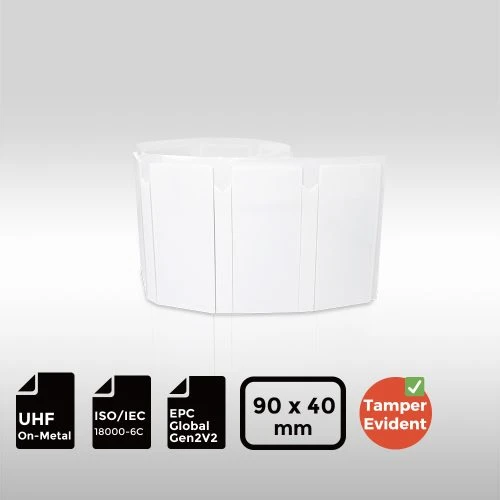
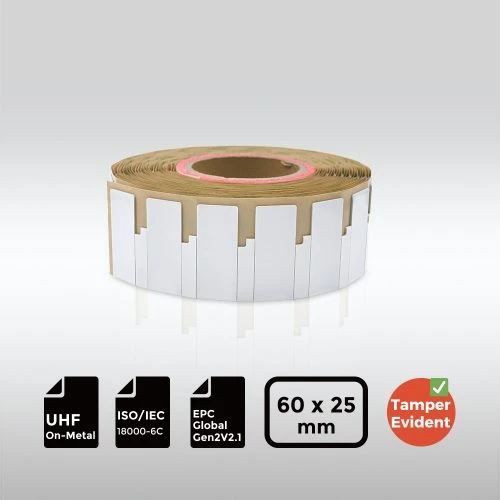
Efficient coffee supply chain management requires accurate identification, reliable tracking, and durable RFID label solutions that can perform in demanding environments. RFID labels designed for logistics and asset tracking help businesses monitor products, containers, pallets, equipment, and reusable assets throughout transportation, storage, and distribution processes.
To support these applications, this article introduces RFID labels, a versatile identification solution designed for supply chain management, logistics tracking, and inventory visibility. Available in different designs, materials, and RFID chip configurations, RFID labels can be customized to meet various application requirements, including agricultural products, food supply chains, logistics operations, and industrial asset tracking.
Product Overview
RFID labels combine RFID technology with flexible label designs, enabling businesses to attach digital identification capabilities to products, packaging, and assets. Compared with traditional identification methods, RFID labels provide faster data collection, improved traceability, and better visibility across supply chain processes.
For coffee supply chain management, RFID labels can help companies track coffee bags, packaging units, logistics assets, and reusable containers from collection and processing to storage and distribution. This improves product traceability and supports more efficient inventory management.
Product Features
- Flexible Label Designs: RFID labels are available in various sizes, materials, and formats to support different product surfaces and application environments.
- Reliable RFID Identification: Supporting UHF RFID technology and EPCglobal Gen2 / ISO 18000-6C standards, RFID labels provide stable long-range identification for logistics and supply chain applications.
- Durable Performance: Different RFID label materials can be selected based on environmental requirements, including moisture resistance, temperature resistance, and outdoor applications.
- Secure Data Management: Depending on the RFID chip configuration, RFID labels can support EPC memory, unique identification, and password protection features for secure tracking.
- Wide Application Range: RFID labels are suitable for coffee bags, agricultural products, logistics packaging, inventory management, asset tracking, and other supply chain applications.

Conclusion
The successful implementation of RFID technology at Coopercam demonstrates the significant potential of RFID labels in improving coffee inventory management and supply chain visibility within the coffee industry. By replacing manual tracking methods with RFID-based identification, the cooperative improved operational efficiency, reduced inventory errors, and enhanced transparency throughout the coffee supply chain.
For businesses requiring reliable product identification and traceability, RFID labels provide an effective solution for managing products, packaging, and logistics assets throughout transportation and storage processes. With flexible designs, stable RFID performance, and customizable options, RFID labels are suitable for agricultural, food, logistics, and industrial supply chain applications.
If you are a supplier of coffee, agricultural products, or other goods requiring efficient coffee inventory management and traceability, implementing RFID label solutions can help optimize your supply chain operations. Explore RFID labels and other RFID solutions from rfidlabel.com to build a more efficient, transparent, and reliable supply chain.